How Local Conditions Play In
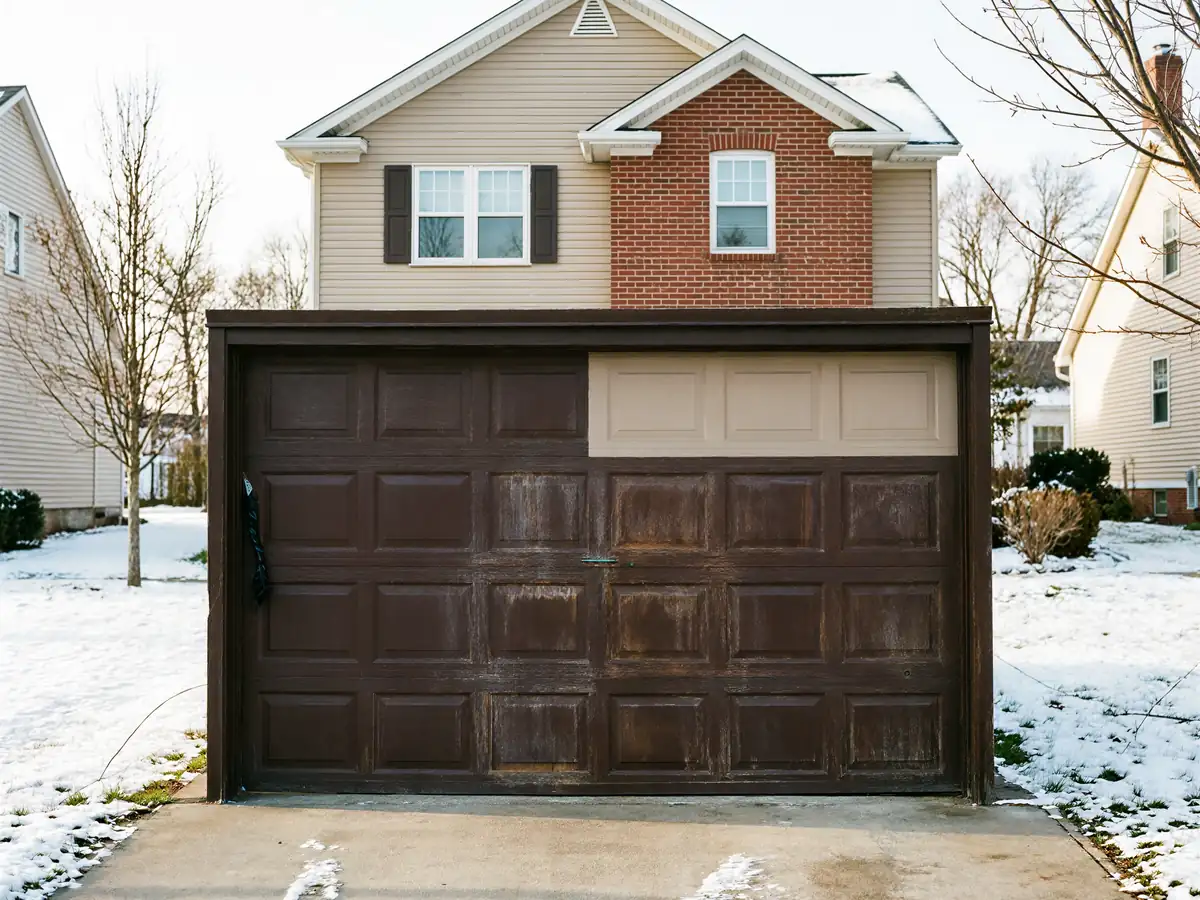
Most of the garage doors we get called on in Hopkins are hanging on hardware that's never been touched since the house was framed, and that house is probably from somewhere in the 1957 to 2005 run, with the bulk of them going up in the 1980s and 90s. That matters because a torsion spring and the bearings on either end of it have a working life measured in cycles, not years, and a door installed in, say, 1986 has had three or four decades to wear its bearings oval and its spring coils tired. You don't hear a worn bearing until it's most of the way gone - and then you hear it every single time the door moves.
On top of the age of the stock, Hopkins sits in a cold climate band, and cold does something specific to steel and lubricant: grease thickens, metal contracts, and any slack in a joint becomes a rattle you didn't have in August. A noise that shows up only below freezing is usually the same loose part you already had - the cold is just reporting it louder. We're not chasing down a rare problem here. We're looking at a predictable one, tied directly to how old the hardware in this part of town tends to be and what a Minnesota winter does to it.
The Problem
Garage doors don't fail quietly
They tell you first, usually weeks or months before the part lets go, and the sound is specific to the part. A rhythmic thump once per rotation is almost always a flat spot or chip on a roller - common once a door's original rollers (steel on nylon, 1980s and 90s builds especially) have logged enough winters. A sharp metallic pop, usually once, usually loud enough to make you jump, is a torsion spring losing a coil or a cable popping off a drum - on a door this age, both are closer to the end of their life than the start.
A grinding whine that rises with speed points at the opener's drive gear, not the door itself
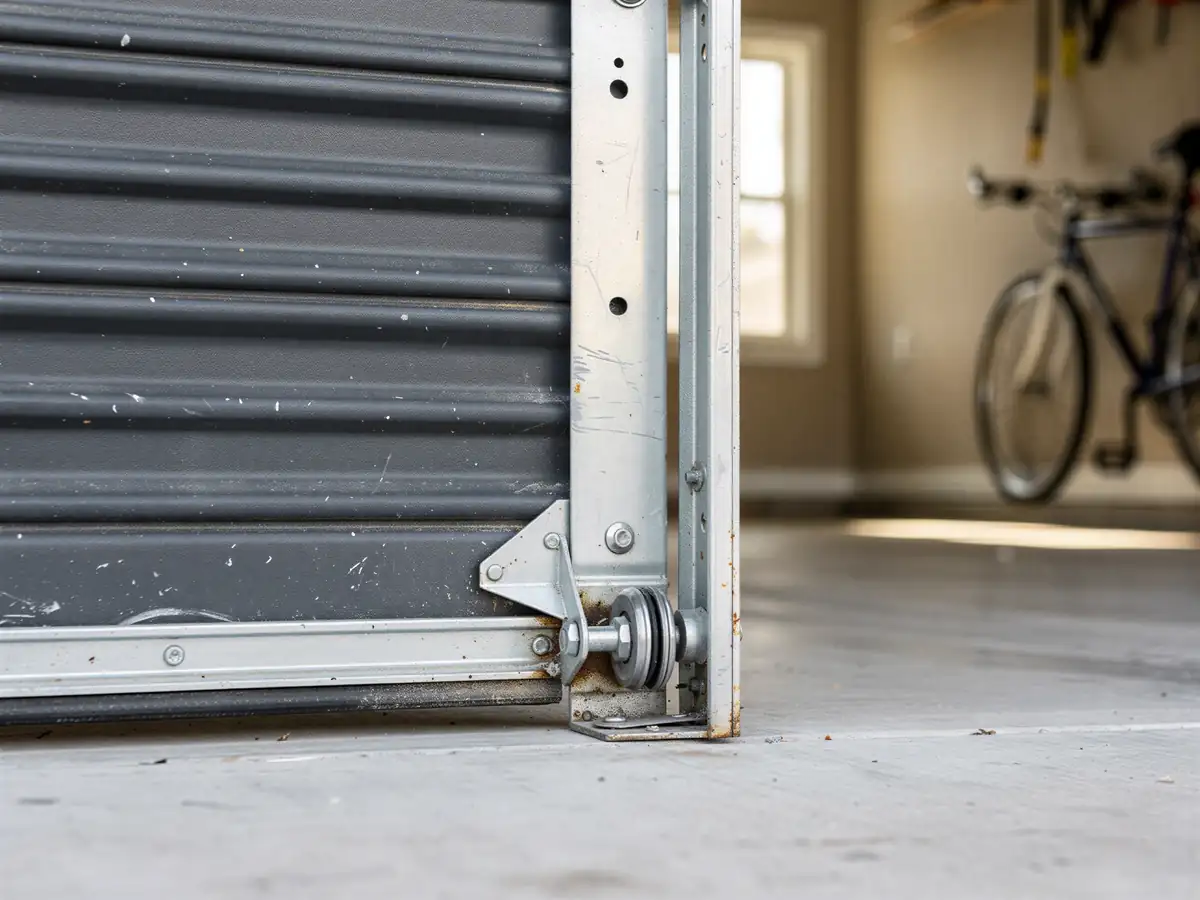
A separate wear item with its own timeline. A low groan or shudder that runs the whole travel of the door usually means a bent track or a bracket working loose from the jamb, which cold-weather wood movement in a house built in this era can quietly accelerate over a winter.
Here's the limitation: we can't tell you exactly which part from a description over the phone
We can tell you which three or four parts it's probably not, and that's worth something before you call.
Checking It Yourself
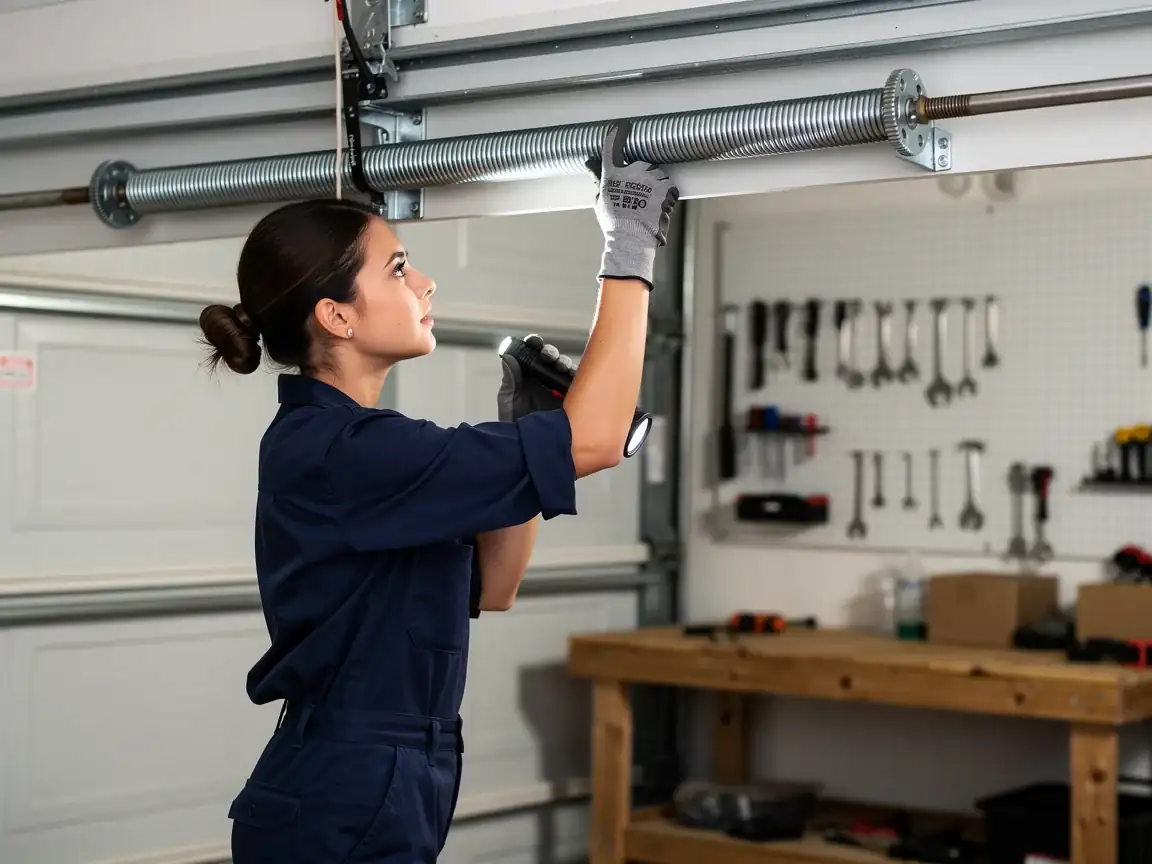
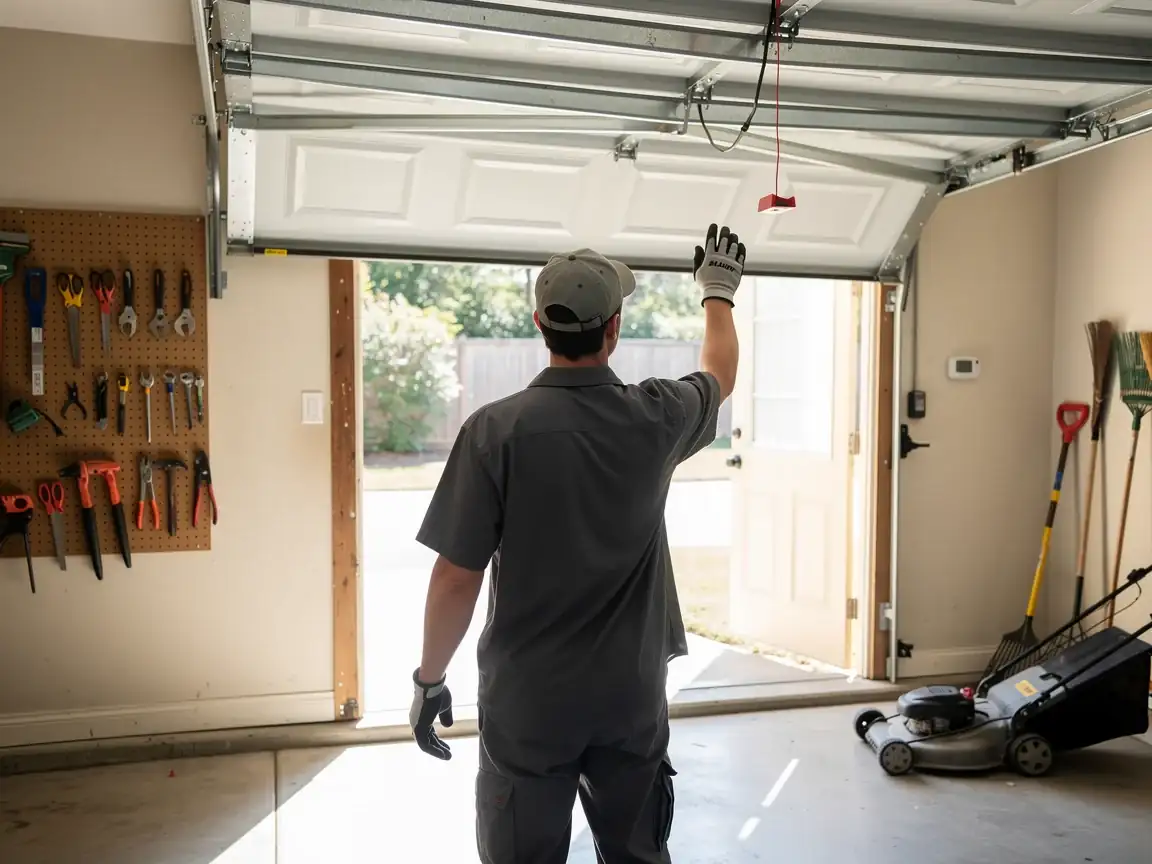
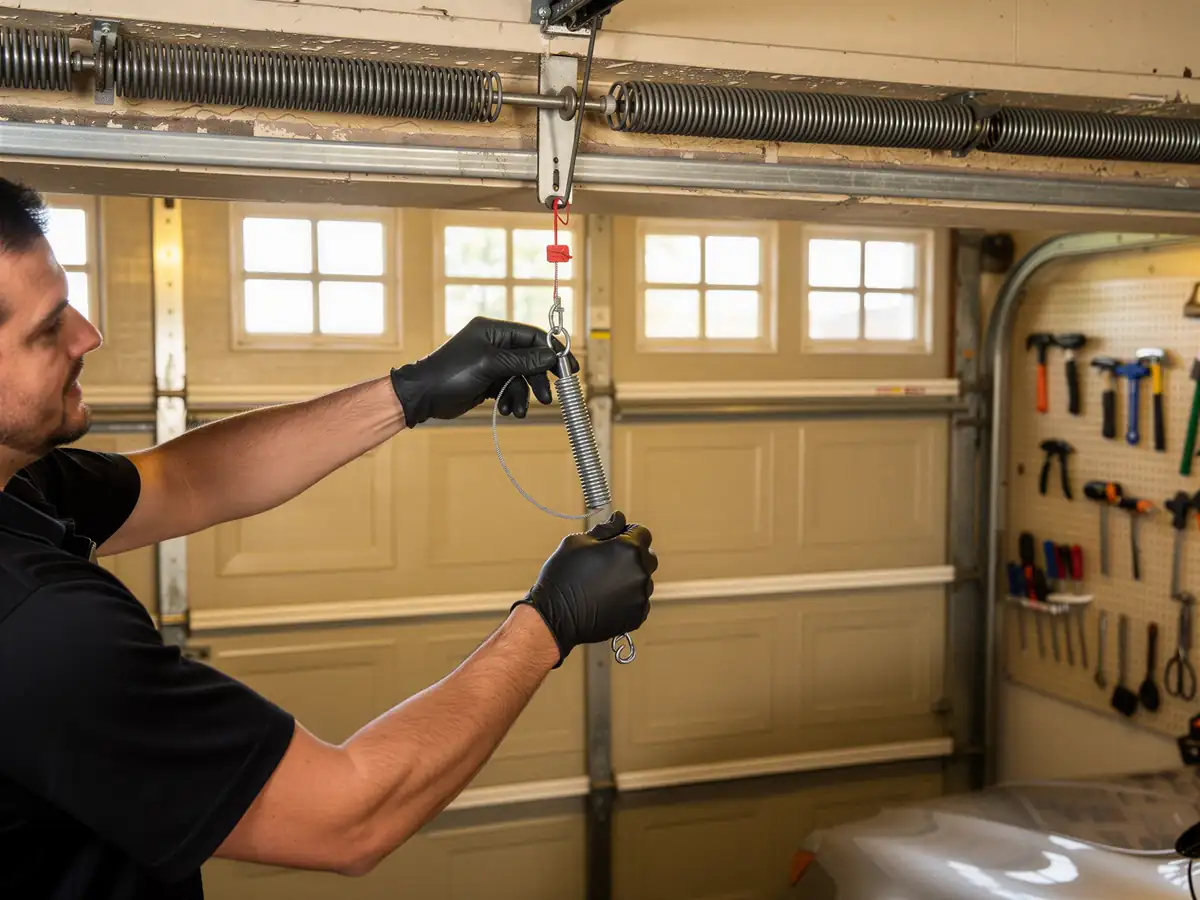
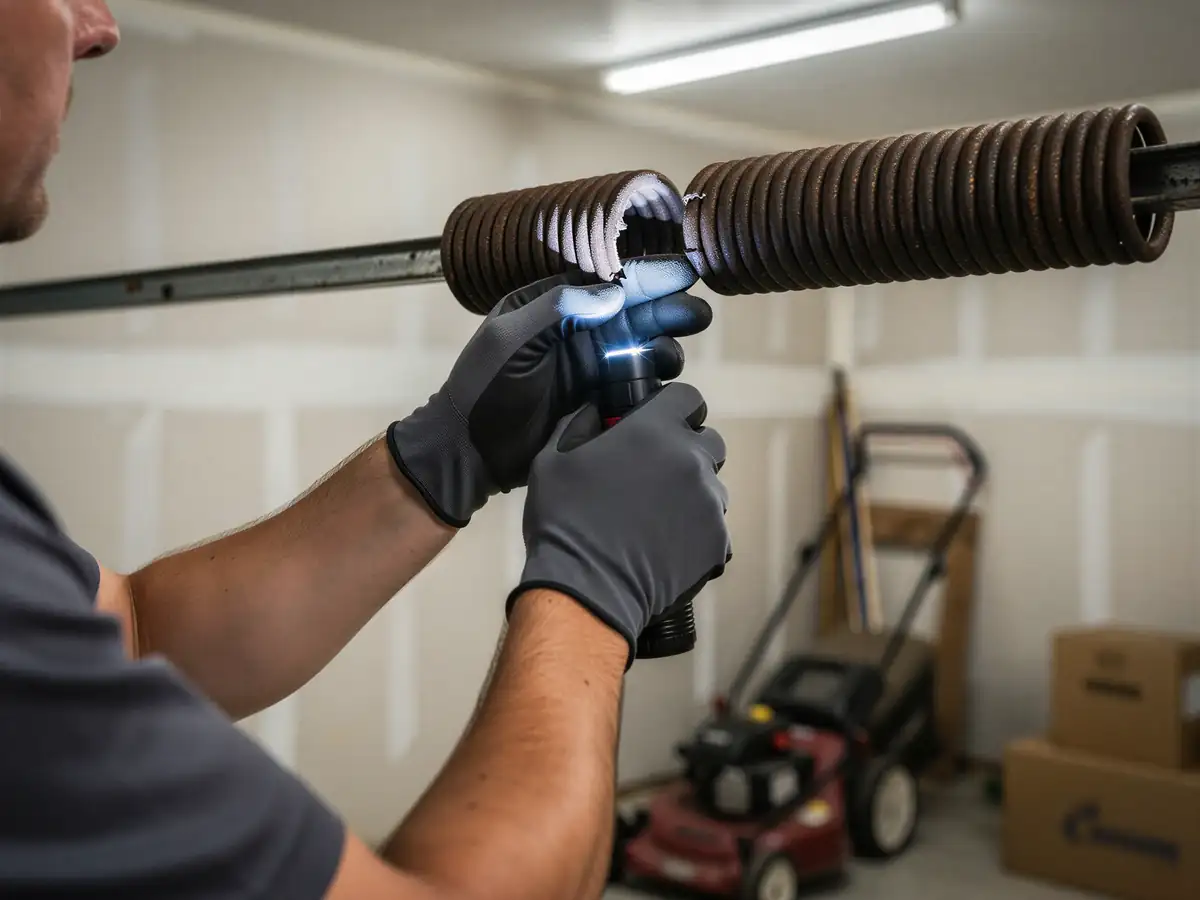
You can do a reasonable first pass without tools. Open and close the door manually, slowly, and listen for where in the travel the noise happens - top, middle, or bottom of the track tells you a lot about which roller or bracket is involved. Look at the springs above the door: visible gaps between coils, or one spring sitting noticeably lower than its pair, is a sign of fatigue common on doors that have been in service since the 80s or 90s.
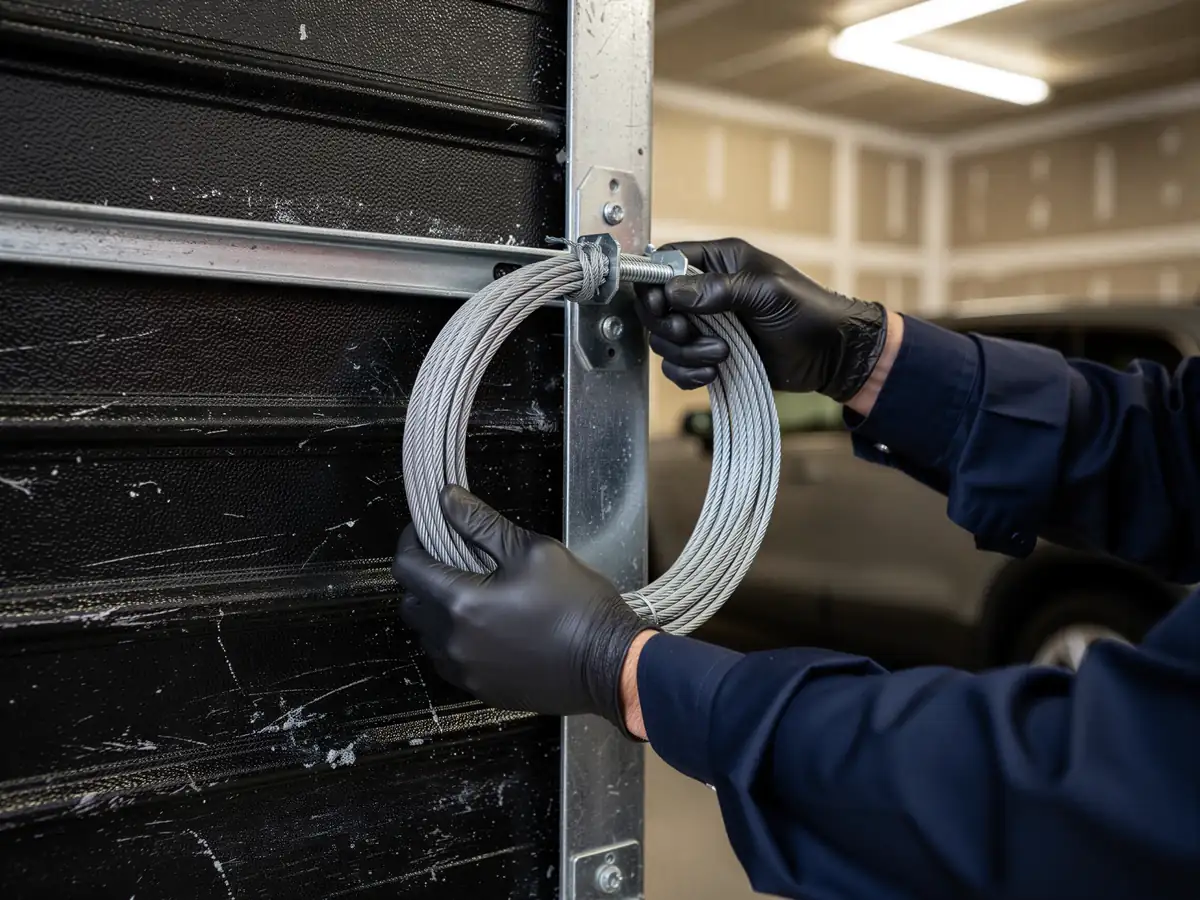
Check the lift cables for fraying, especially near the bottom bracket - cold makes brittle strands more likely to snag and show. Run a hand (carefully, door down) along the track for anything bent or loose at the mounting brackets; houses built on this era's stock sometimes have jambs that have shifted slightly over 30-plus years, and a track mount that was square in 1990 may not be square now.
What you shouldn't do yourself: touch a wound torsion spring, or try to tighten a cable under tension. Those hold enough stored force to put someone in the hospital, and that's not a job for a Saturday afternoon with a ratchet.
Season by Season
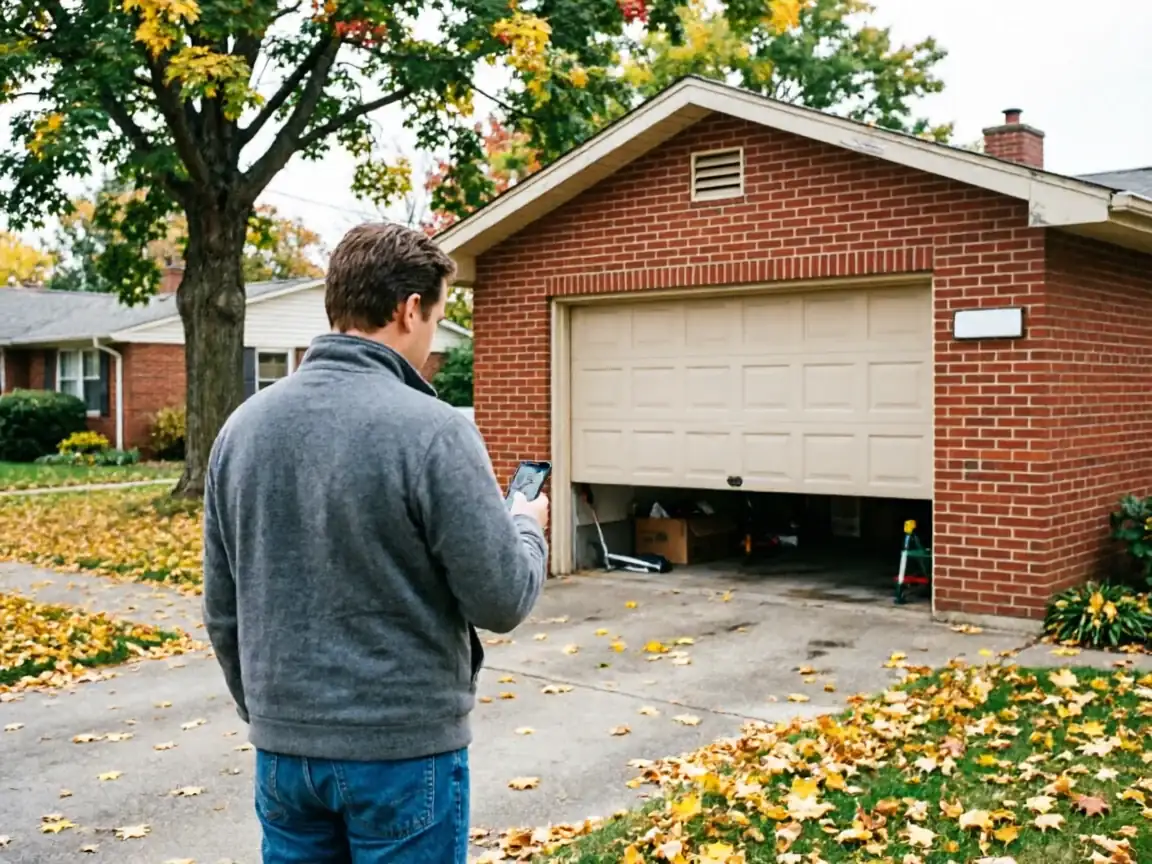
Fall, before the first hard freeze, is the window to deal with anything you noticed over summer - lubricant goes on easier above freezing, and a spring under strain is more likely to let go once cold stiffens the steel around it. Early winter is when thickened grease and cold-contracted metal turn a quiet looseness into a real noise; this is when most of our Hopkins calls on older torsion setups come in.
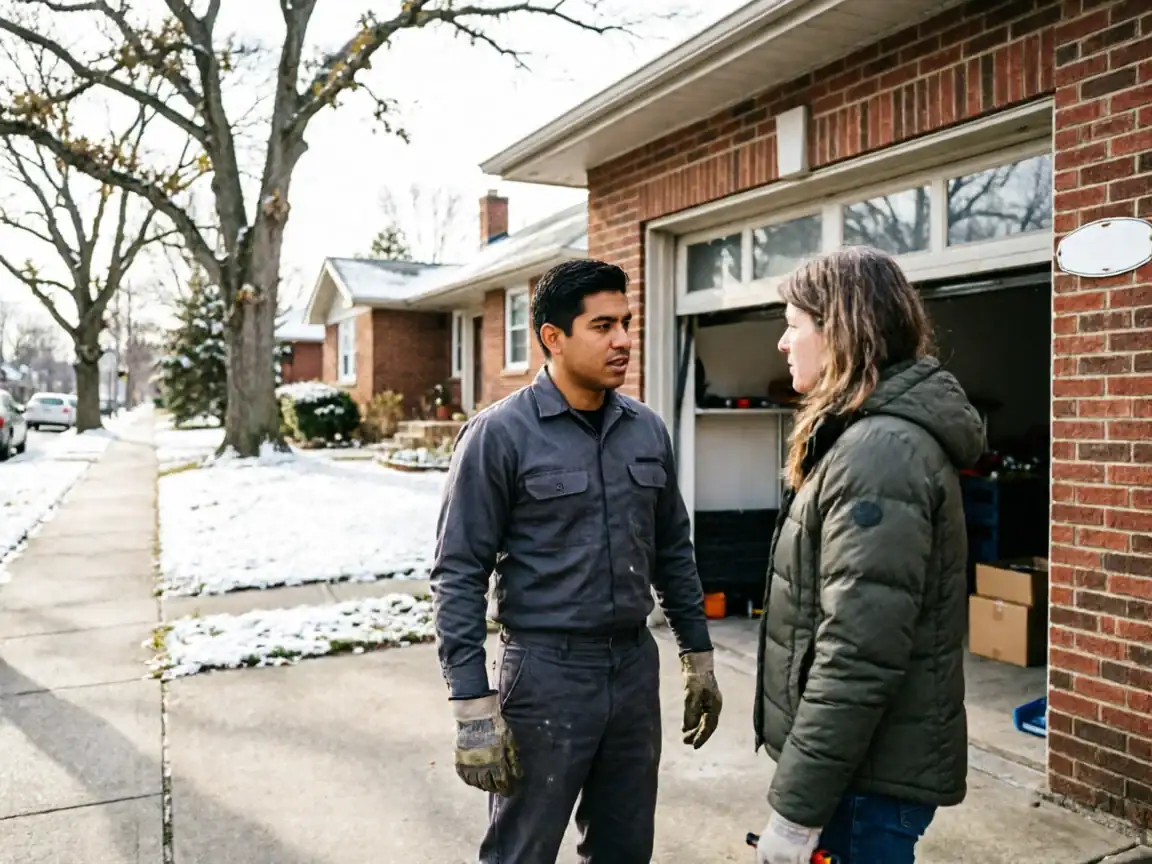
Midwinter, below zero, is the worst time to force a stuck door - metal is at its most brittle and a track that's binding can bend rather than just scrape. If a door won't move easily in a cold stretch, that's a stop-and-call situation, not a lean-into-it one.
Spring brings a different noise: moisture-swollen wood jambs on older houses can pinch a track that was fine all winter, so a scrape that shows up in April on a 1980s-era house is often a seasonal wood issue, not a hardware failure. Summer is the slow season for us, and the right time for the lubrication and bearing check that keeps next winter's noises from starting at all.