How Local Conditions Play In
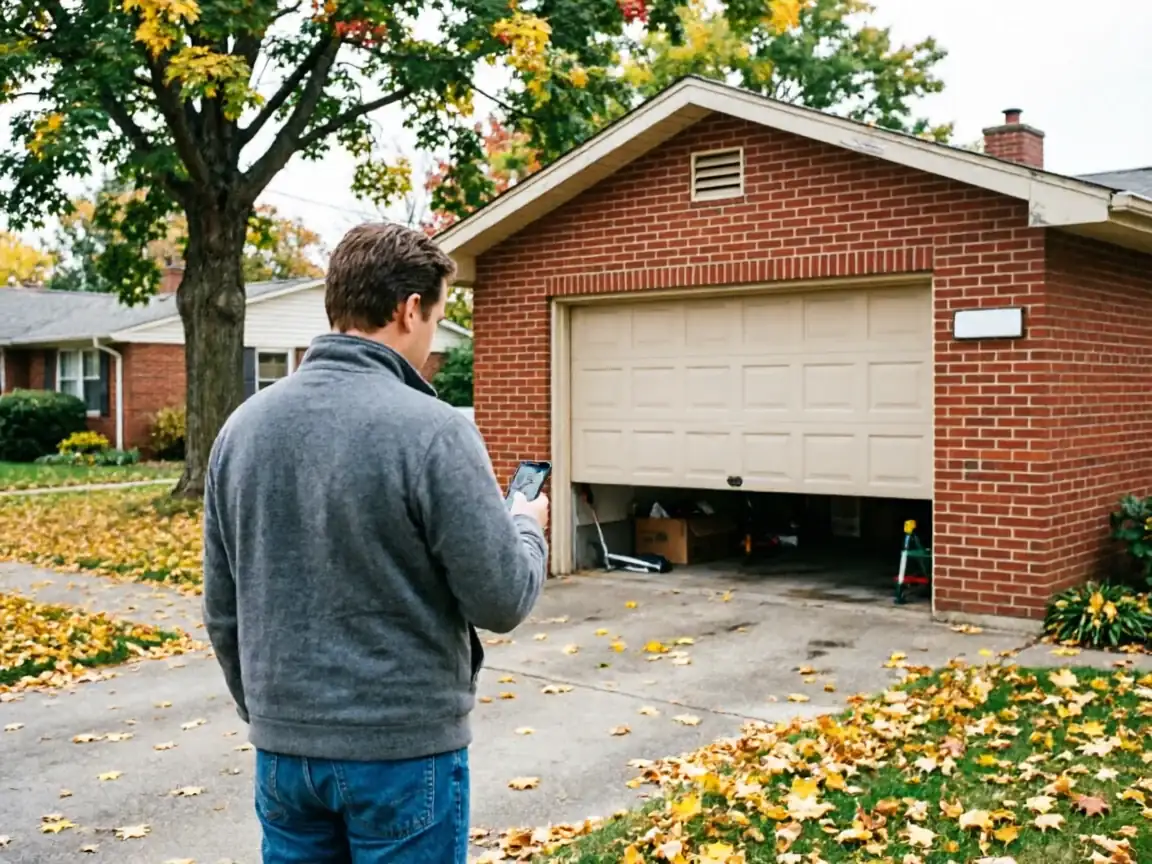
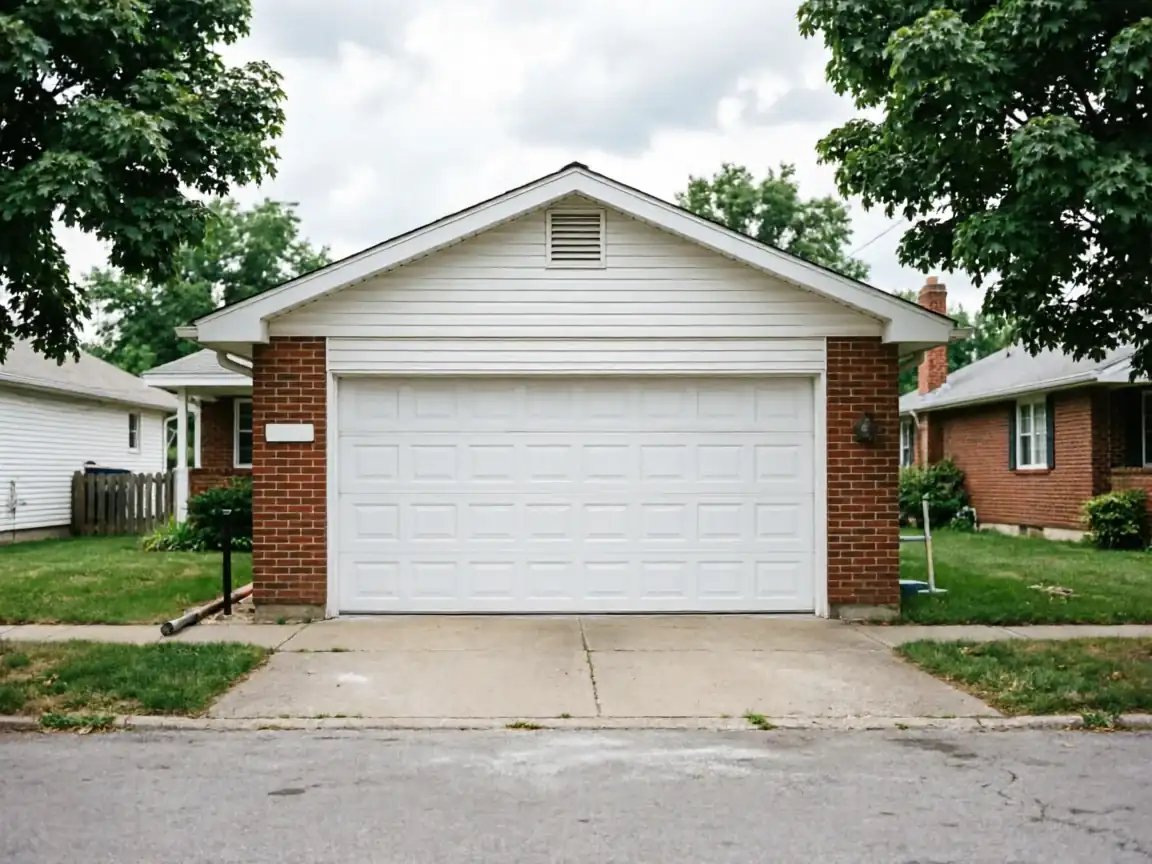
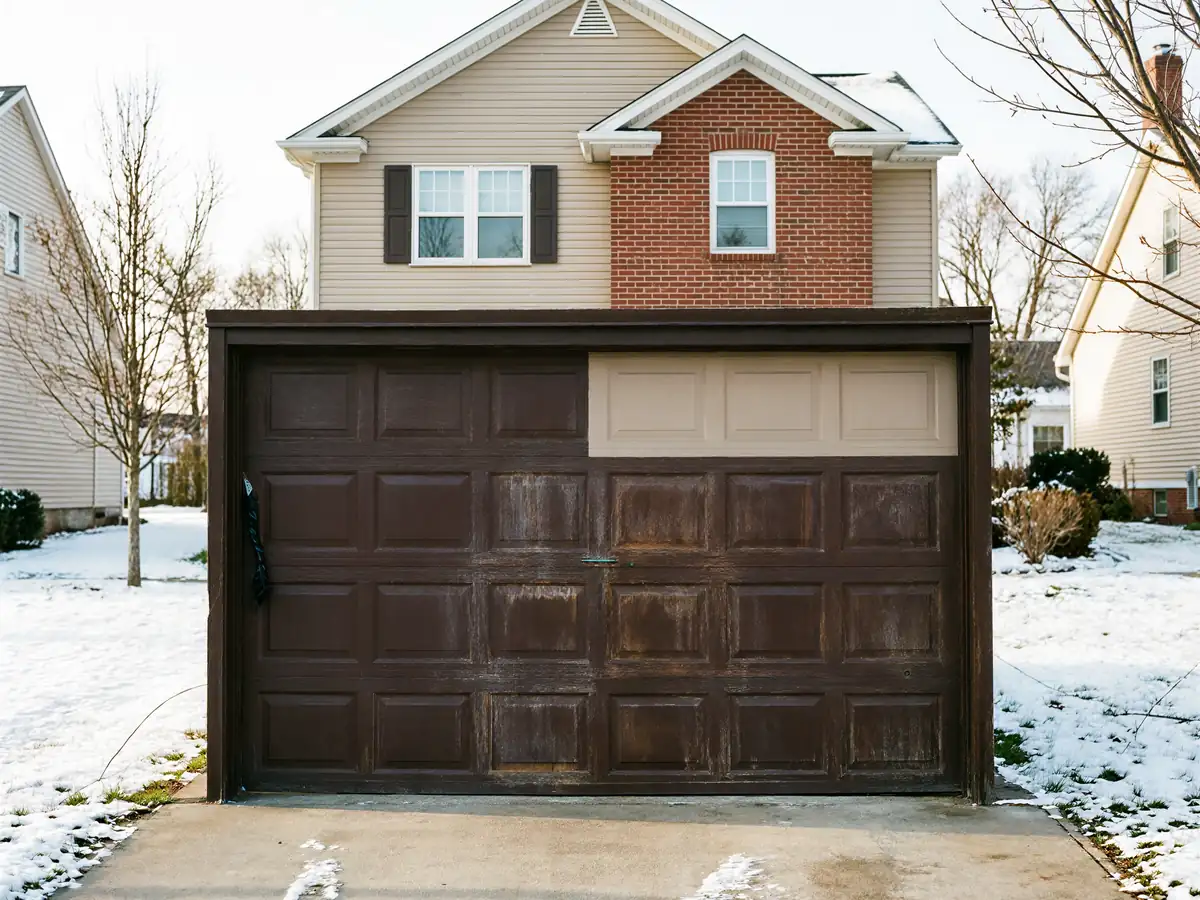
Most of the housing stock around Hopkins went up between 1957 and 2005, with the median build year sitting around 1984. That means a lot of doors in town are still running on the original steel track and roller hardware from that era, or a replacement door hung on brackets that are now 30 to 40 years old. Track alignment depends on the bracket bolts staying tight and the jamb staying square, and both of those loosen with age faster in a cold-climate build than people expect.
Hopkins sits in a moderate-cold climate band, which means the slab and the framing around the door opening go through a real freeze-thaw cycle every winter, not just a few cold snaps. That cycle moves the wood jamb a little bit every year. Over three or four decades, a jamb that's shifted even an eighth of an inch throws the track brackets out of plane with the door panel, and the rollers start riding the edge of the track instead of the center. You won't see it happen. You'll just notice the door start to shudder partway through its travel, usually a season or two after it starts, not the day it starts.
The Problem
A door goes off track for one of three reasons
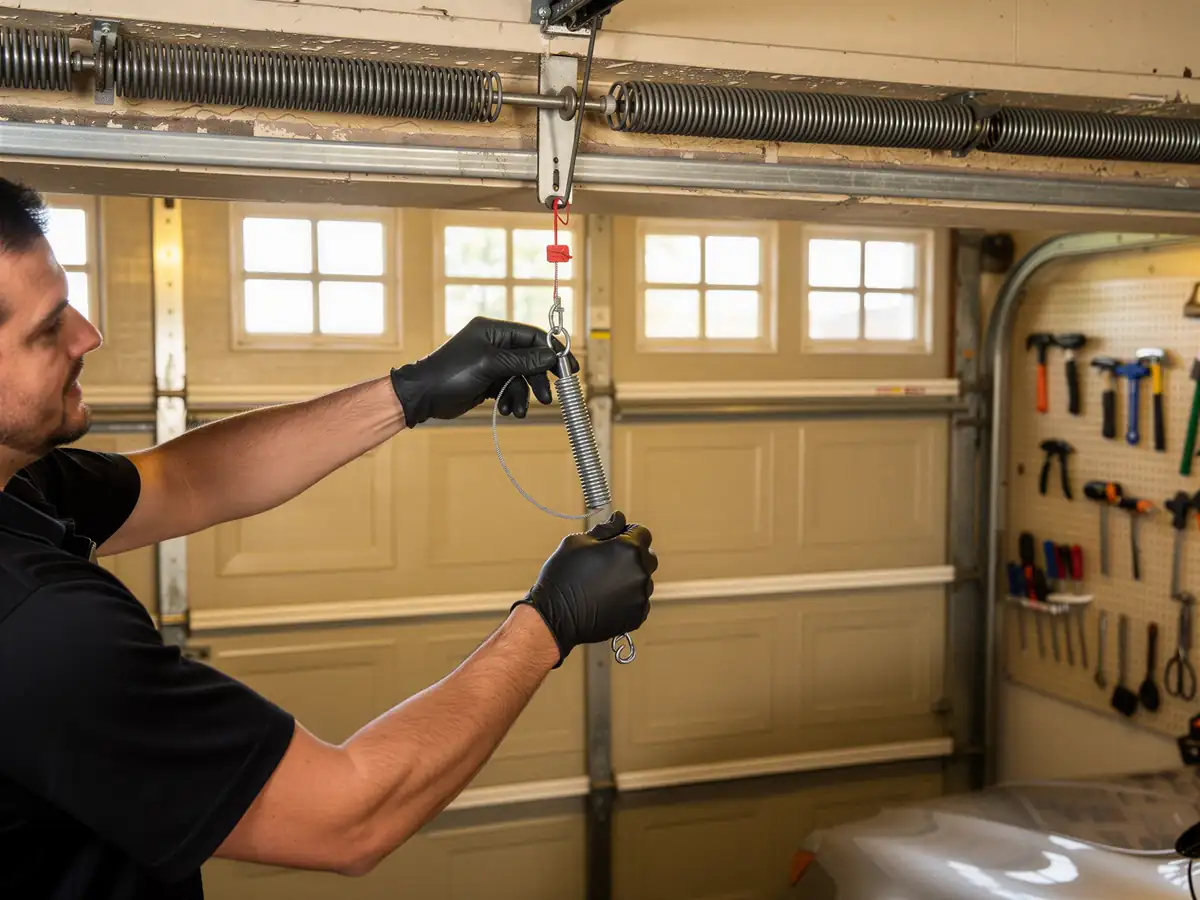
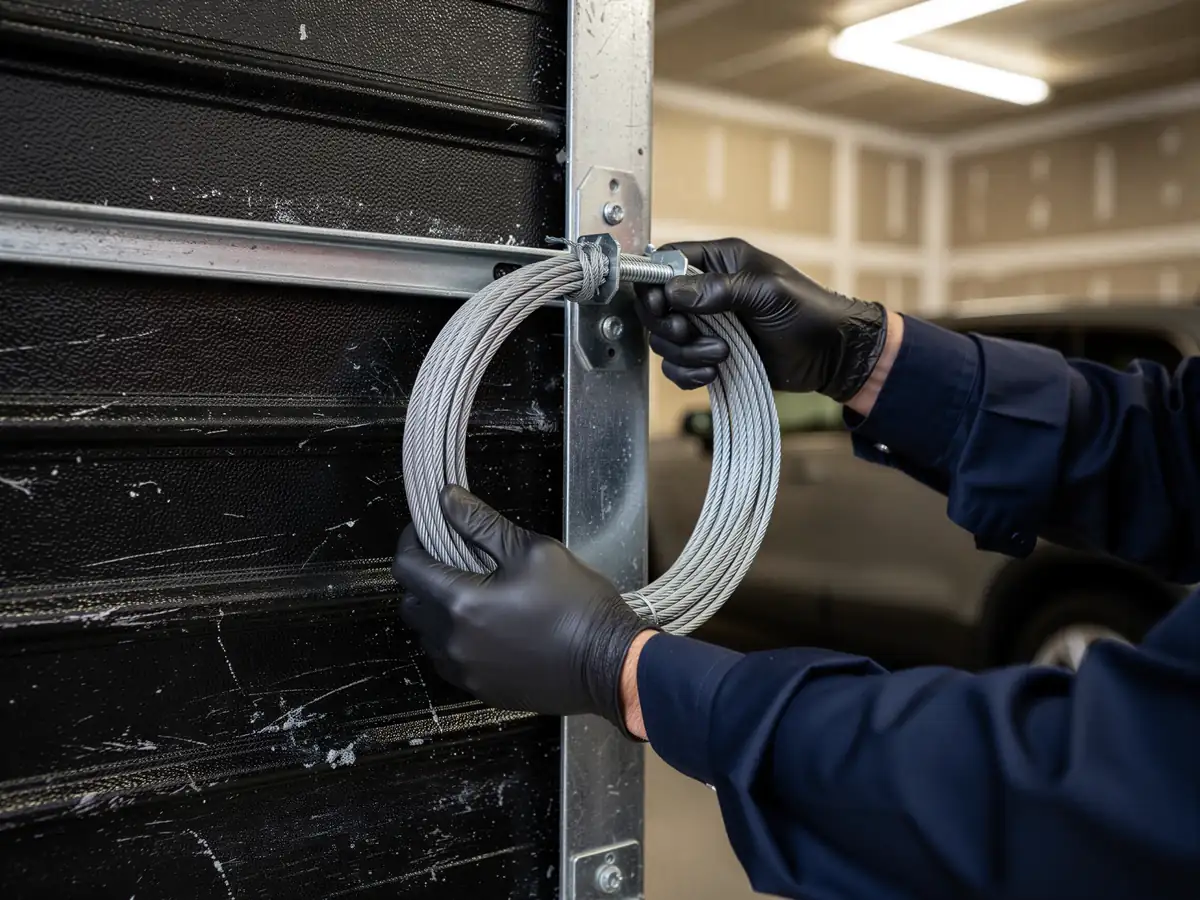
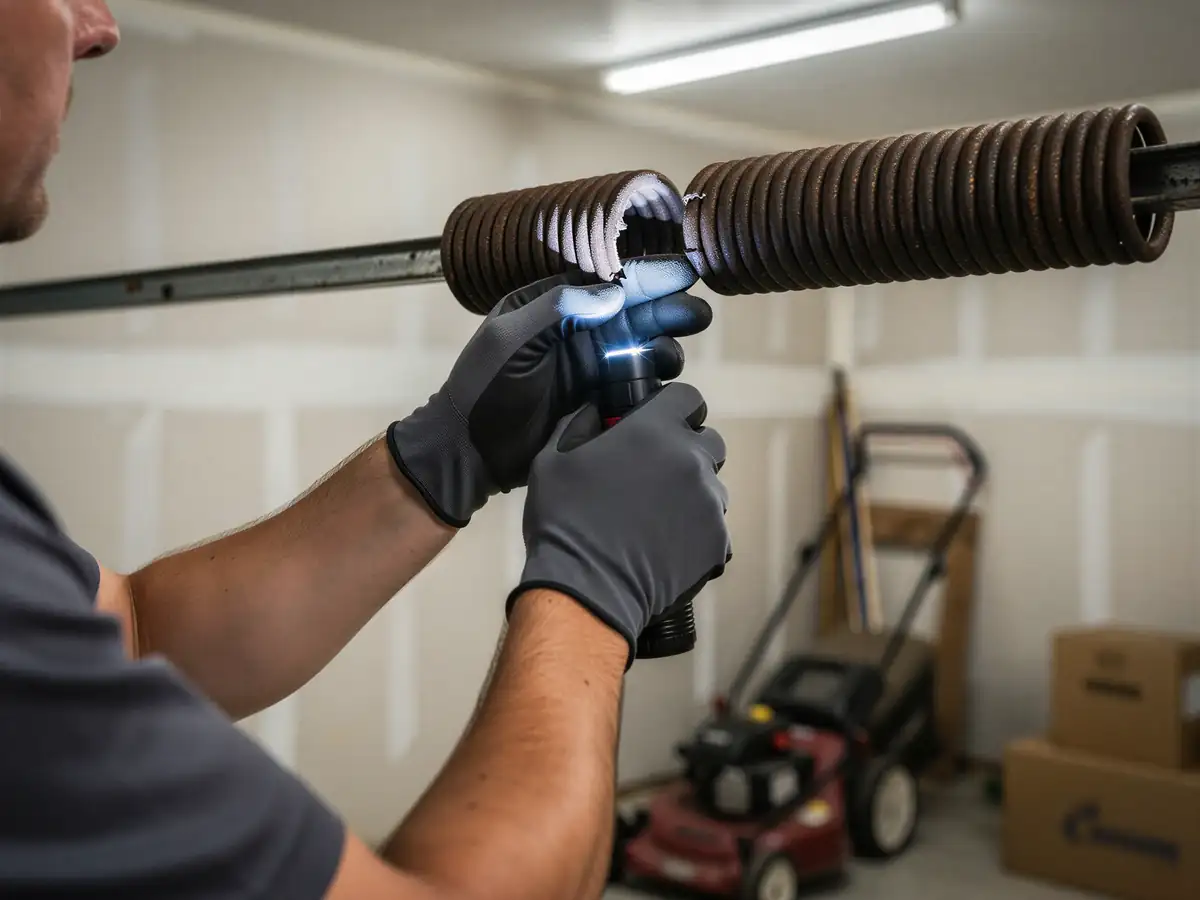
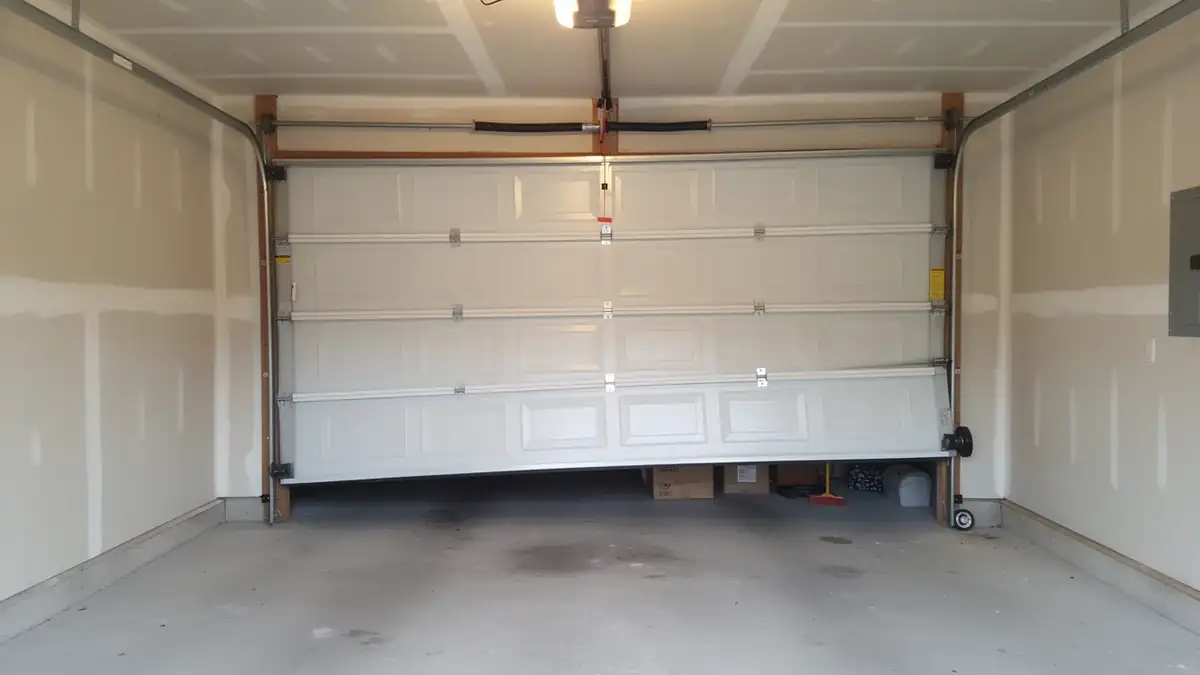
And all three connect back to how long the hardware has been in place. First, a bent track rail - usually from the door catching something on the way down, or from a bracket working loose and letting the rail sag. Second, broken or stretched rollers, which on a house built before the 2000s are often the original nylon or steel rollers, well past the point where they roll smoothly. Third, cable or spring imbalance, where one side of the door is carrying more load than the other and pulls the panel sideways as it travels.
On the 1980s-90s stock that makes up most of the housing around here
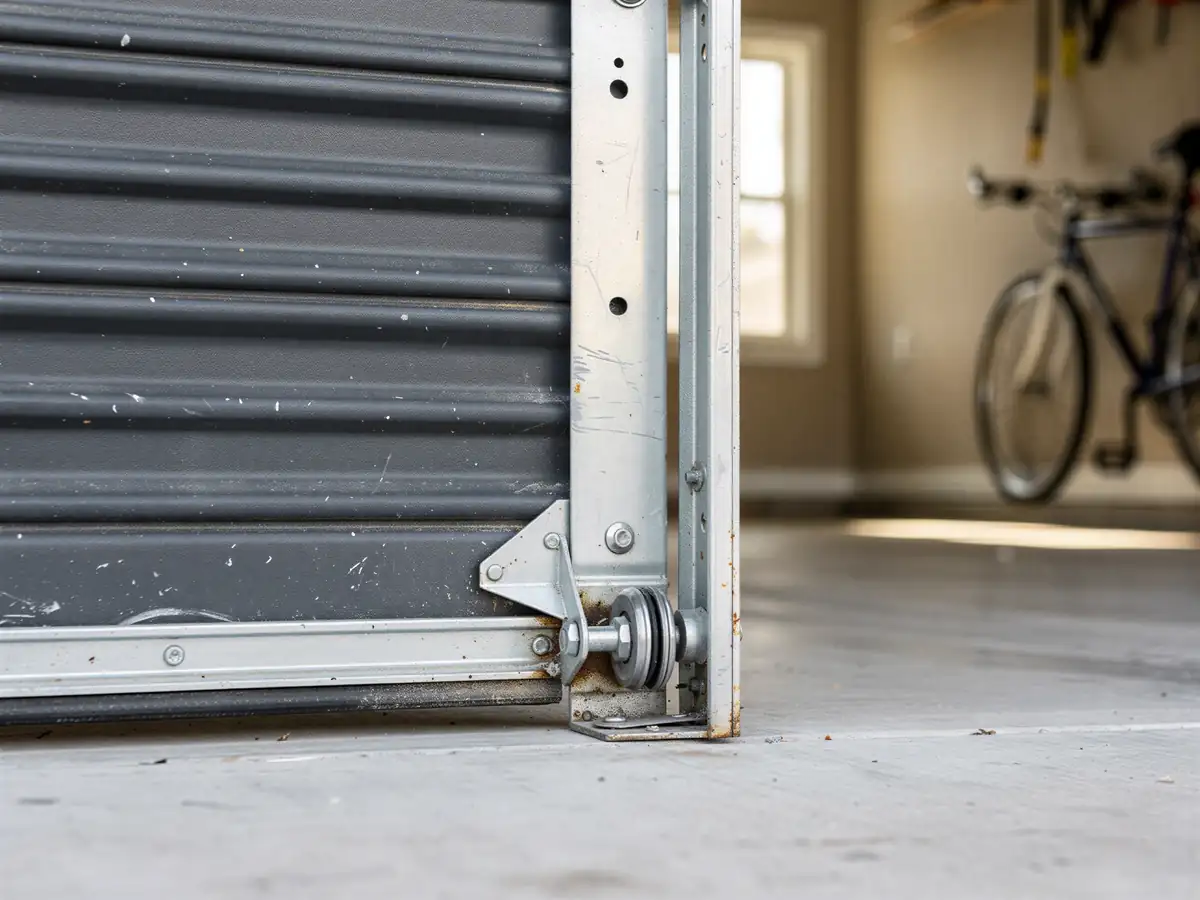
The common failure point is the bracket-to-jamb connection working loose over time rather than a single dramatic event. The door doesn't jump the track all at once - it walks a little further off center with every cycle until one day it binds hard or drops a roller completely.
Checking It Yourself
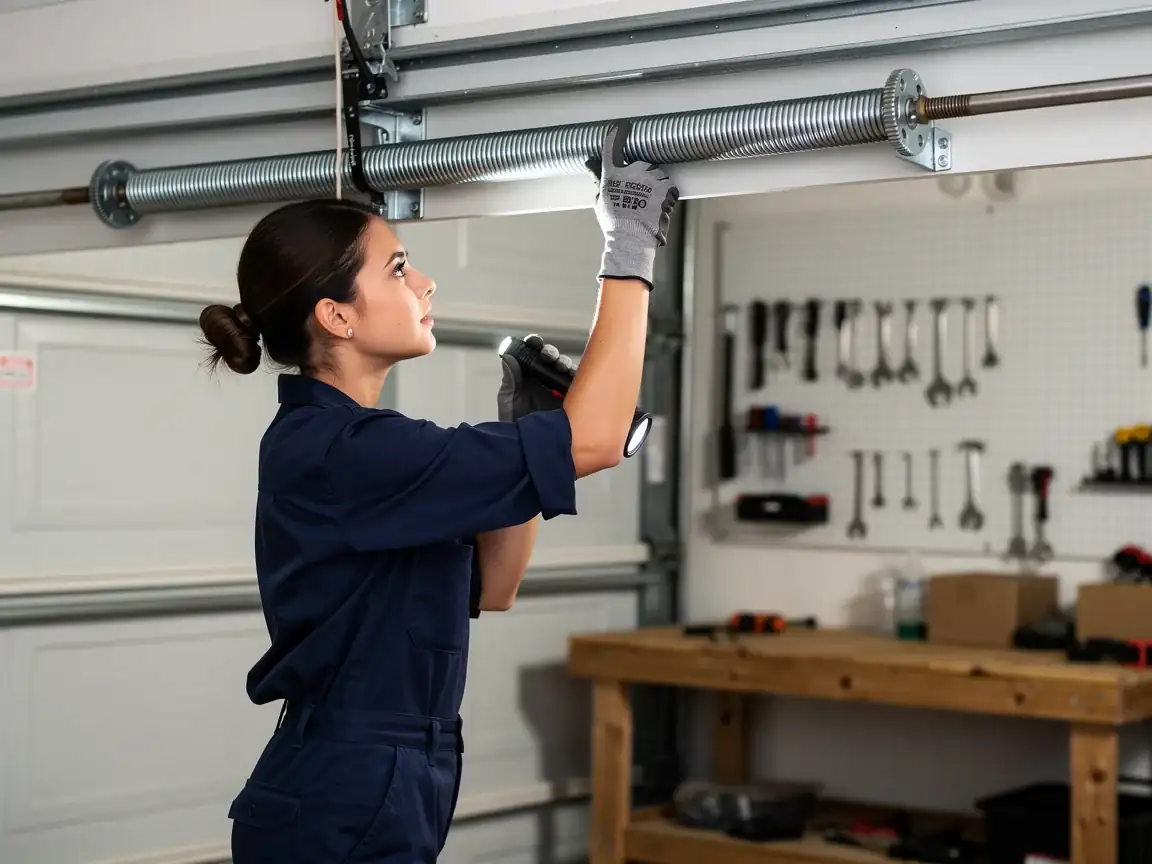
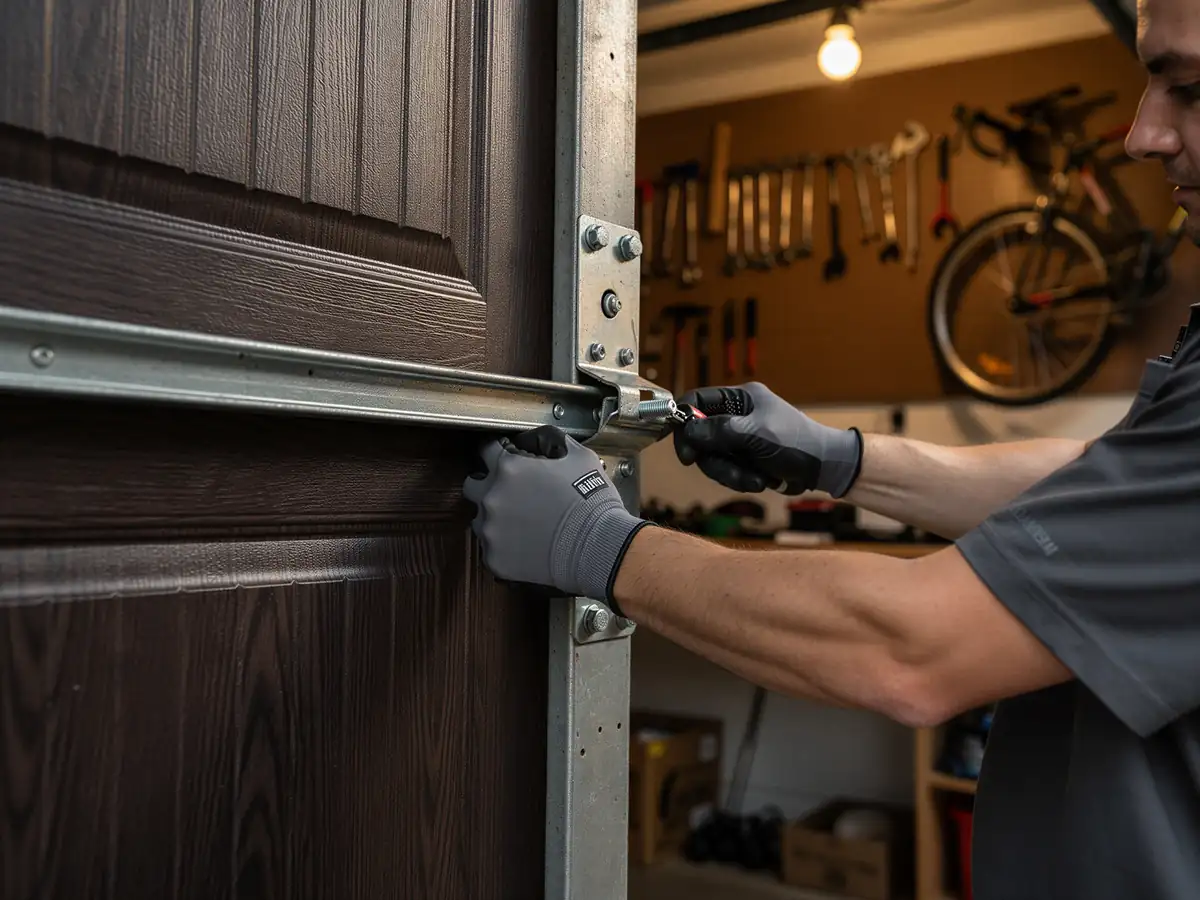
Before you call anyone, look at the track itself. Stand to the side and sight down the rail from the floor to the header - any kink, gap, or spot where the rail pulls away from the wall bracket tells you where the problem is. Check the lag bolts holding the brackets to the jamb; if you can wiggle a bracket by hand, that's your answer.
Next, look at the rollers where they sit in the track. Cracked, flat-spotted, or visibly worn rollers need replacing before you do anything else - running a door on bad rollers is what bends track in the first place.
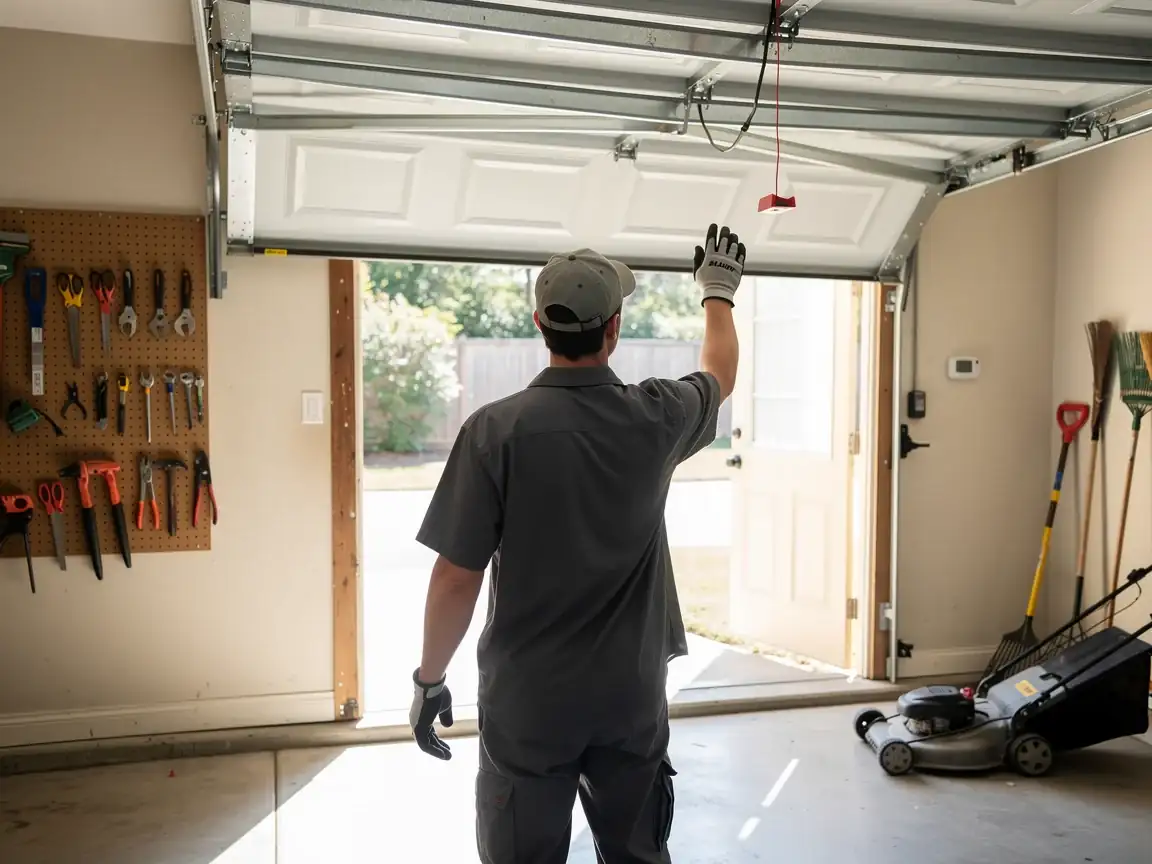
Here's the limitation: if the track is bent more than slightly, don't try to bend it back yourself. A rail that's kinked at a bracket point usually needs replacing, not straightening, and a door under spring tension is not something to work on alone. That part of the job we do, not talk you through.
Season by Season
In a moderate-cold climate, the stress on track alignment isn't steady through the year - it peaks at the transitions. Early winter, when the ground and jamb framing go from wet fall weather into the first hard freezes, is when brackets that were already a little loose finally let go. Late winter into spring, as the frost comes out of the ground and the structure settles back, is the second wave - doors that ran fine all winter suddenly start rubbing or binding as everything shifts again.
Summer is the easy season for this kind of wear; the lumber's stable and the hardware isn't fighting expansion and contraction. That's the better time to get bracket bolts checked and retightened before the next freeze cycle starts the process over. On a house from the 1960s or 70s stock still common around Hopkins, that seasonal check matters more than it would on newer construction, simply because the hardware has had more decades to work loose.