The Symptom
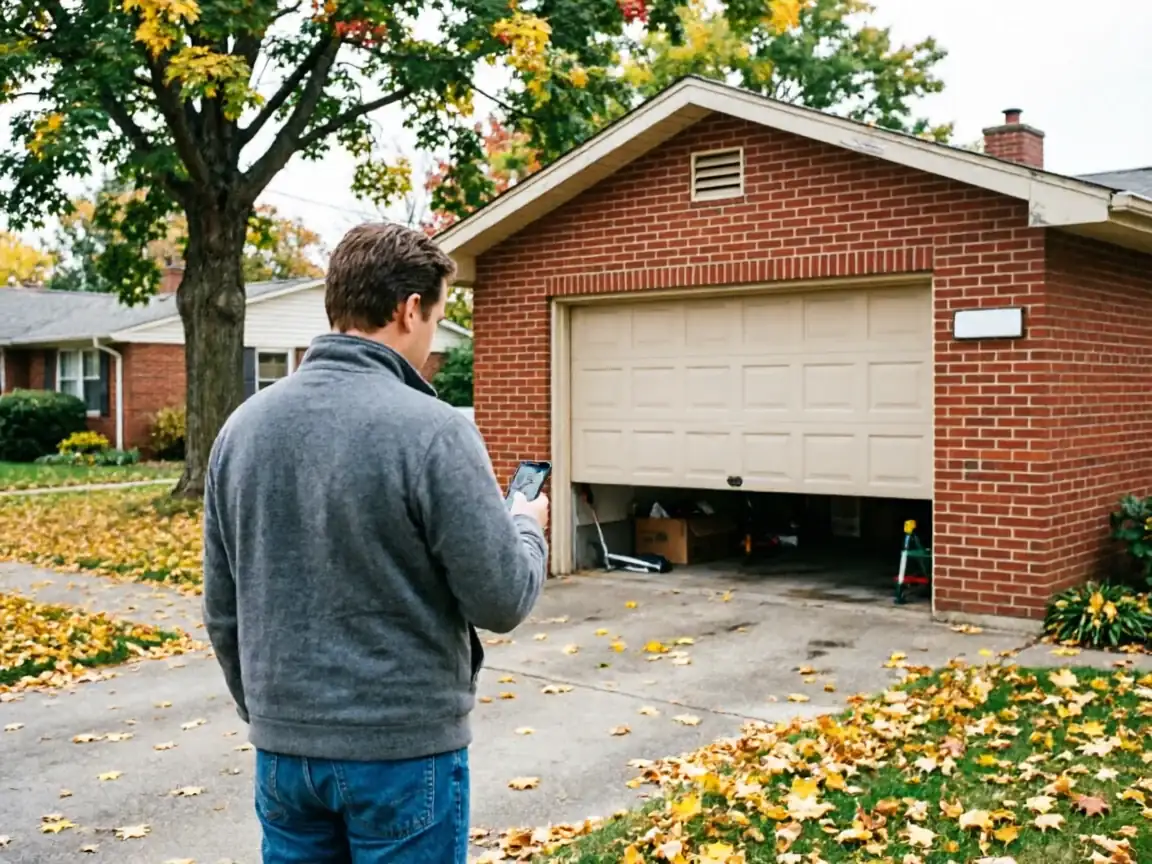
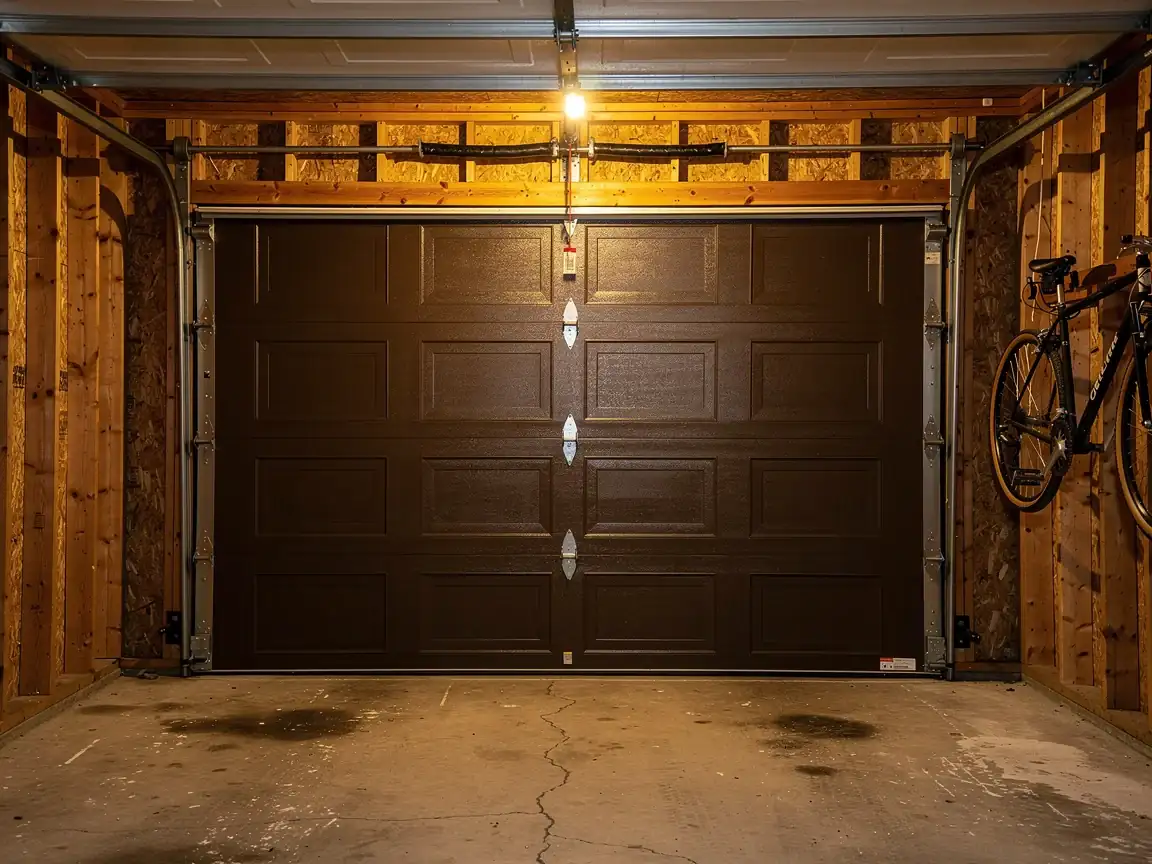
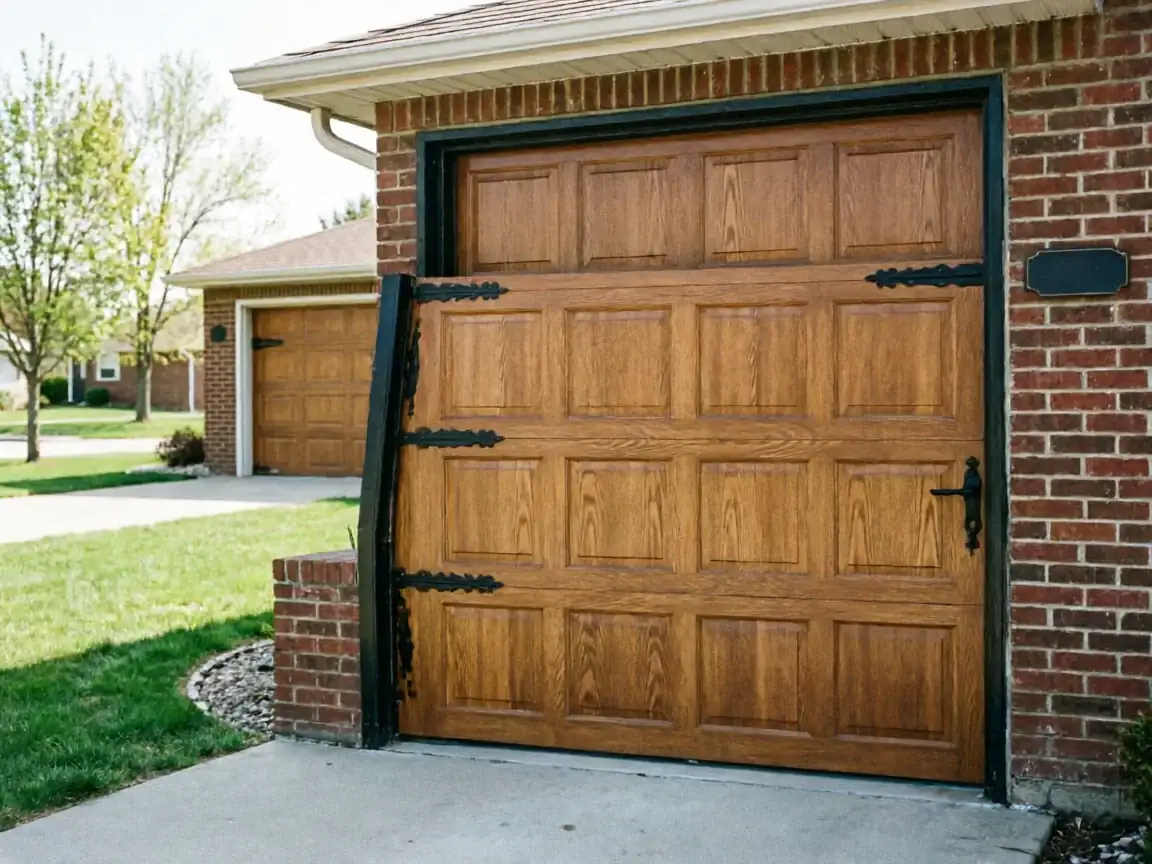
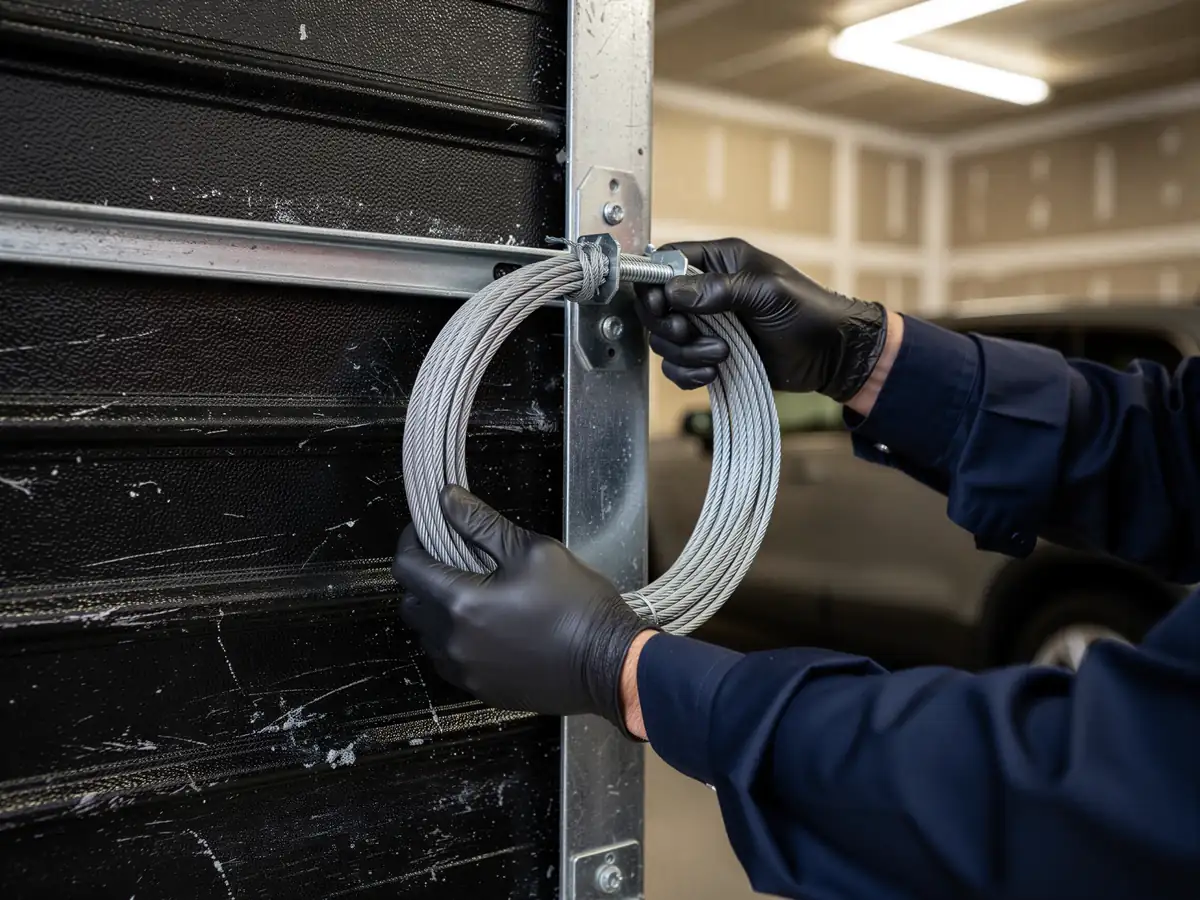
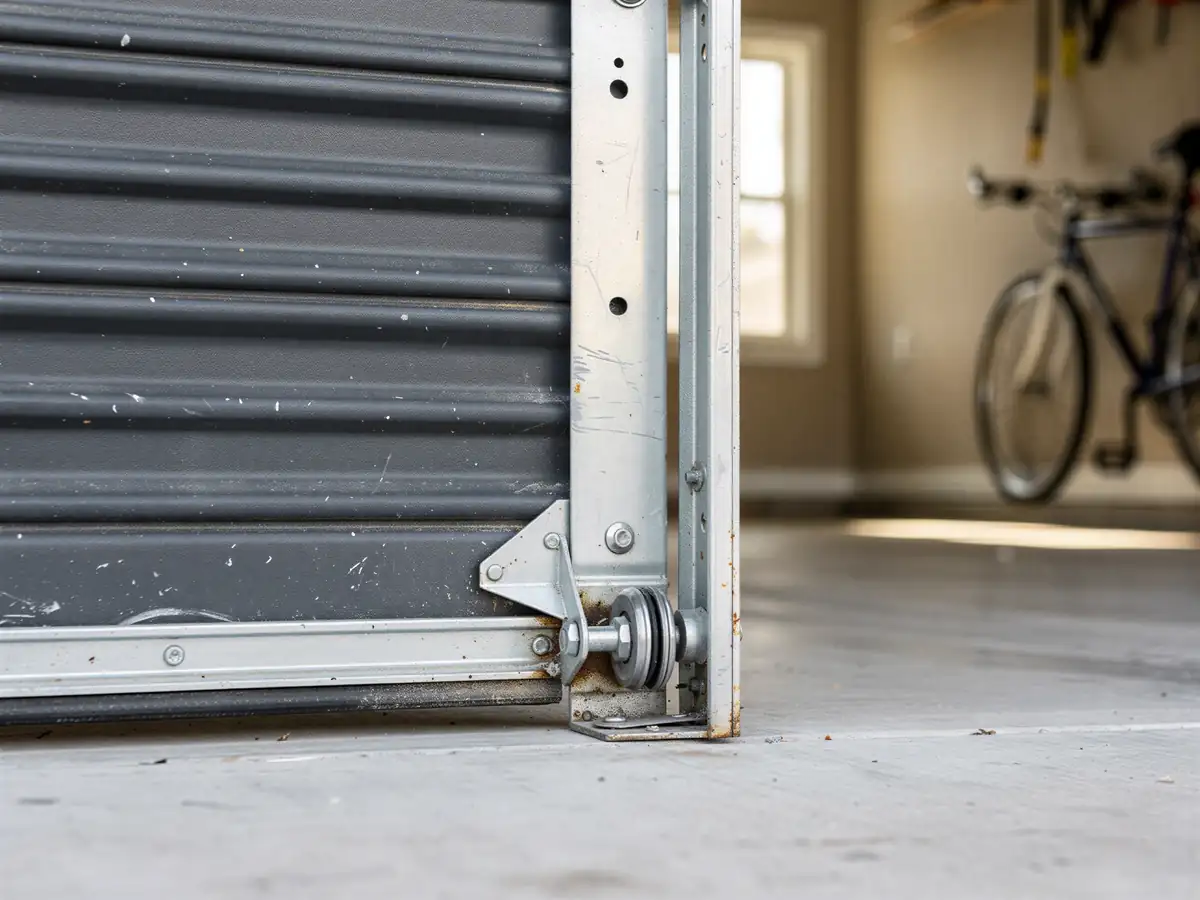
You hit the opener button and the door jerks, binds, or stops halfway with one side hanging lower than the other. Sometimes a roller has jumped the track entirely and you can see daylight between the wheel and the rail. Sometimes the door looks fine sitting shut but won't move at all because a cable has slipped off the drum and the door is leaning on the track instead of riding in it.
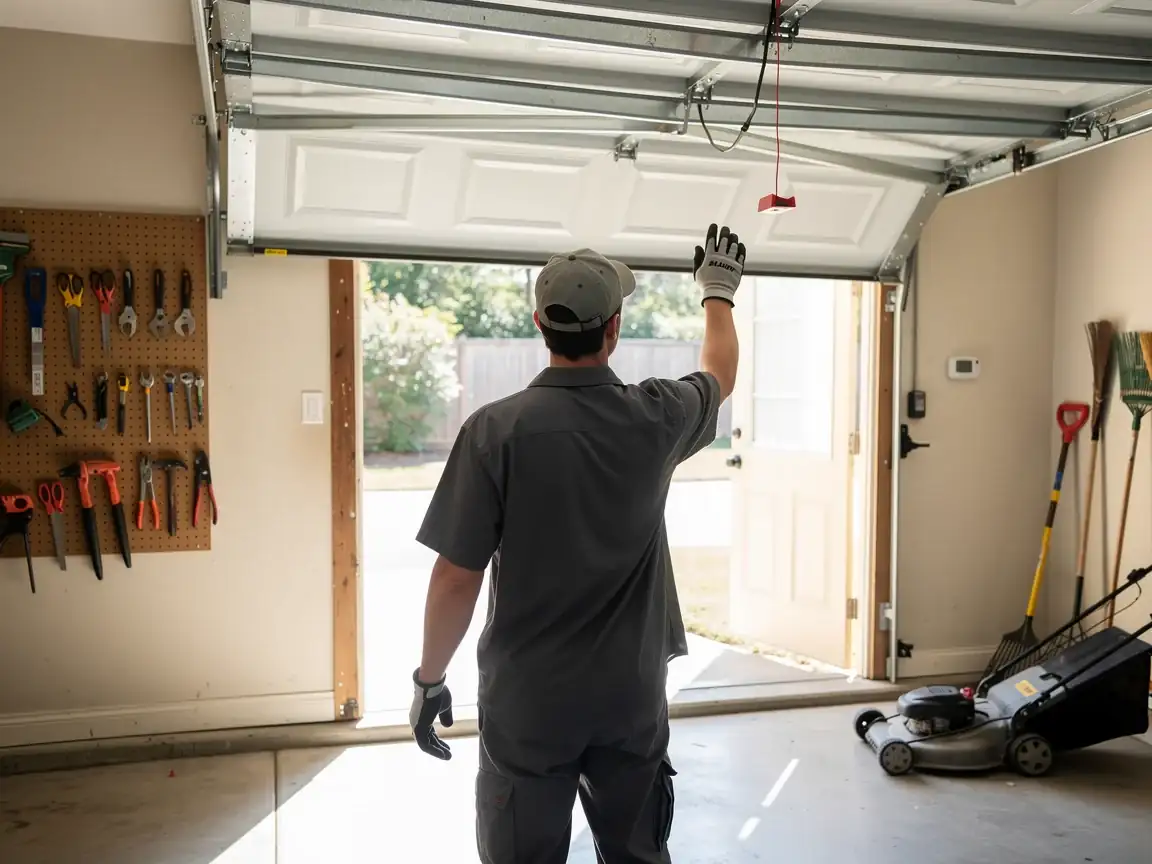
This isn't the same thing as a dead opener or a dead remote. An off-track door usually still has power to the motor - the chain or belt runs, but the door itself doesn't move cleanly, or it moves and grinds metal on metal. If you can see a bent section of track, a roller sitting outside the rail, or a gap where the door has pulled away from one side, stop running the opener. Forcing it usually bends the track further or pulls the bracket out of the framing, which turns a track repair into a track-and-jamb repair.
A door that's merely noisy - squeaking rollers, a rattly chain - is a different problem with a different fix. Off-track specifically means the door has left the path it's supposed to ride in, whether from a snapped cable, a loose track bracket, or an impact.
What You Pay
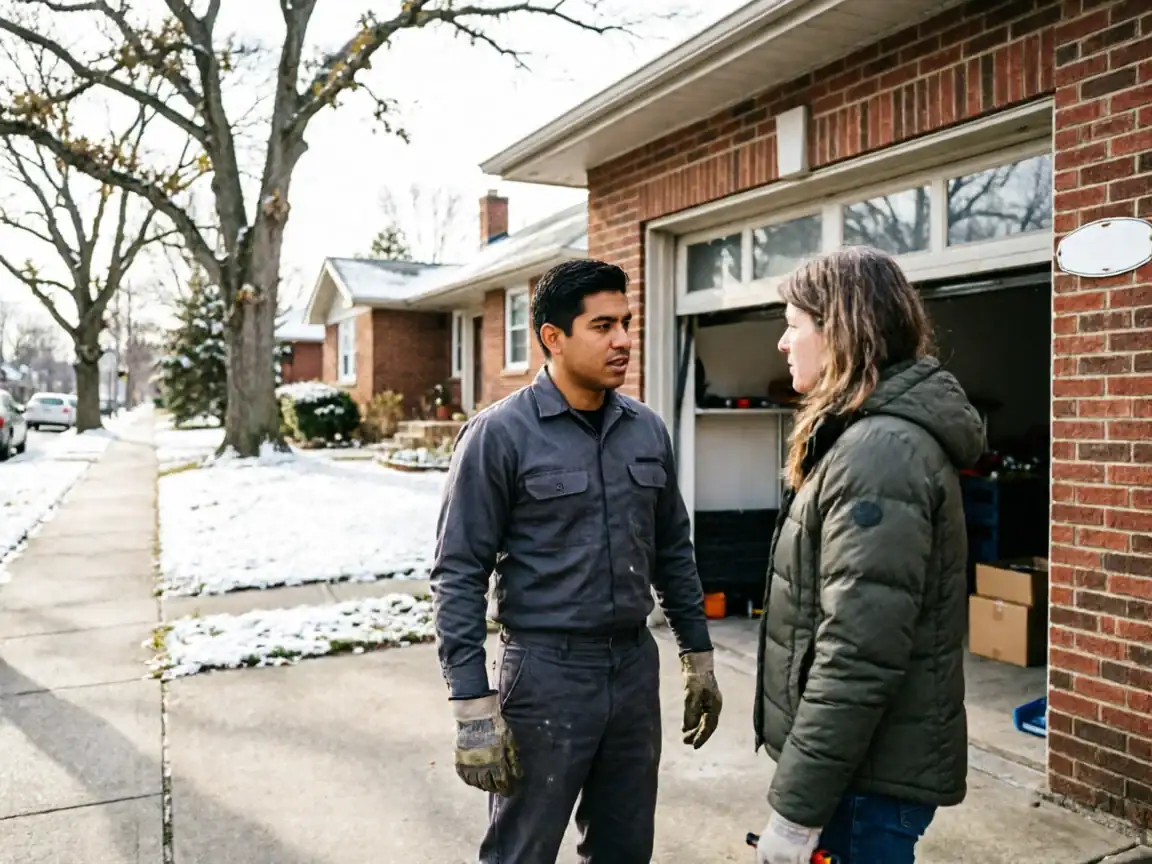
We don't quote a number without looking at the door
Because the range between a bent-bracket tightening and a full track-and-cable replacement is wide, and guessing on the phone does nobody a favor. What drives the cost is whether the track itself is bent or just misaligned, whether a cable or roller failed and caused the jump, whether the door is a standard single or a heavier double, and whether the bottom bracket or hinge took damage when the door came off.
A straightforward realignment with no broken parts is the cheapest visit
Once a cable has snapped or a roller has shattered, you're paying for parts plus labor, and if the track bent enough to need replacing on one or both sides, that's a bigger job than most people expect from what looked like a simple jammed door.
The honest limitation here
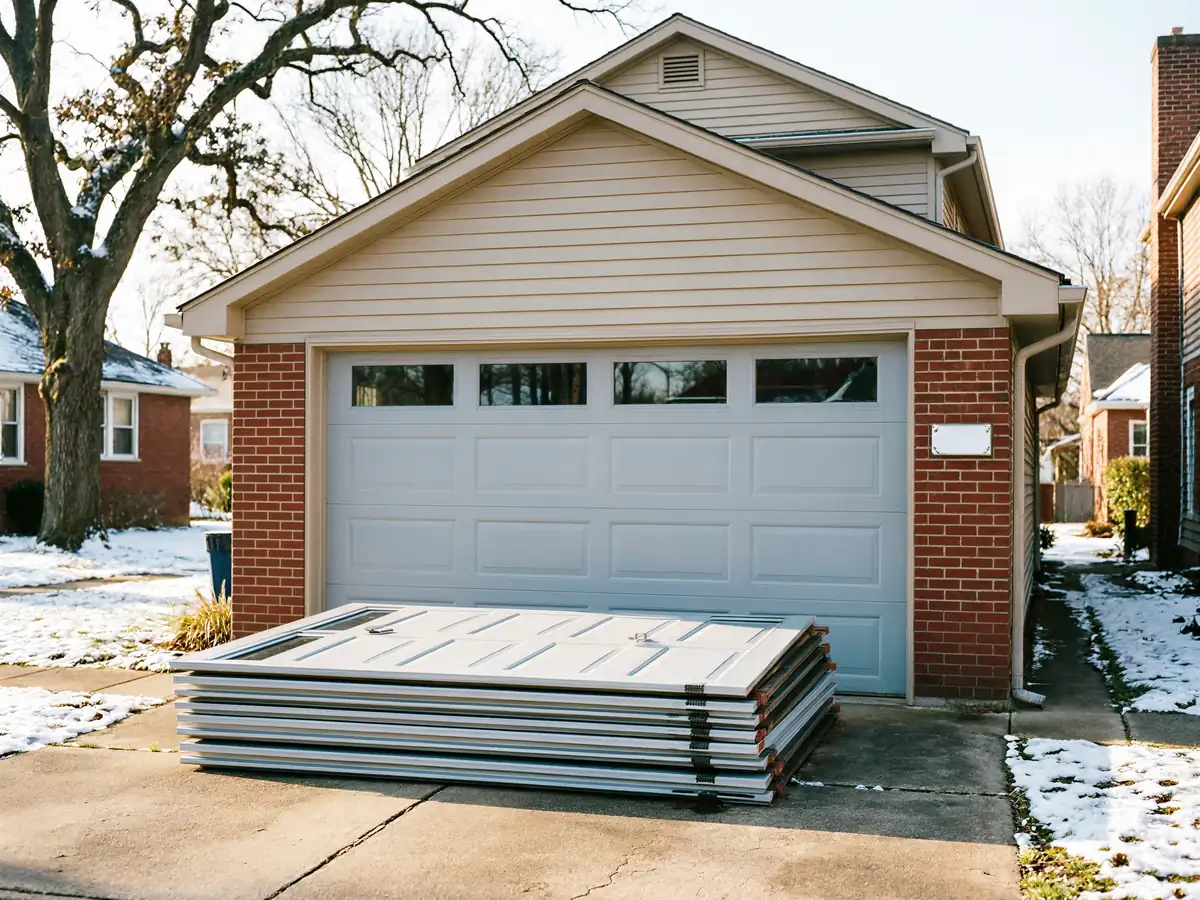
If your door is original to a house built in the 1960s or 70s and the track hardware is end-of-life, we'll tell you when replacing the track assembly makes more sense than patching a 50-year-old rail section again next winter. Patching old hardware repeatedly costs more over time than doing it once.
Why This Fails Locally
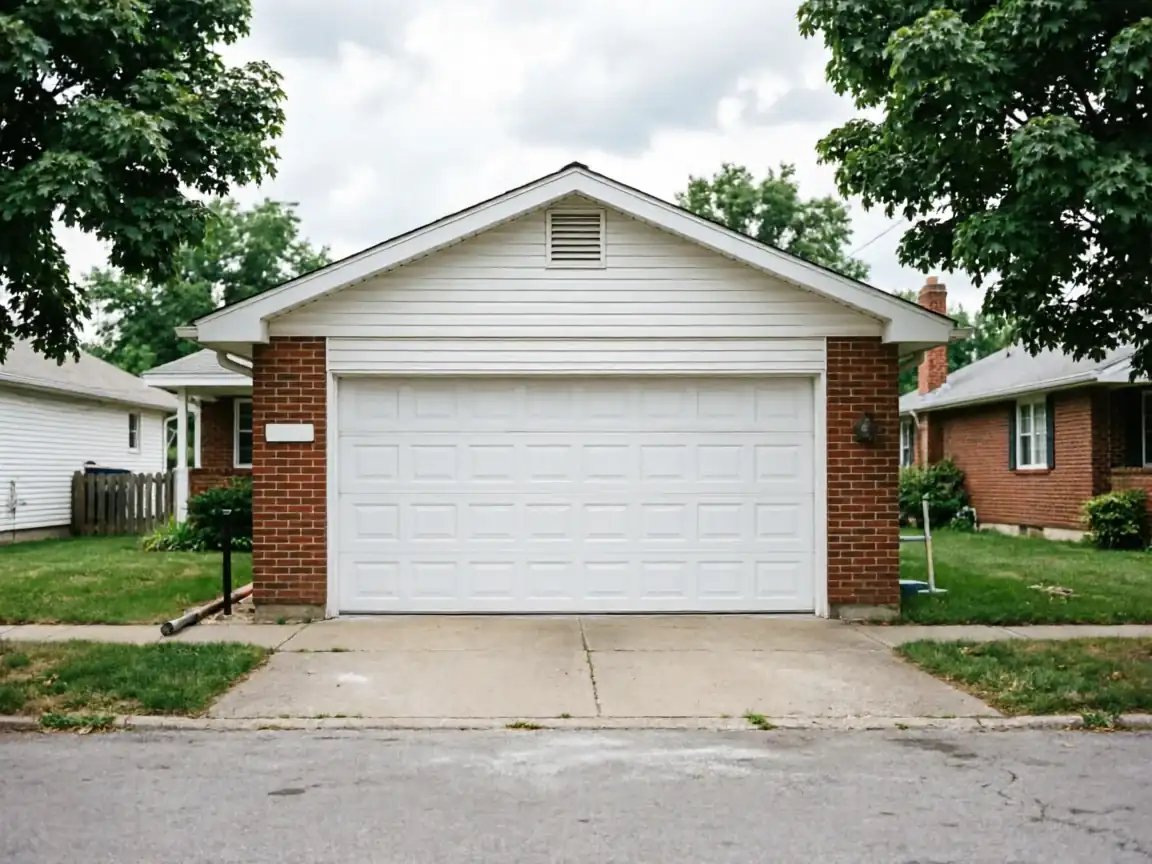
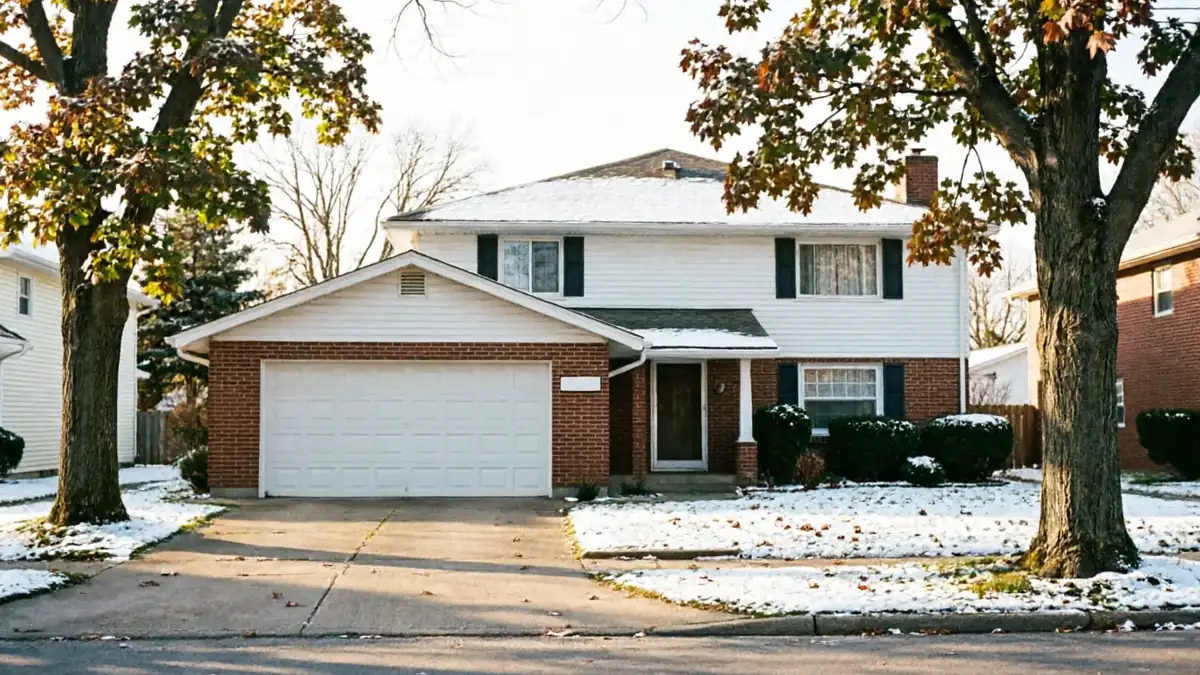
Most garage doors in this service area sit on houses built between 1957 and 1984, the heart of the ranch and split-level boom here, and that era of construction used lighter-gauge track and bracket hardware than what goes in today. Across the 93,593 households this company could reach, 55,318 are owner-occupied houses with an attached garage built in that same era, which means a lot of original or first-replacement track systems are now decades past when the mounting bolts were last checked.
In a cold-moderate climate band, the freeze-thaw cycle each winter works the track bolts loose faster than in warmer regions. Metal track contracts in deep cold and expands again on the thaw, and that repeated movement backs out lag screws in the jamb a little more each season. Add road salt and moisture tracked in off a car, and the lower track sections corrode at the mounting points faster than the rest of the rail.
Towns from Woodland six miles out to Greenfield eighteen miles out all sit in the same cold-moderate band, so the same track-bolt problem shows up across the whole service area, not just here. It's a climate-and-age combination, not a one-house fluke.
The DIY Question
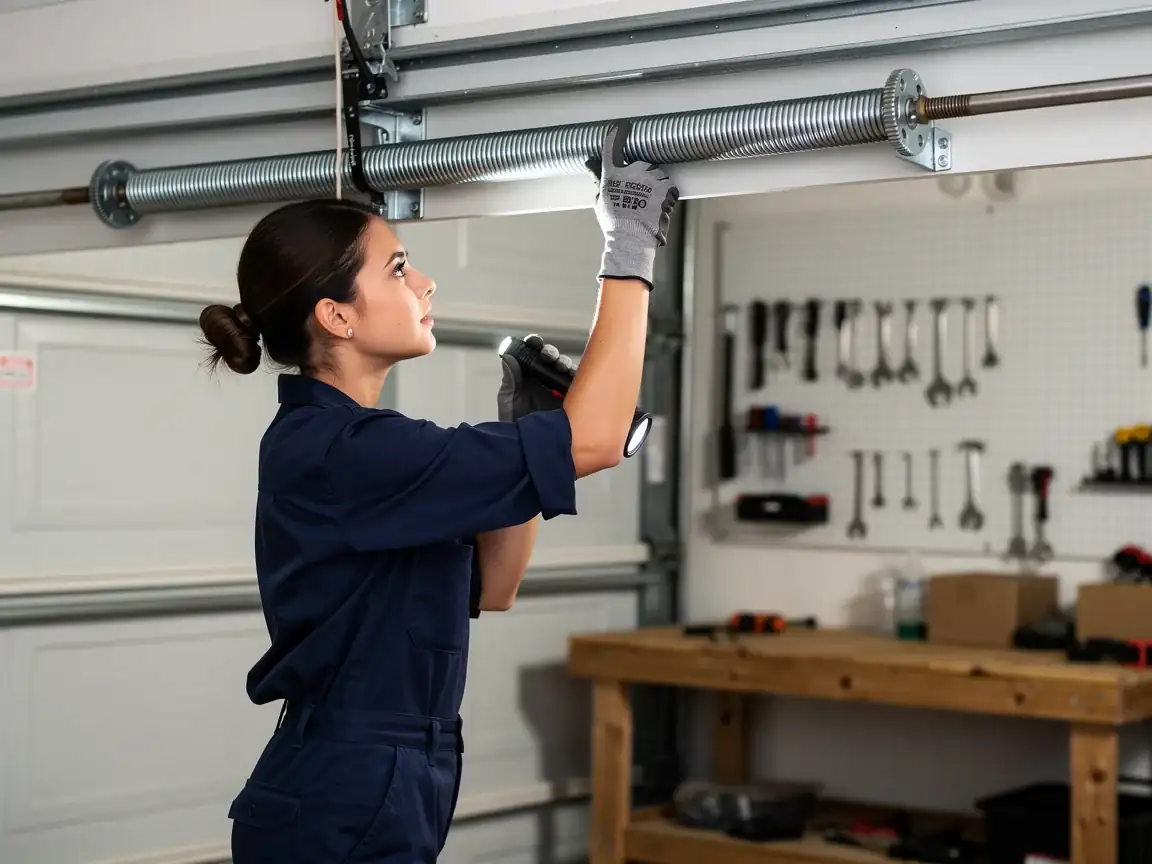
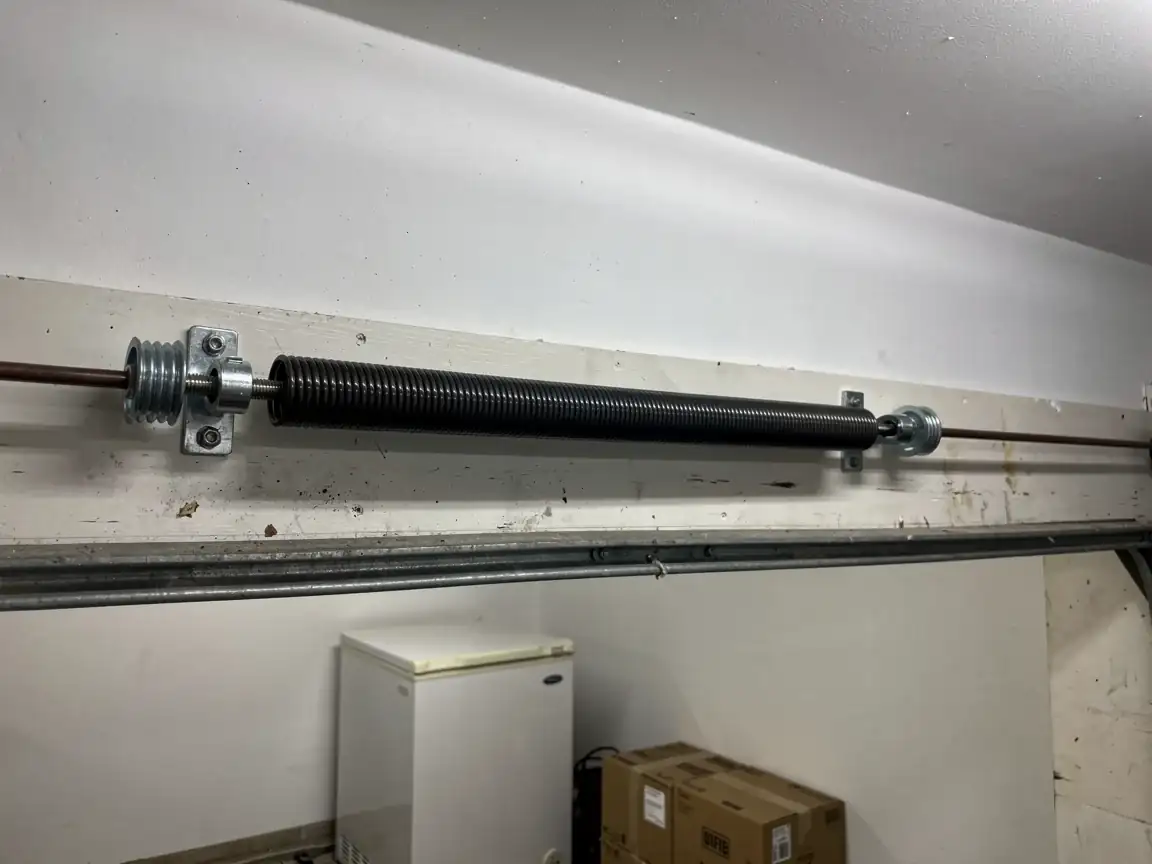
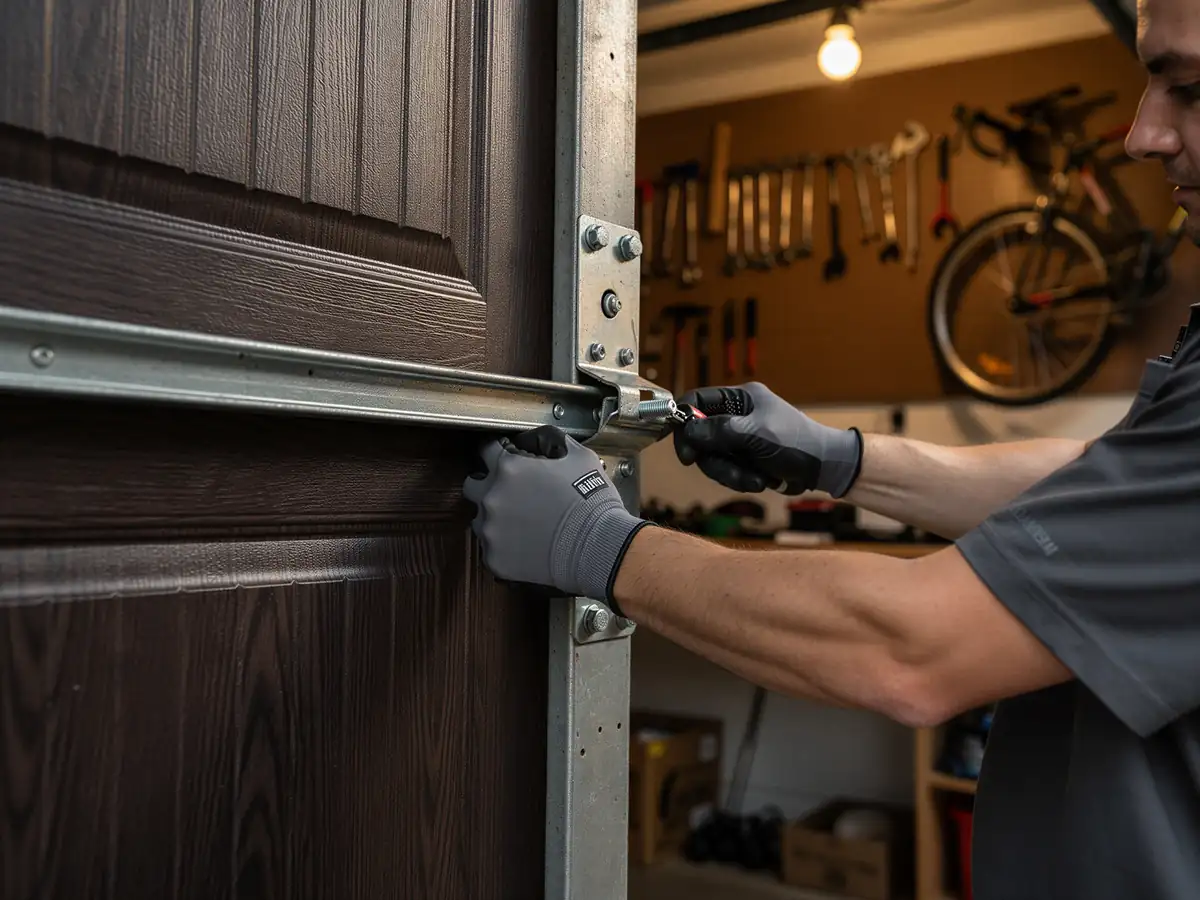
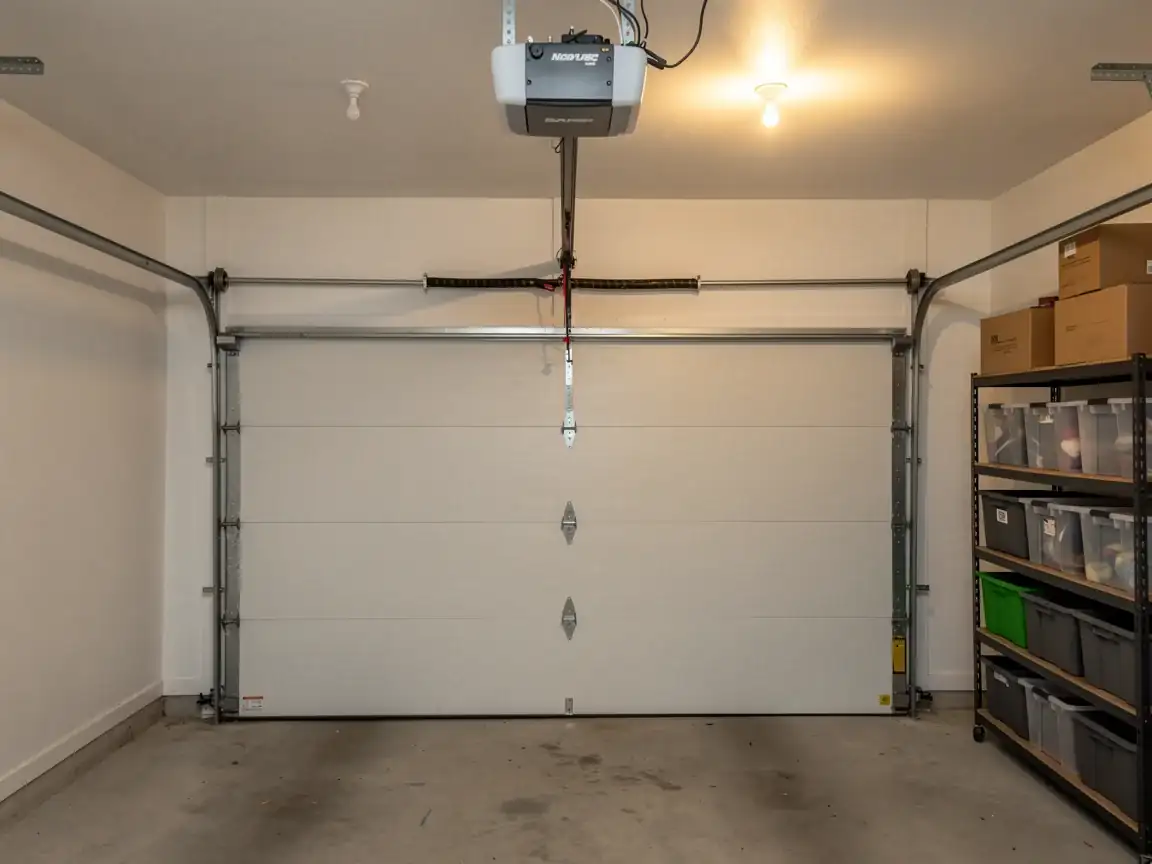
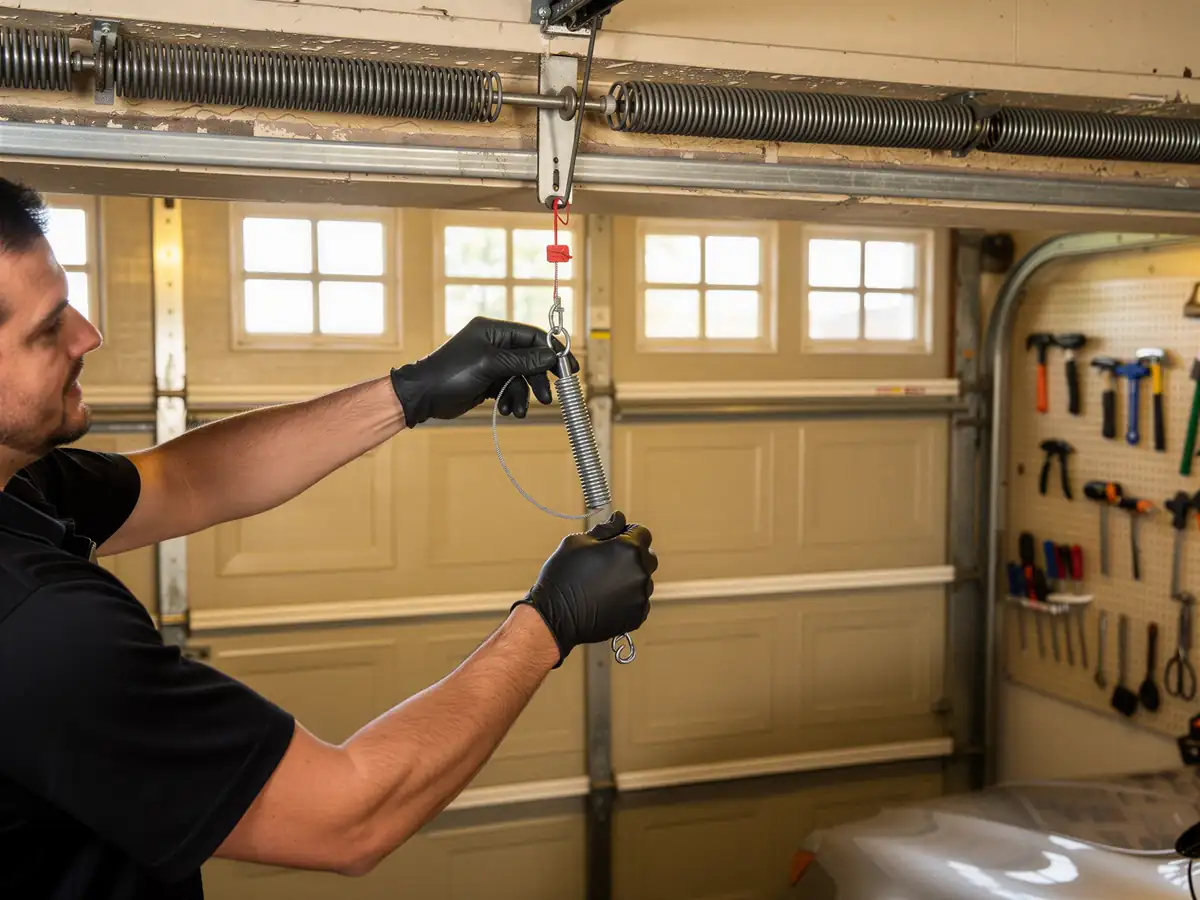
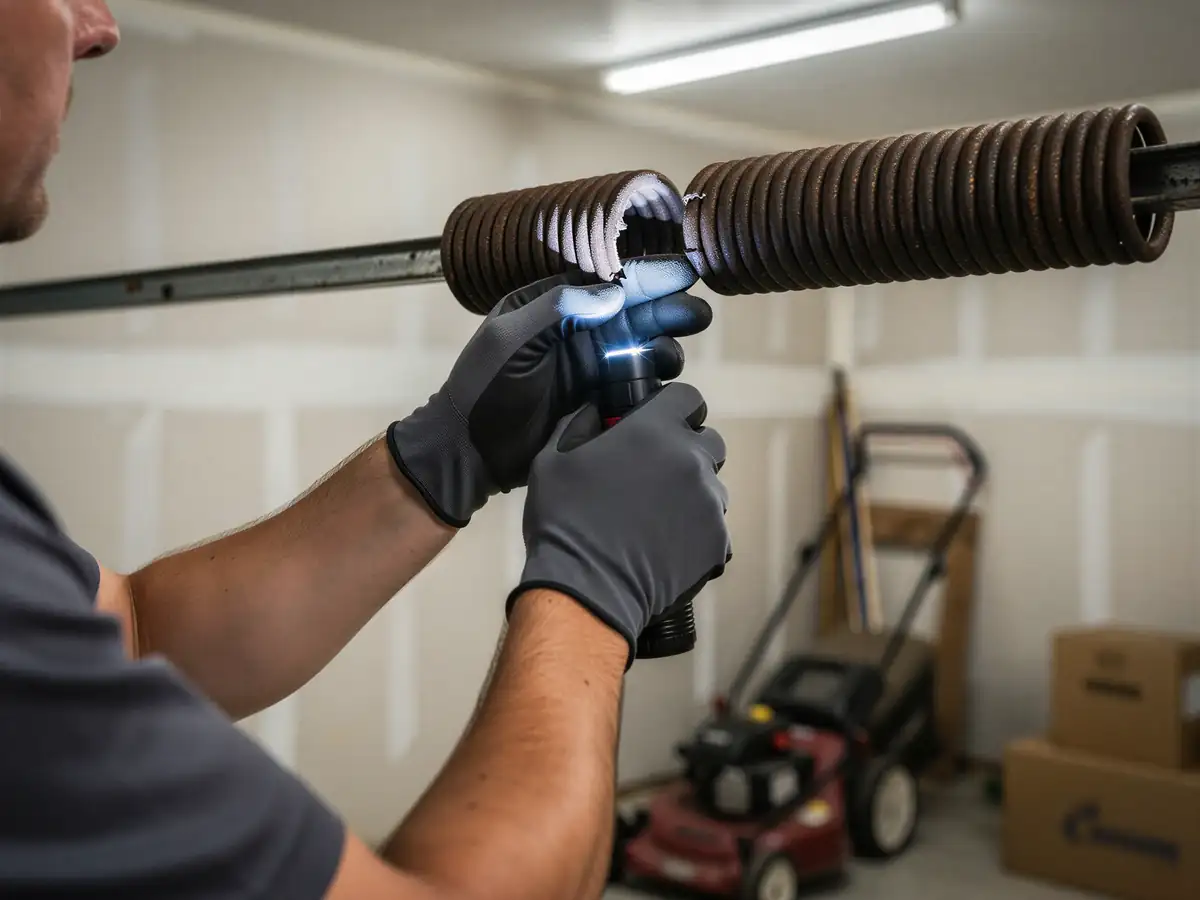
Tightening a loose track bracket with a wrench, if the track itself isn't bent, is something a reasonably handy homeowner can do safely. That's about where the DIY line stops. If a cable has snapped, do not touch it - a cable under tension on a torsion or extension system can whip hard enough to cause a real injury, and resetting a dropped cable without releasing spring tension first is one of the more common ways people get hurt working on garage doors.
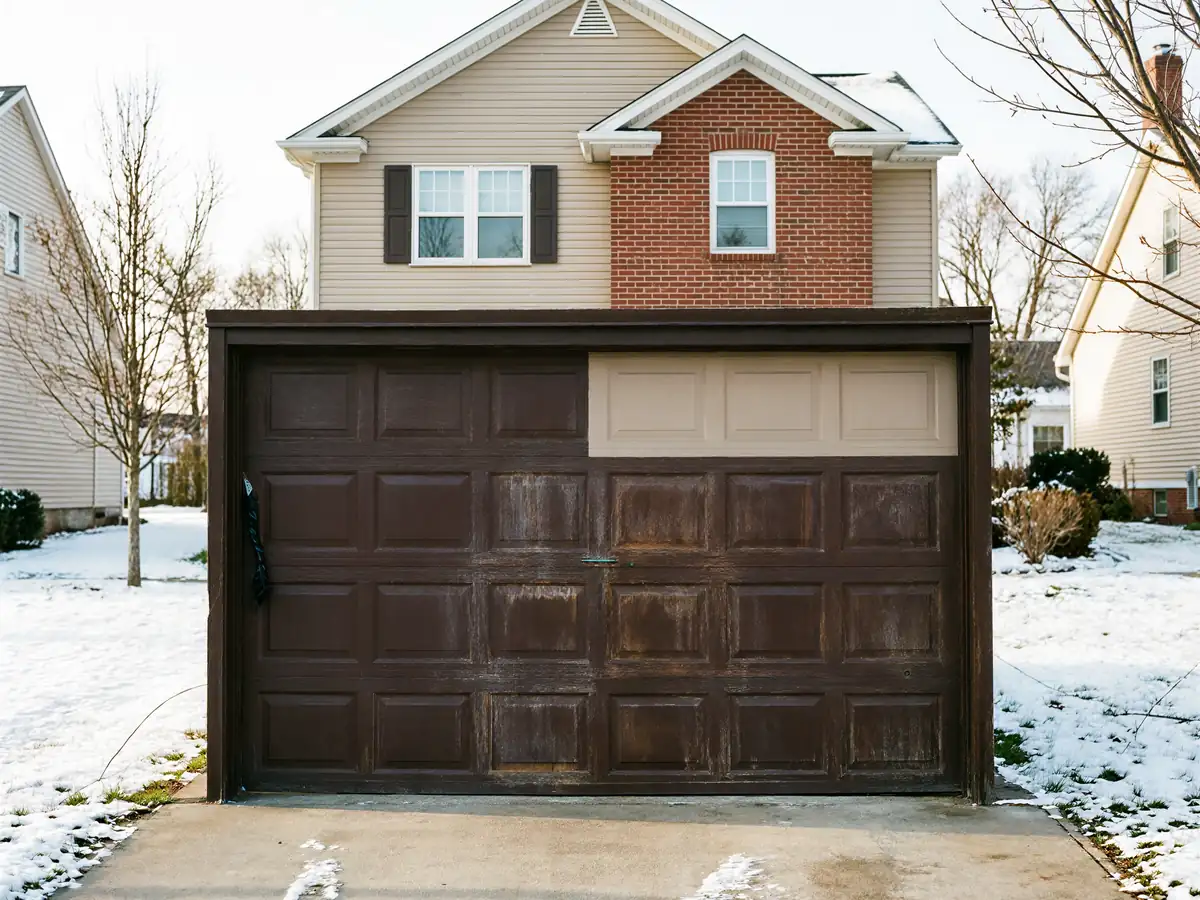
If the door came off track because of an impact - a car bumper, a stray basketball, ice buildup pushing it sideways - check for a bent track before you do anything else. A bent rail that gets forced back into service will jump again, usually worse, and usually at a less convenient time.
If you can lift the door manually, with the opener disconnected, and it moves smoothly without binding, the track is probably not the problem - look at the rollers instead. If it won't budge or binds hard in one spot, leave it and call. A median household income of $116,500 across this area means most owners here choose to replace worn track hardware once rather than keep patching the same weak point every winter.