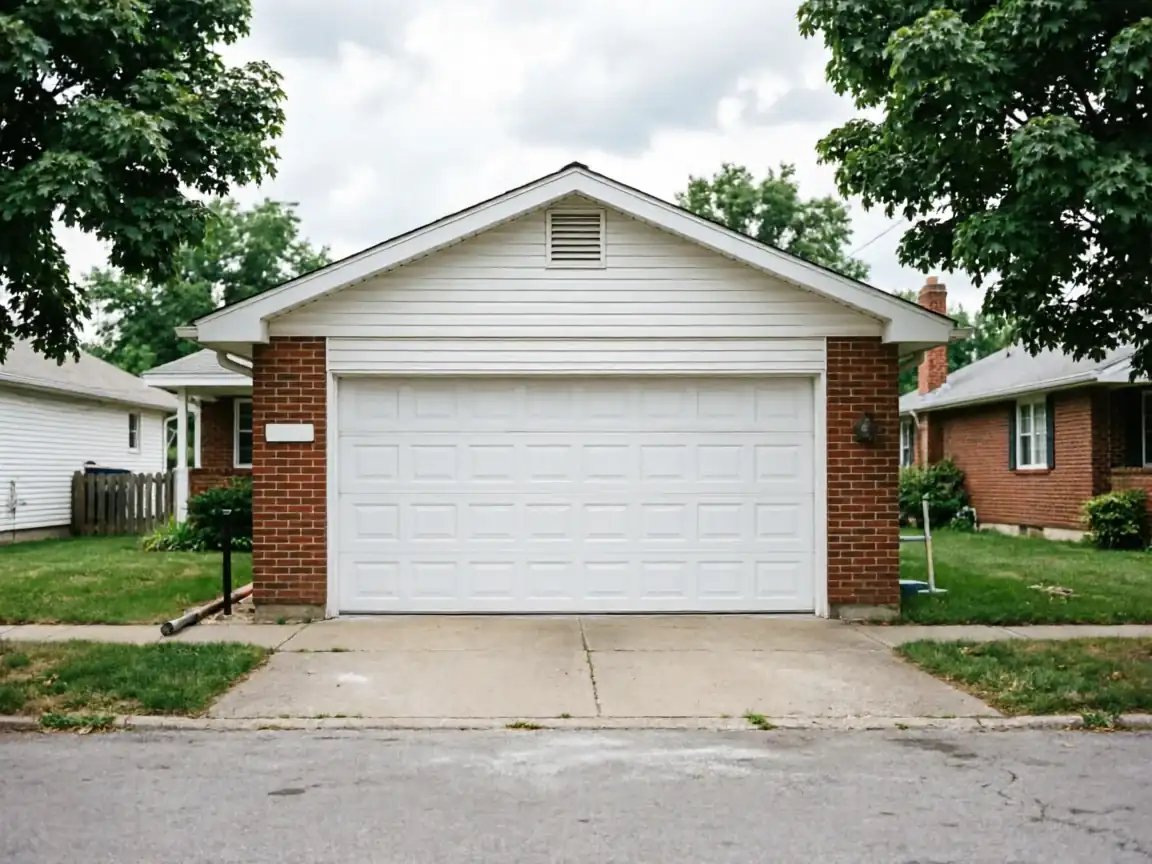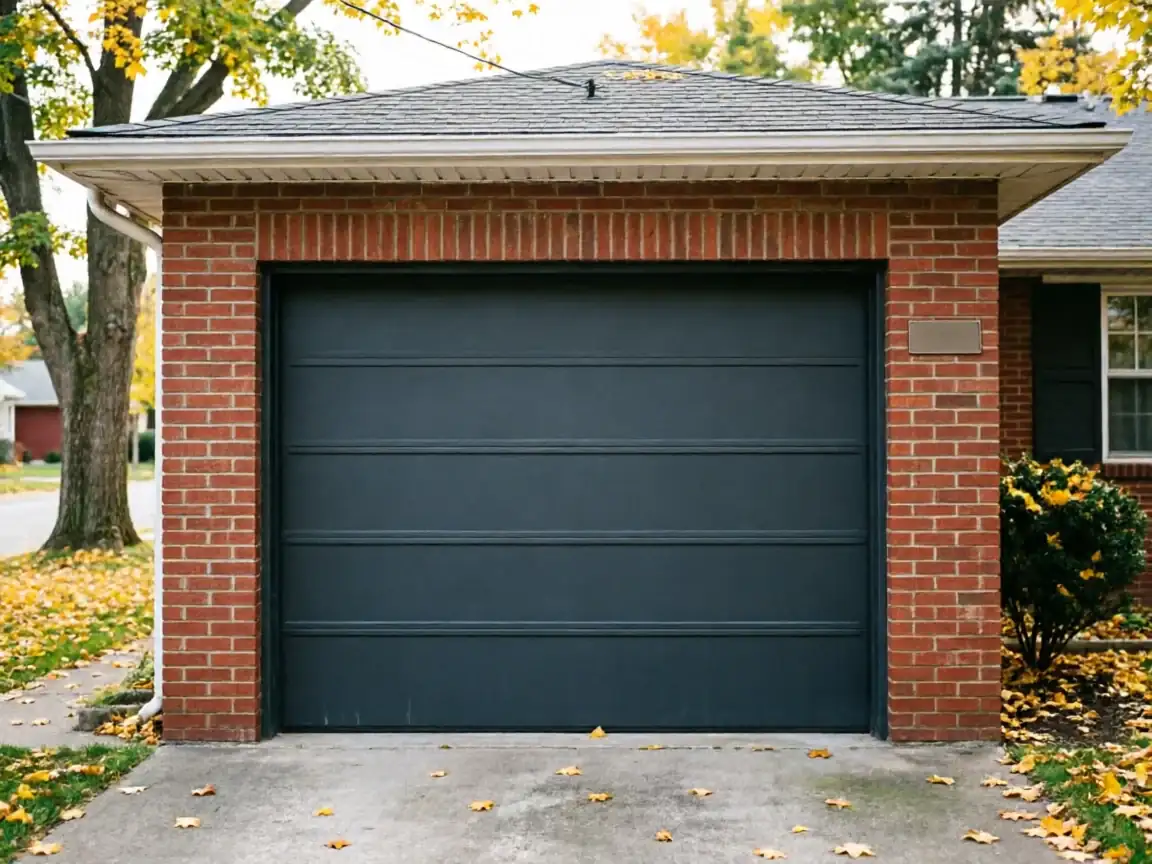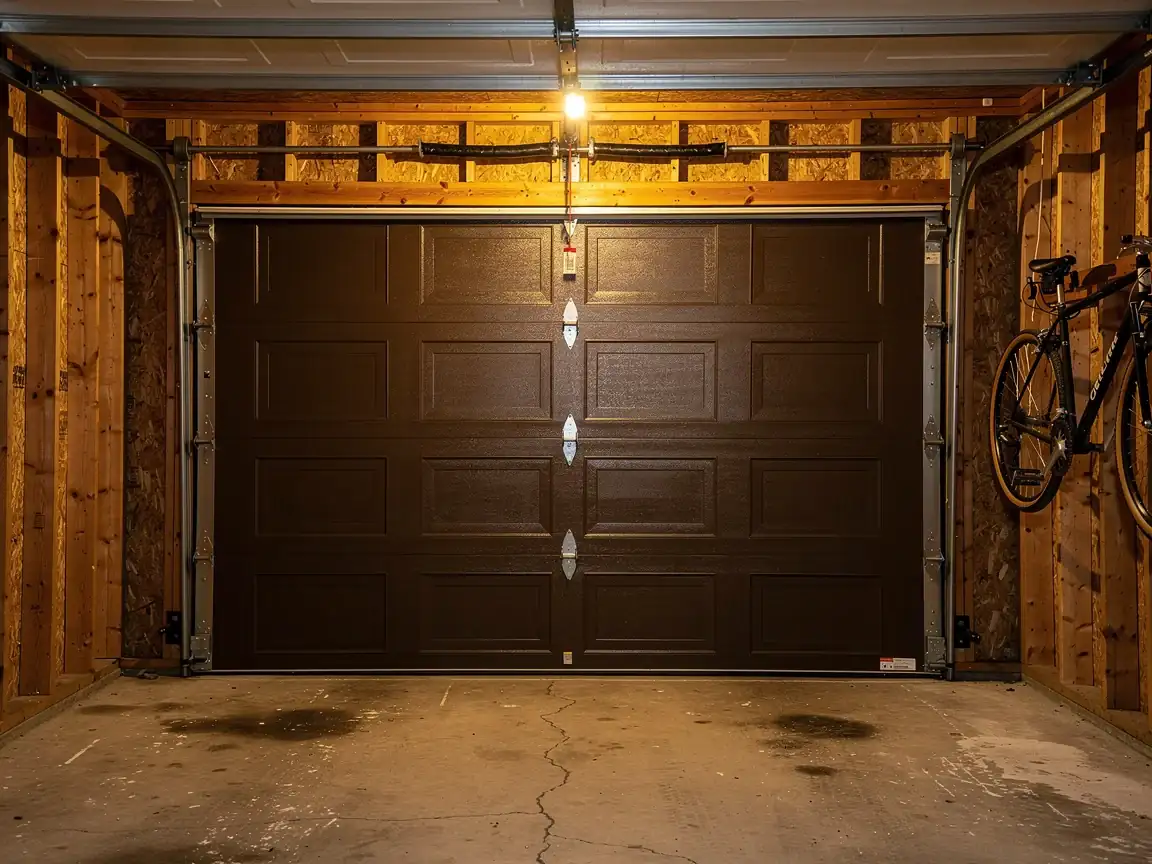
The Symptom
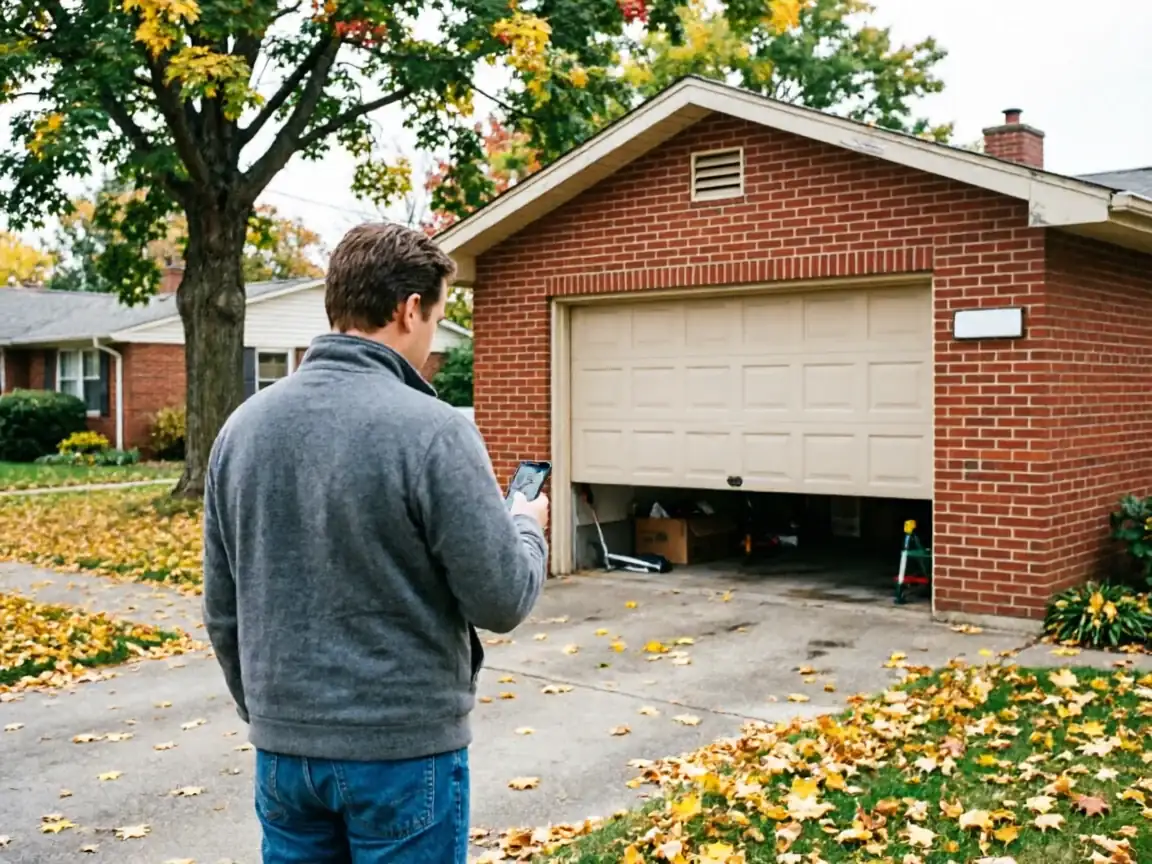
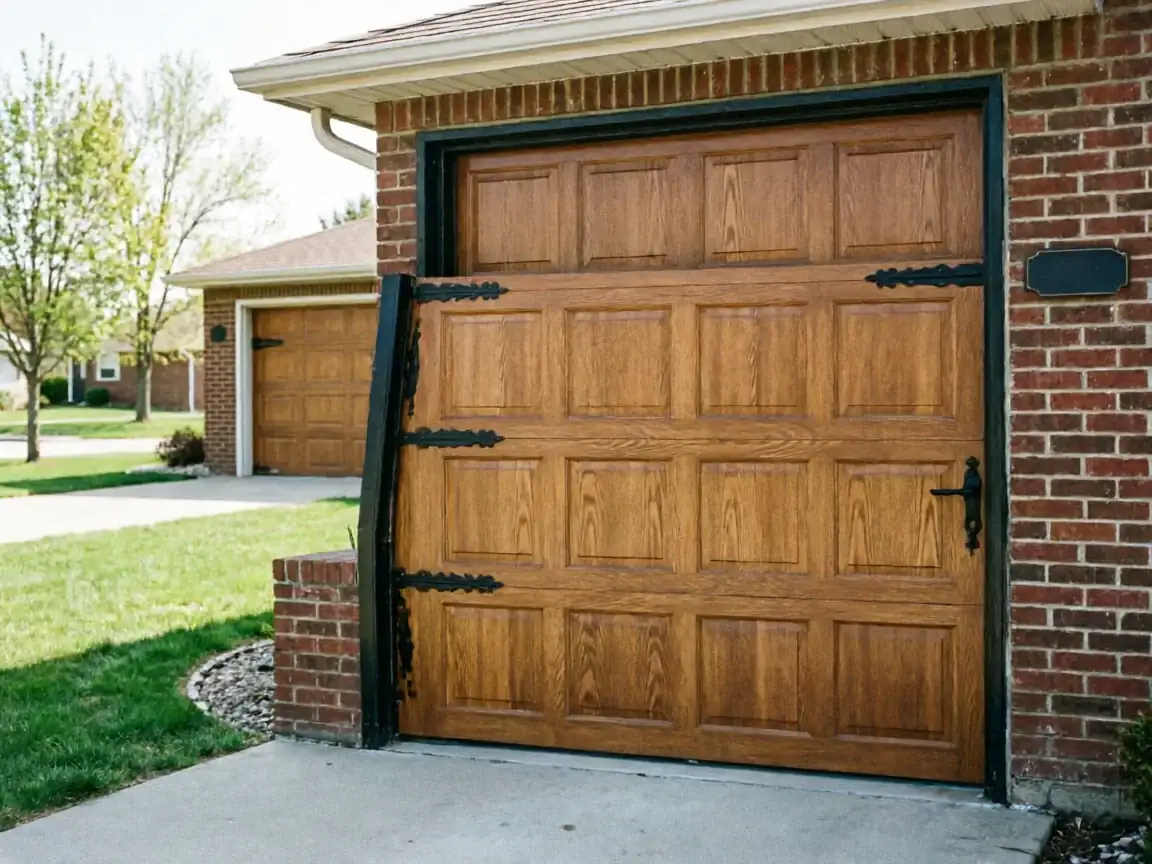
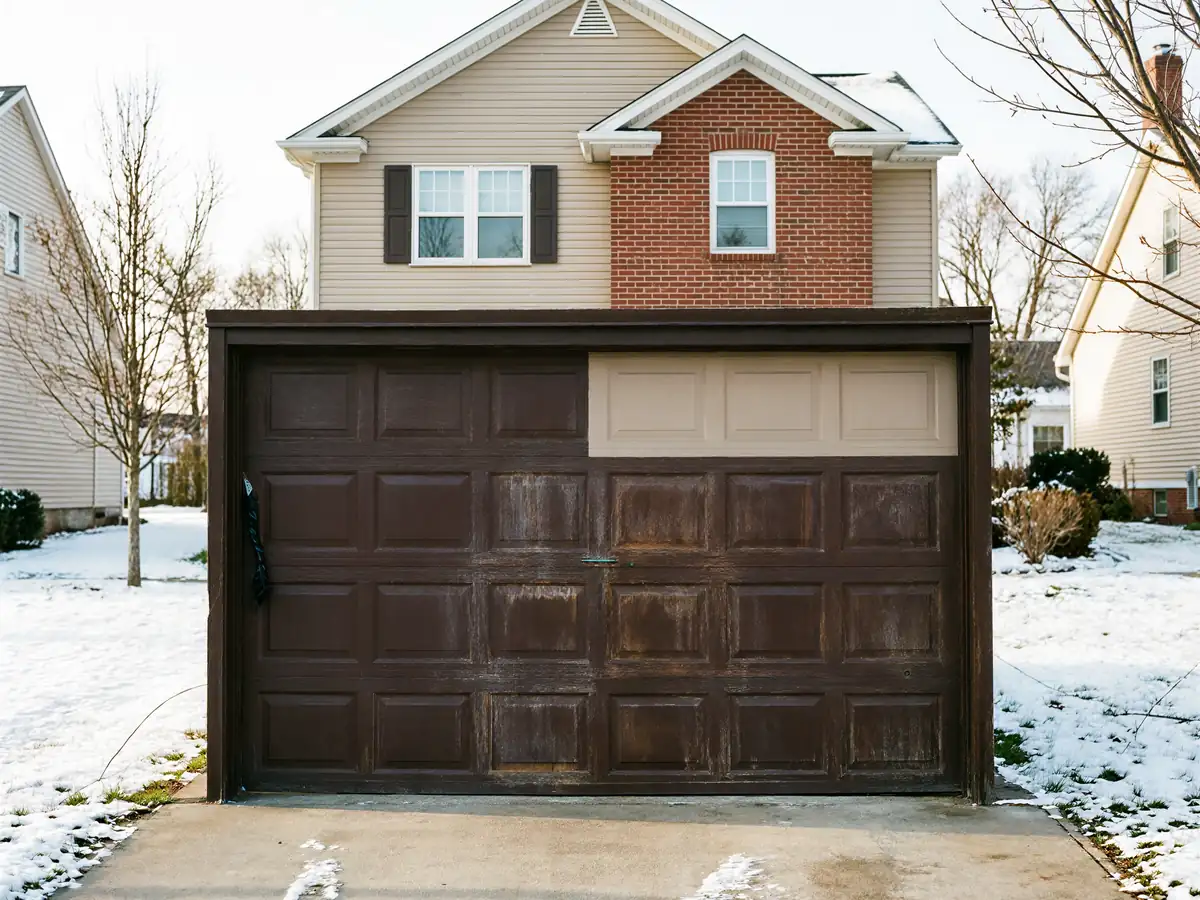
You notice it first on a cold morning: the door shudders halfway up, or the opener strains and stalls before it reaches the top. Sometimes it's a panel that's started to bow, or a seam along the bottom that lets in a line of daylight you never used to see. In a lot of Hopkins houses, this isn't a one-time glitch. It's a door built for a different decade finally telling you it's done.
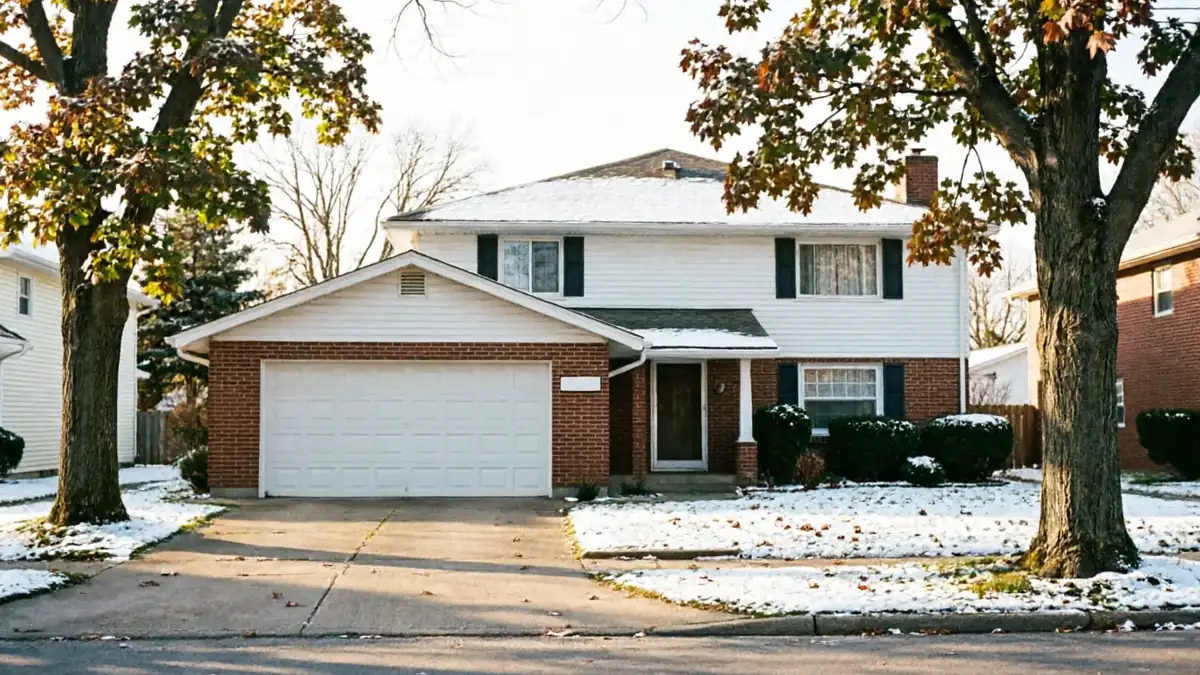
Most of the housing stock here went up between 1957 and 2005, with the bulk of it dating to the 1980s and 90s across the 37 named areas that make up this part of the Twin Cities west metro. A door and track system installed when that home was built has had three or four decades of freeze-thaw cycles to work on its hardware. Springs lose tension unevenly. Tracks pull slightly out of plumb as foundations settle. None of that shows up as a sudden failure - it shows up as the door getting a little worse every winter until one morning it doesn't move at all.
What You Pay
We don't post a flat number here because the job isn't flat
A single-car door on a house built in the 80s with standard torsion springs is a different scope than a double-wide door with a newer opener bracket and insulated panels. What we can tell you is what we weigh when we quote: door width, insulation level, whether the existing track and springs are reusable or need full replacement, and whether your opener is staying or getting swapped too.
Household income across the service area runs a median of $116,500
And we see that reflected in what people choose - a fair number of owners here go with a mid-to-upper tier insulated door rather than the bare minimum, because they're planning to stay in the house and want it to hold up through another twenty Minnesota winters. That's a choice we lay out for you, not one we make for you. You'll get a written number before anything gets ordered, and it won't move once the job starts unless you ask us to change the scope.
Why This Fails Locally
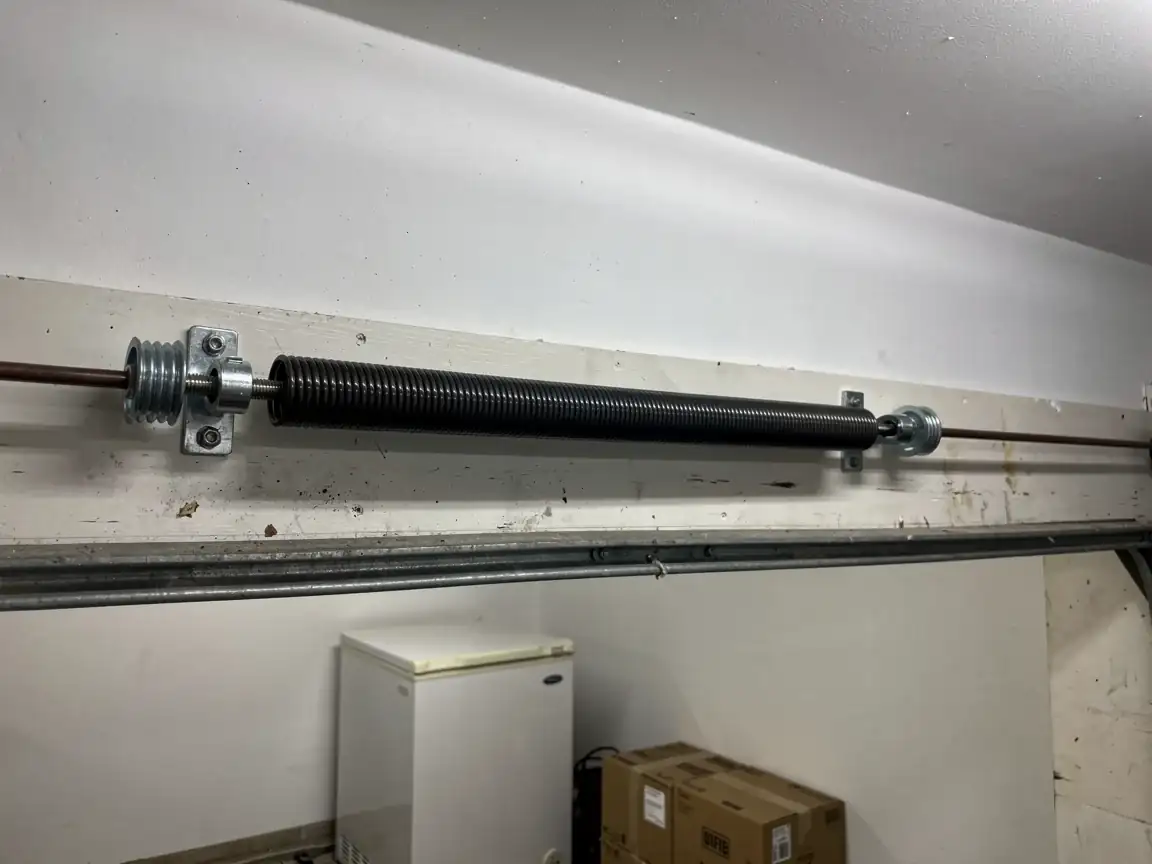
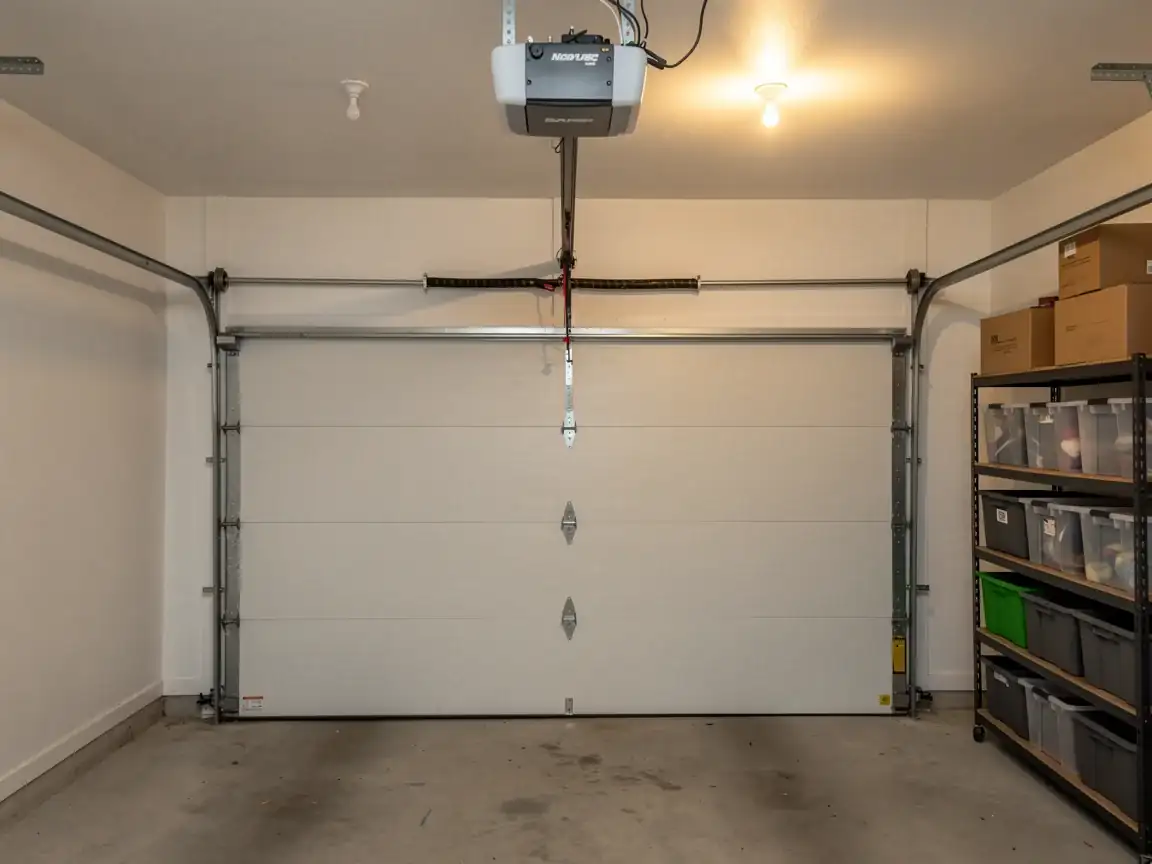
Hopkins sits in a cold, moderate climate band, which sounds mild until you remember what that actually means for a garage door: real freeze depth, real ice buildup on the bottom seal, and enough seasonal temperature swing to work metal fatigue into springs and hinges faster than a door in a warmer zone would ever see. A torsion spring rated for a certain number of cycles doesn't care what year it is - it cares how many times it's been wound and released under load, and cold makes the steel less forgiving on every one of those cycles.
Pair that with a housing stock built mostly in the 1980s and 90s, and you get a specific, repeatable failure: original-era torsion hardware that was fine for twenty years and is now past its rated life right as the metal is least flexible. We see it most in late fall and through deep winter, right when a replacement is least convenient and most urgent. It's not bad luck - it's a door and a climate reaching the end of a predictable overlap.
The DIY Question
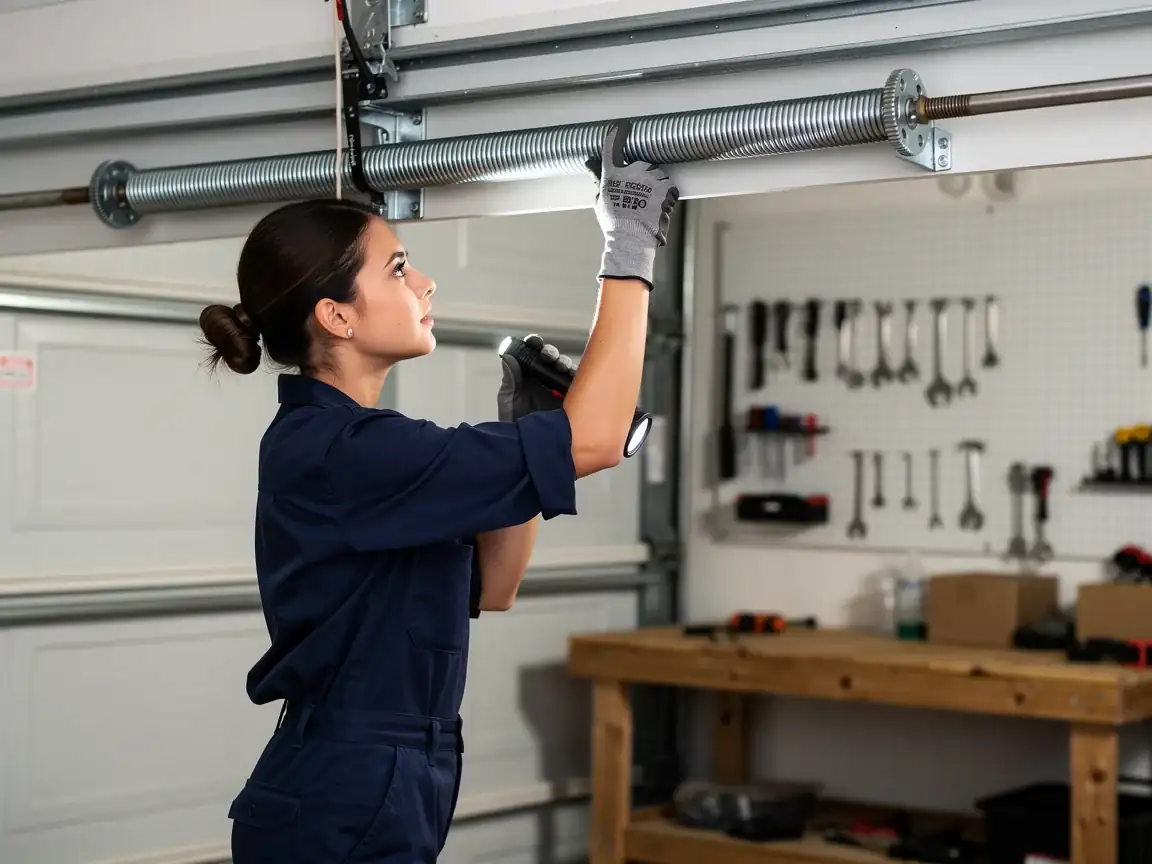
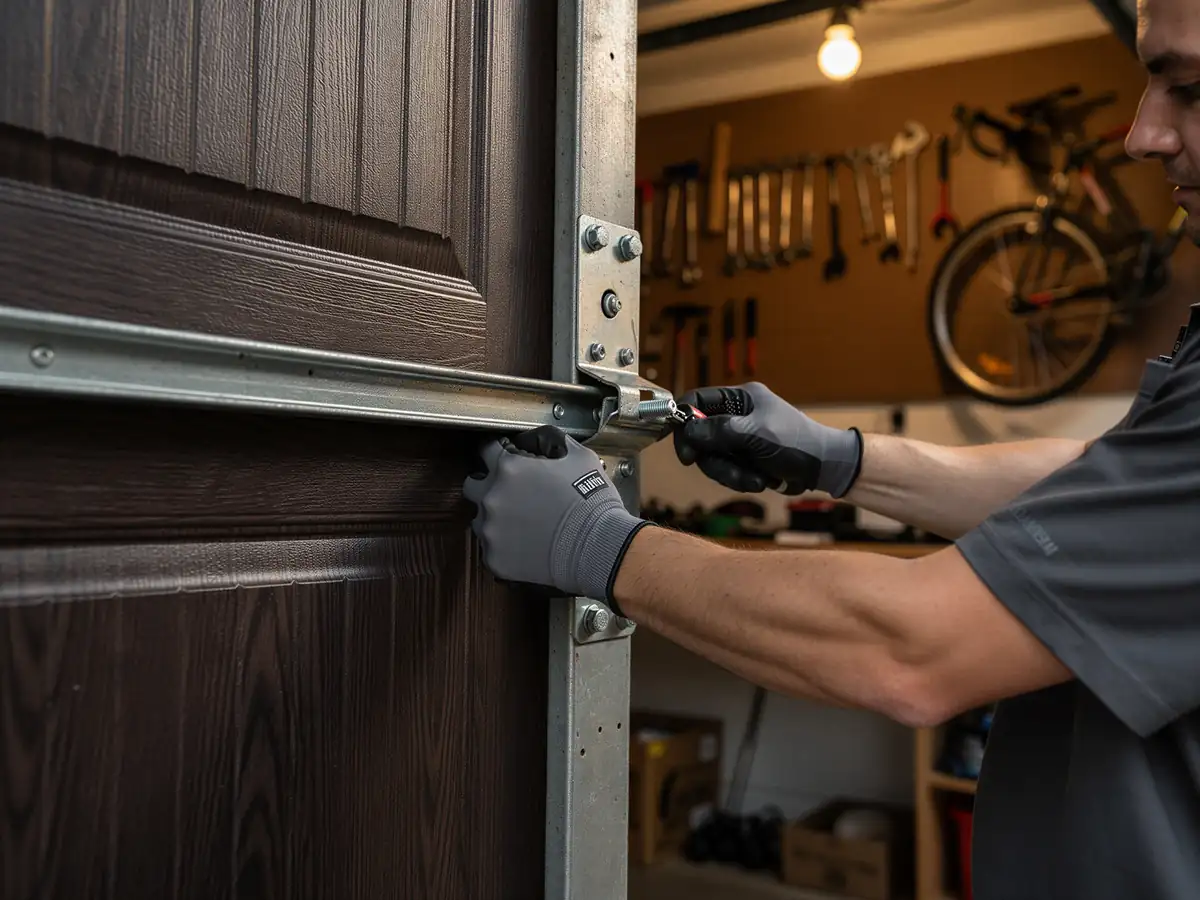
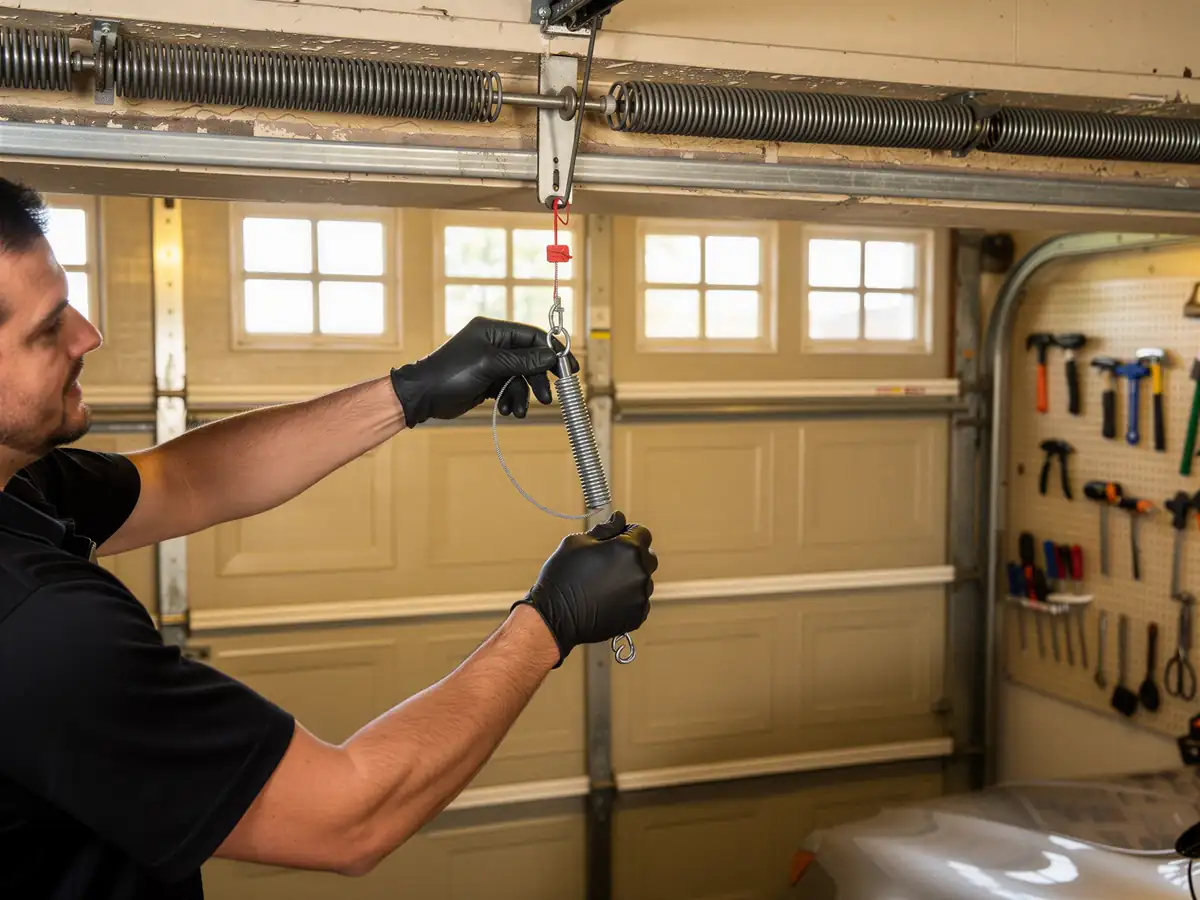
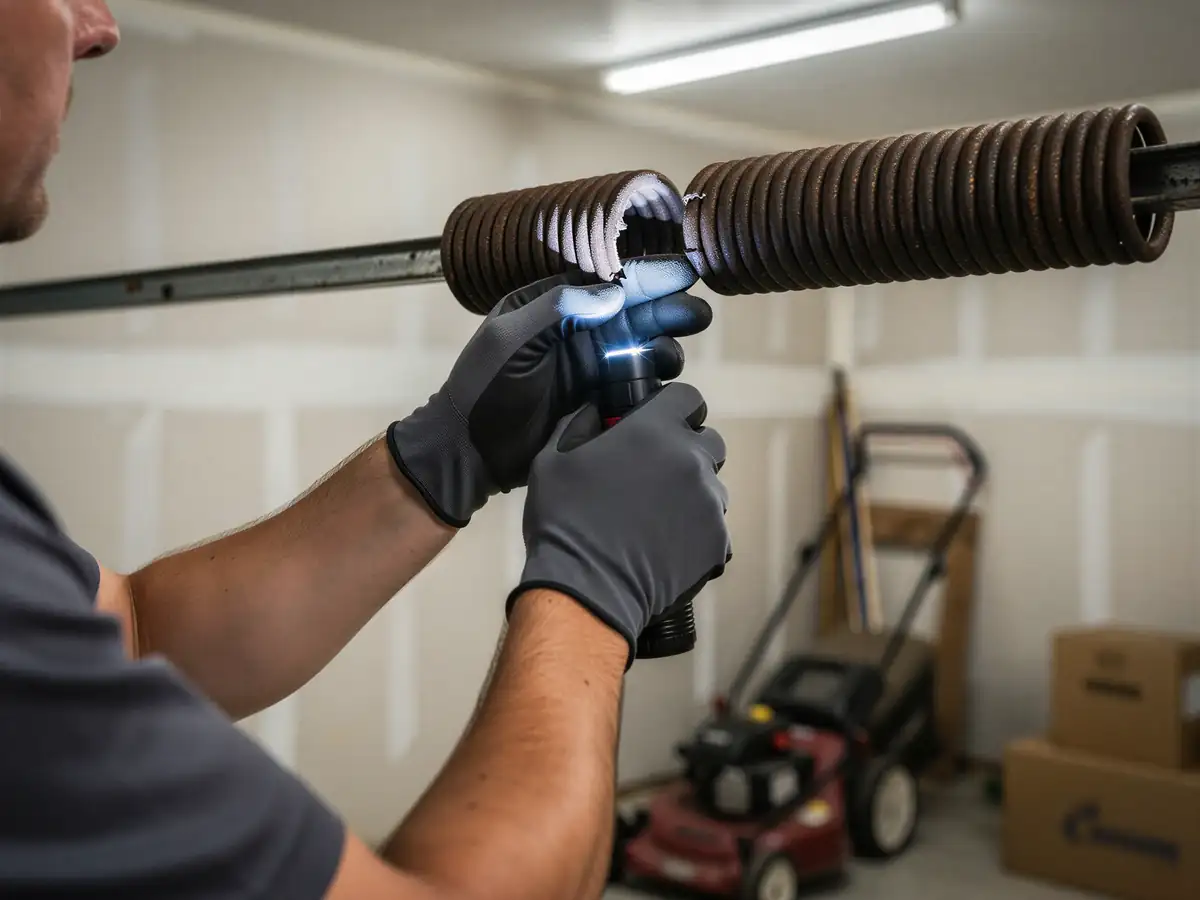
A torsion spring under load can put someone in the ER - that's not scare talk, it's the honest reason we don't walk people through spring replacement over the phone. If your door is sagging, off-track, or the opener is grinding, that's a call-a-pro job, not a weekend project.
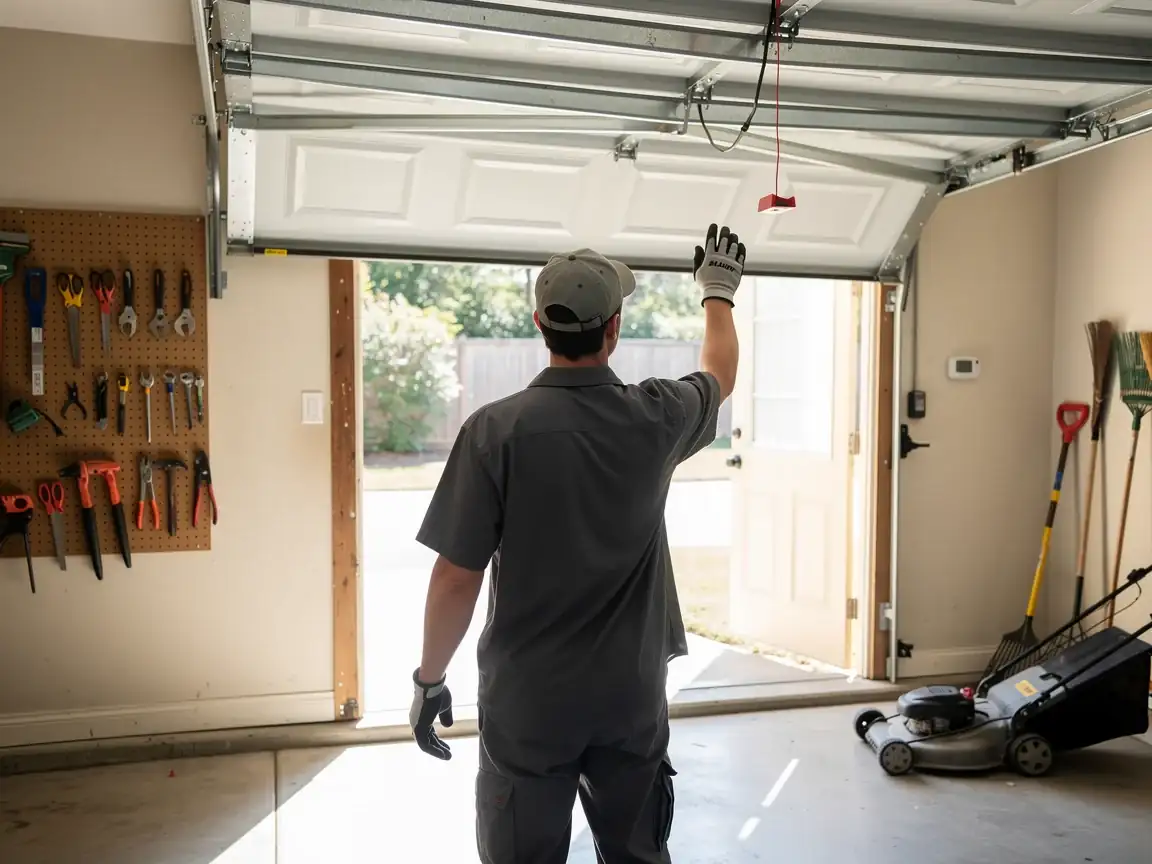
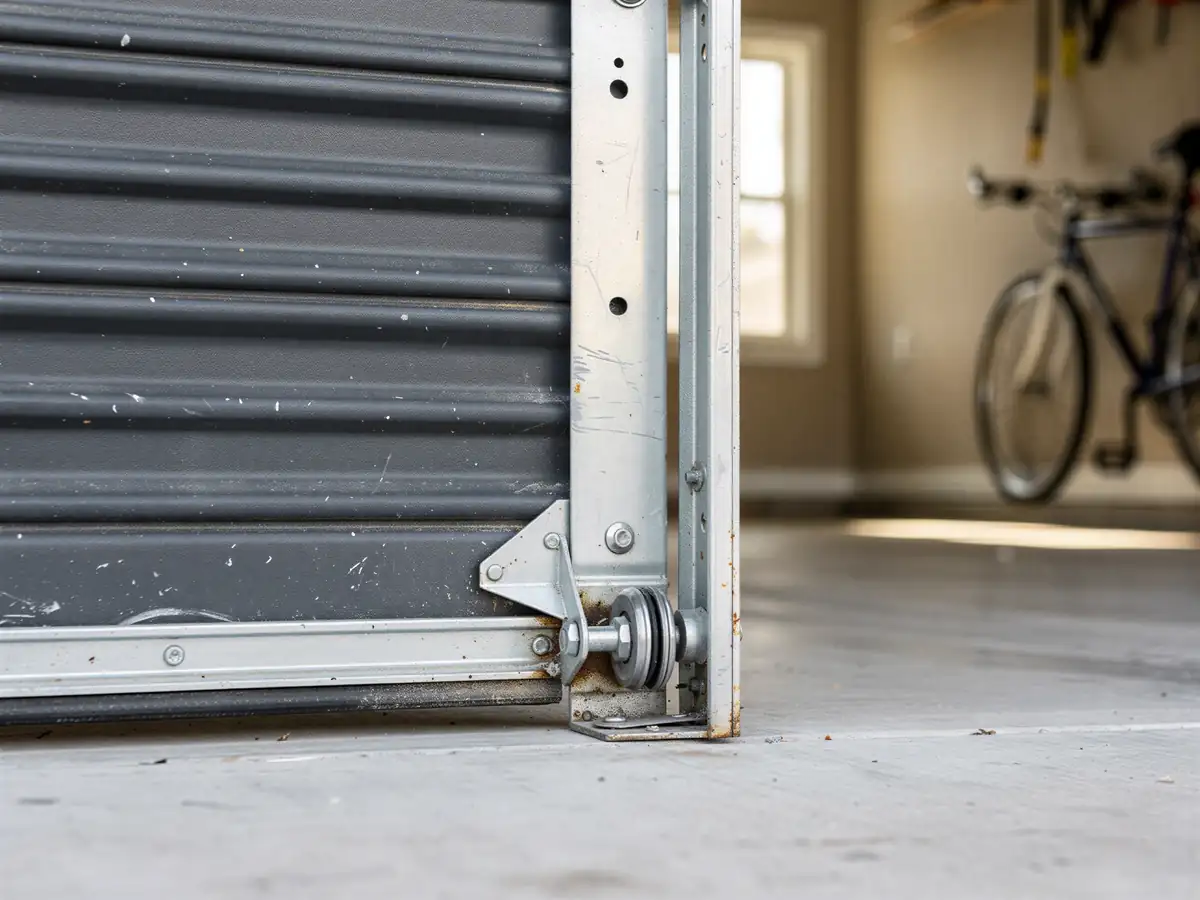
What you can reasonably check yourself: the weatherstripping at the bottom, whether the tracks are visibly dirty or have loose bolts, and whether the door is balanced (disconnect the opener and lift it by hand - it should hold at waist height on its own). If it drops or shoots up, the springs are off and it's time to call. One honest limitation: if your door is original to a house built before the 1980s and the track hardware is obsolete, we may recommend full replacement rather than hunting for parts that aren't made anymore - sometimes a repair quote isn't the right answer even when a repair is technically possible.