Getting It Booked In
Dayton's median household income sits at $137,383, well above the $116,500 median across the rest of the territory we cover. That number matters more than it sounds like it should, because it changes what a homeowner here is willing to do about a broken door. In a lot of the suburbs we serve, a stuck or broken garage door gets patched and lived with for a season. In Dayton, the math tips toward getting it handled and handled right the first time.
We run this call from Hopkins, about 18 miles out, which is the longest regular drive in our service area. We don't promise a response time here because we're not going to make one up - we travel to Dayton the same way we travel to any suburb at that distance, and we tell you on the phone where we are before you commit to a visit.
With only 3,034 households in Dayton, we see fewer calls here than in the denser parts of the territory, which means less day-to-day familiarity with any one specific house. What we do know going in is the building stock, and that tells us a lot before we ever see the door.
The Complications
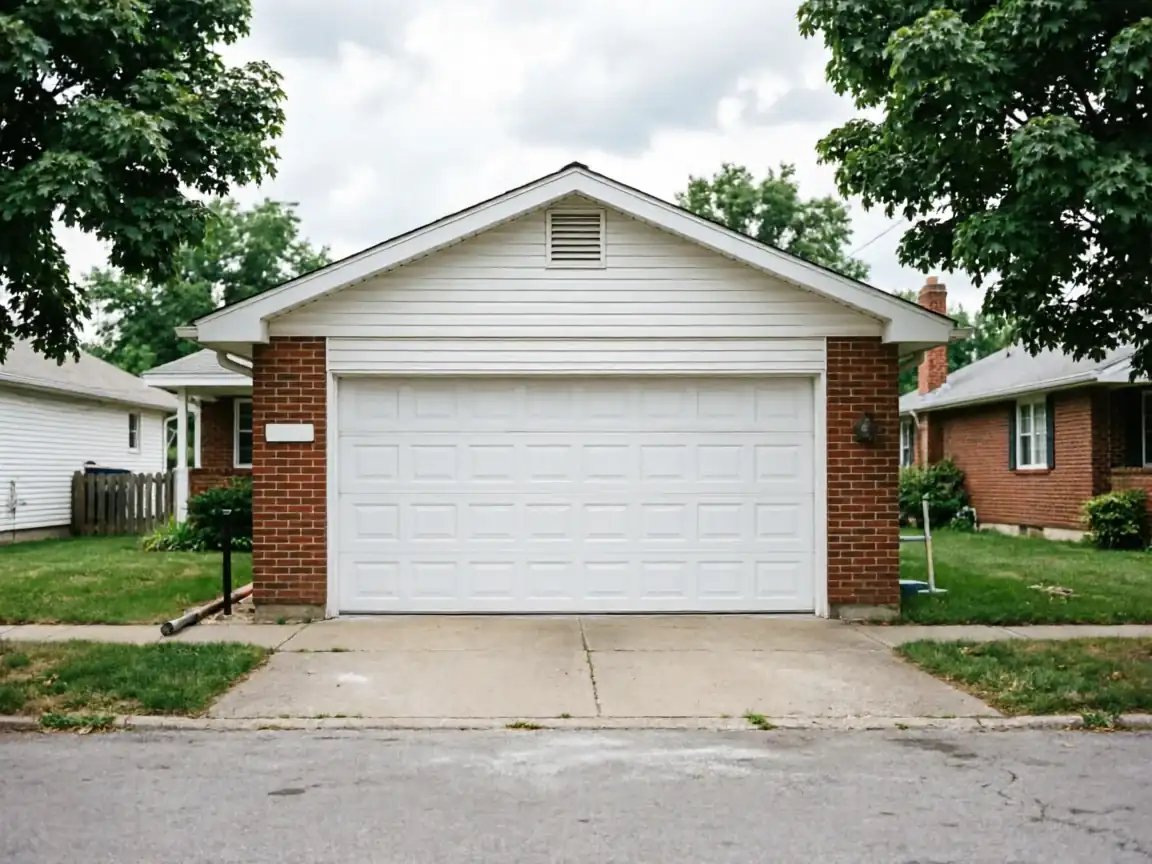
Most of Dayton was built around 2003, a couple of decades newer than the regional median of 1984
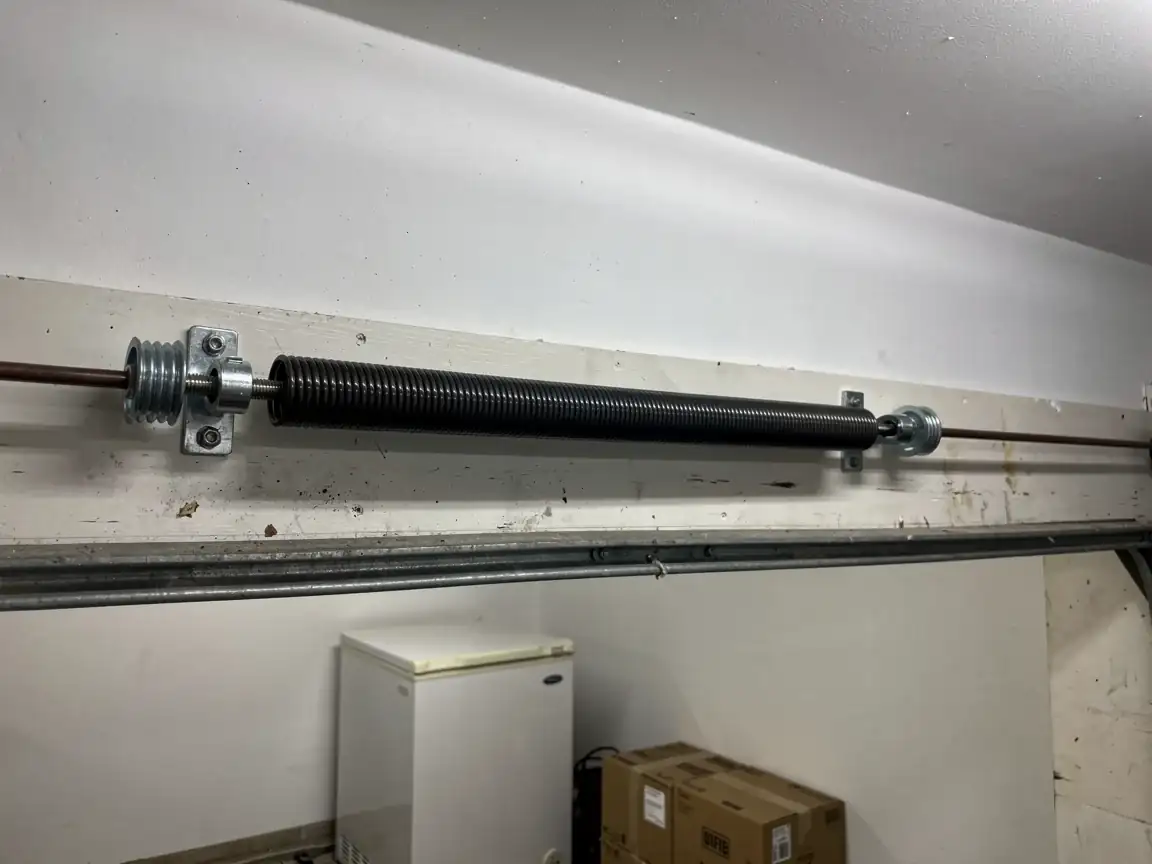
That's a real difference, not a trivia point. Newer construction here means steel sectional doors on torsion springs that are still a common size and wind, openers with circuit boards and photo-eye safety sensors rather than the old mechanical reversing systems, and insulated panels instead of a single steel slab.
What that means on a service call
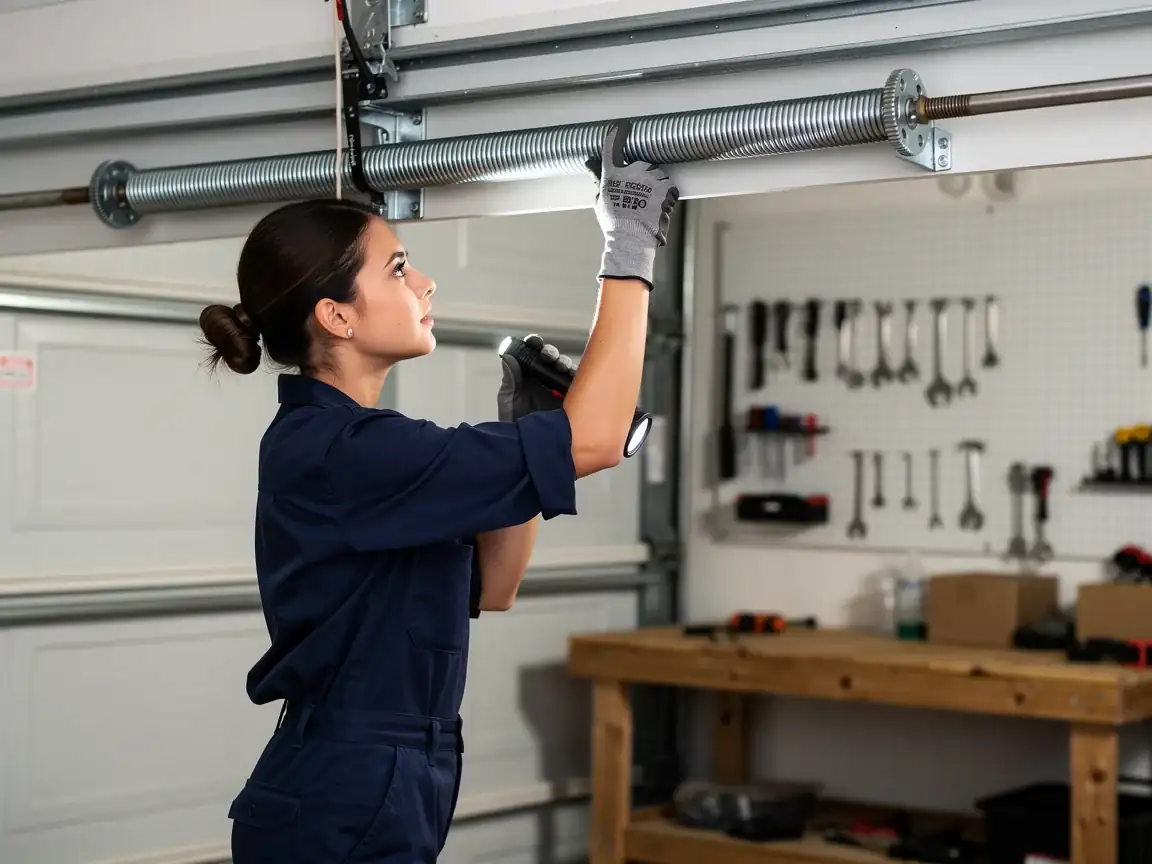
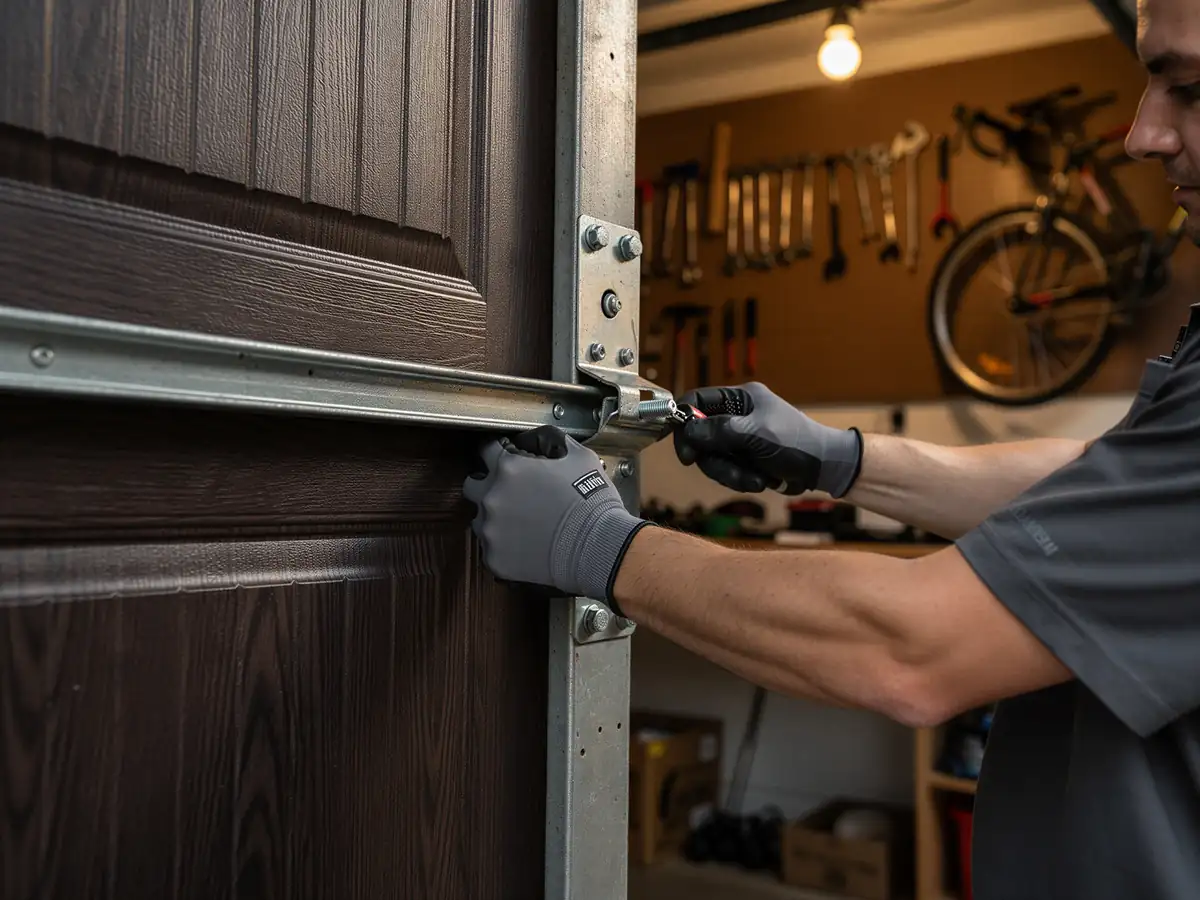
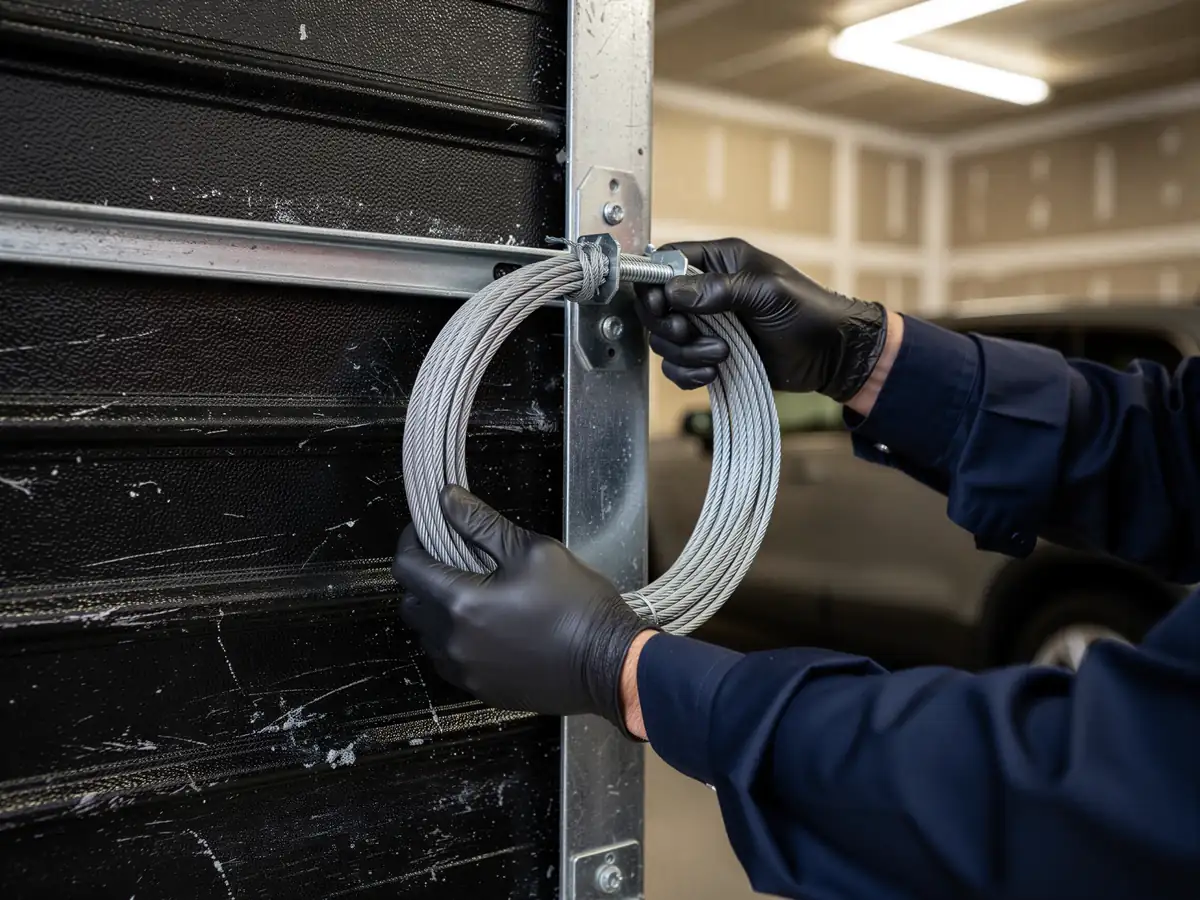
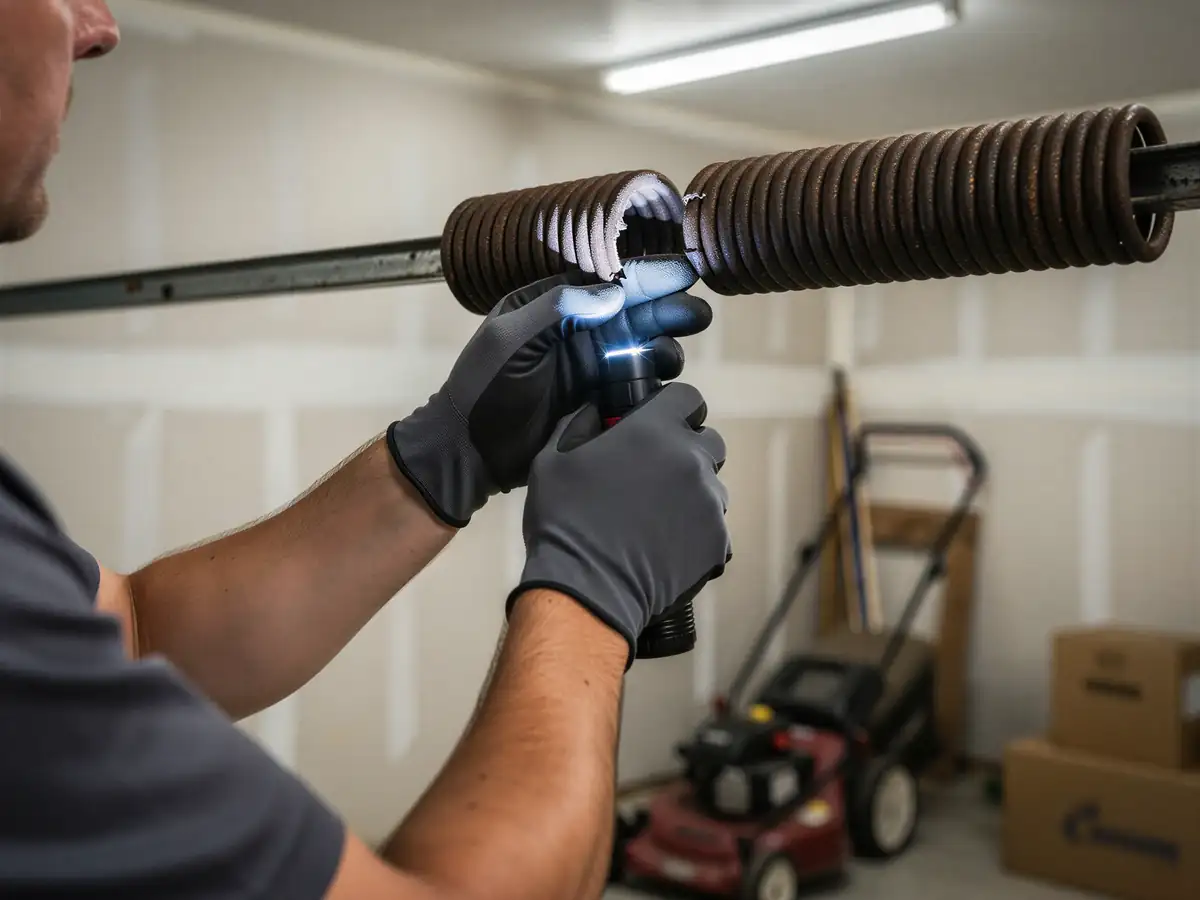
The failure in Dayton is less often "this whole door is worn out" and more often "one part on a newer system quit." A photo-eye sensor knocked out of alignment, a logic board that's failed outright, a cable that's frayed on hardware that's otherwise in good shape. We still get snapped torsion springs - every spring has a cycle life regardless of the year the house went up - but we're not usually fighting decades of rust or hardware nobody makes any more.
Minnesota's cold does the same thing to every door in the area, Dayton included
Stiff lubricant, a slow opener, a spring that finally lets go on the coldest morning of the week. That part doesn't change with the build year.
Stocked Parts
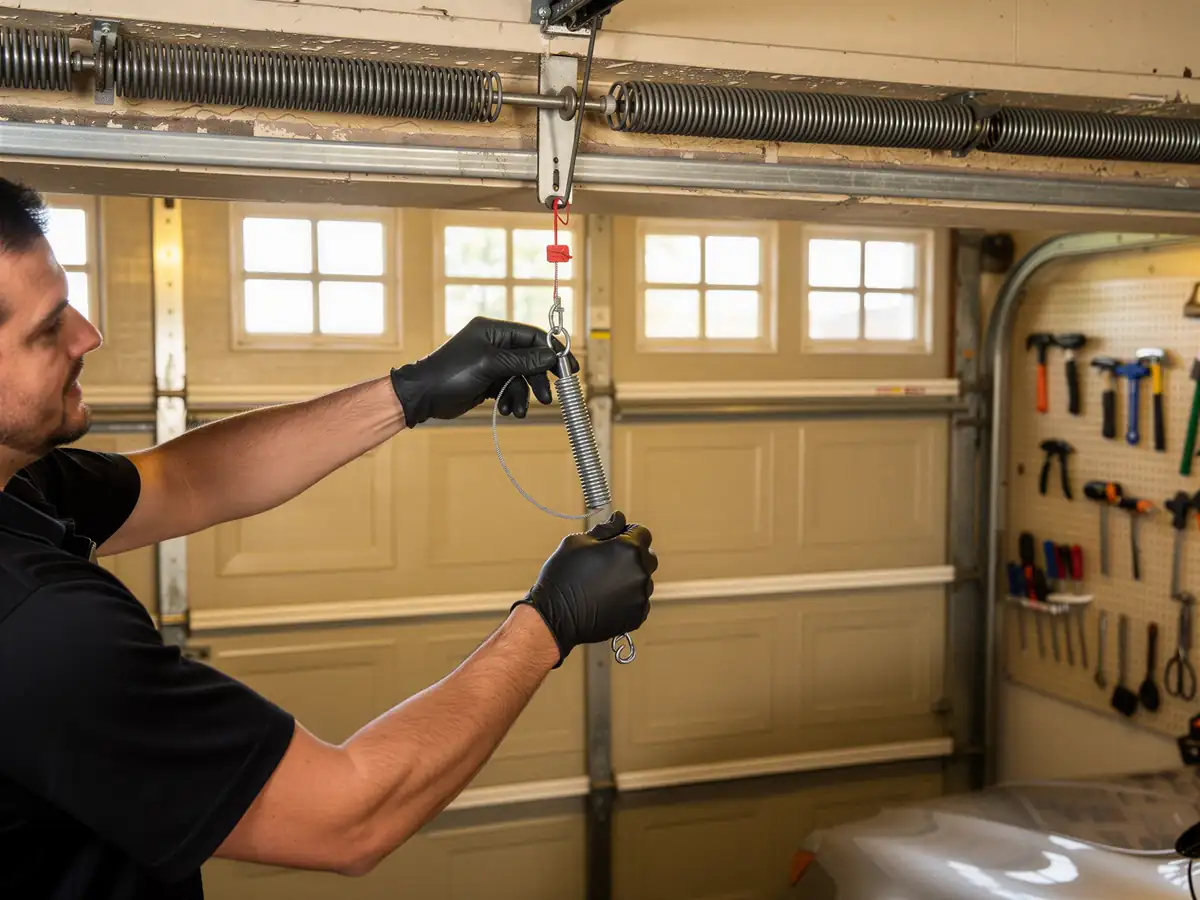
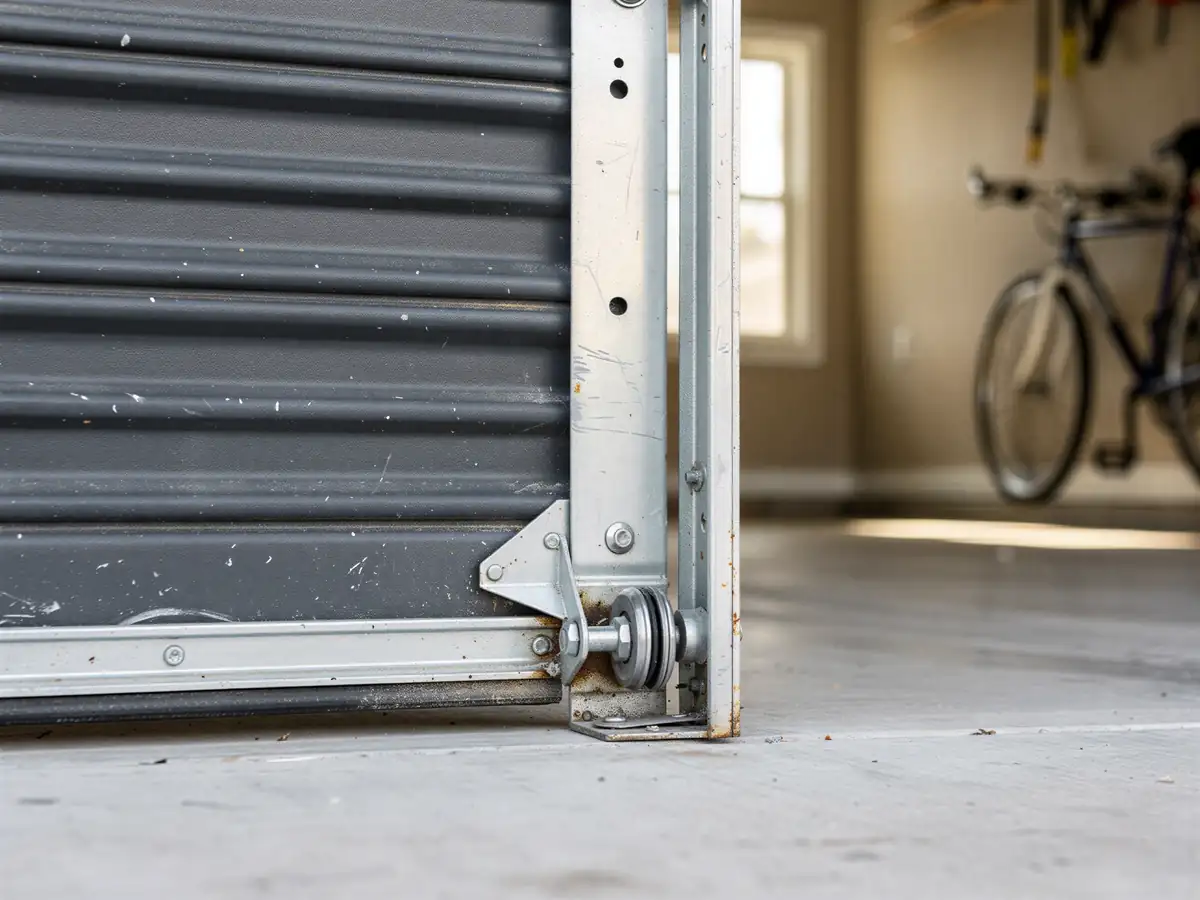
We carry the common torsion springs, rollers, cables, and standard opener boards on the truck, and most Dayton jobs fall into that range because the hardware here is newer and more standardized than in older parts of the territory. Where we run into a wait is a specific opener model's logic board or a photo-eye sensor pairing that isn't the common part - those sometimes have to be ordered, and we'll tell you that up front instead of pretending otherwise.
That's the honest limitation: if your opener is an oddball model, or the part that failed is proprietary to one manufacturer's newer electronics, we may need a day or two to get the exact board rather than a generic substitute. We'd rather tell you that on the phone than show up and discover it on your driveway.
How Long You Are Without the Door
A spring, cable, or roller replacement on a standard Dayton door is usually a same-visit fix once we're on site, because the parts for that hardware are the ones already on the truck. An opener board or sensor that needs ordering is the exception, and in that case the door can usually be secured or run manually in the meantime so you're not stuck leaving it open or shut for days.
Because the drive from Hopkins is 18 miles, the only real variable for Dayton is getting a truck there, not the repair itself once we arrive. We won't quote a window we can't stand behind, but the work on newer hardware tends to move faster than on a 1960s door with parts nobody stocks.
What You Pay
We don't publish a flat price here because the job itself drives the cost
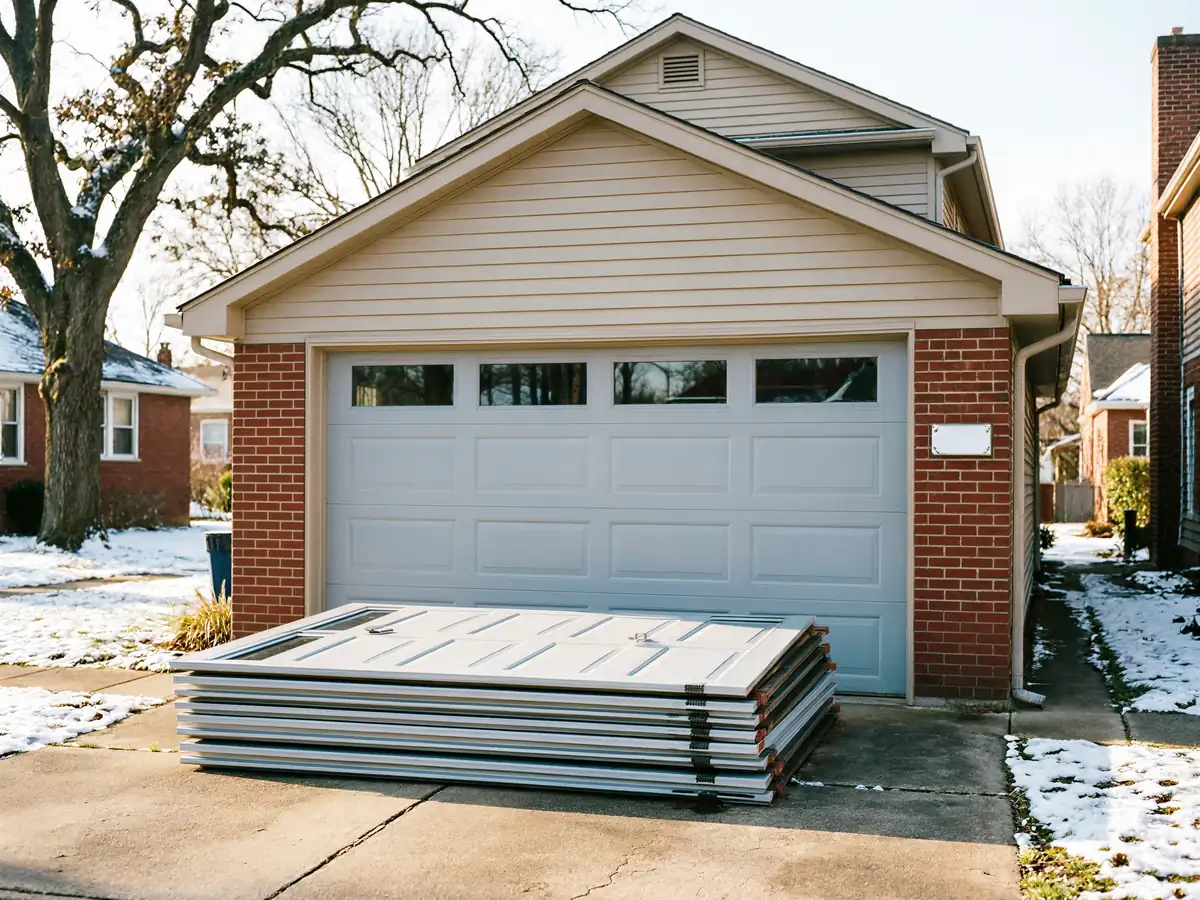
A snapped spring is a different bill than a failed circuit board. What we can say is how the decision tends to land in Dayton specifically: with a median household income of $137,383, well above the territory's $116,500 median, and houses averaging around 2003 construction, replacement is often the more sensible call sooner than it would be on an older house, because the door and opener still have real life left in the rest of the unit. Fixing one part on a twenty-year-old system is usually worth it; patching the same part repeatedly on a system that's clearly failing in multiple places stops being worth it fast.
We'll tell you on site which side of that line your door falls on
And we won't talk you into a full replacement if a $200 part solves it.