The Complications
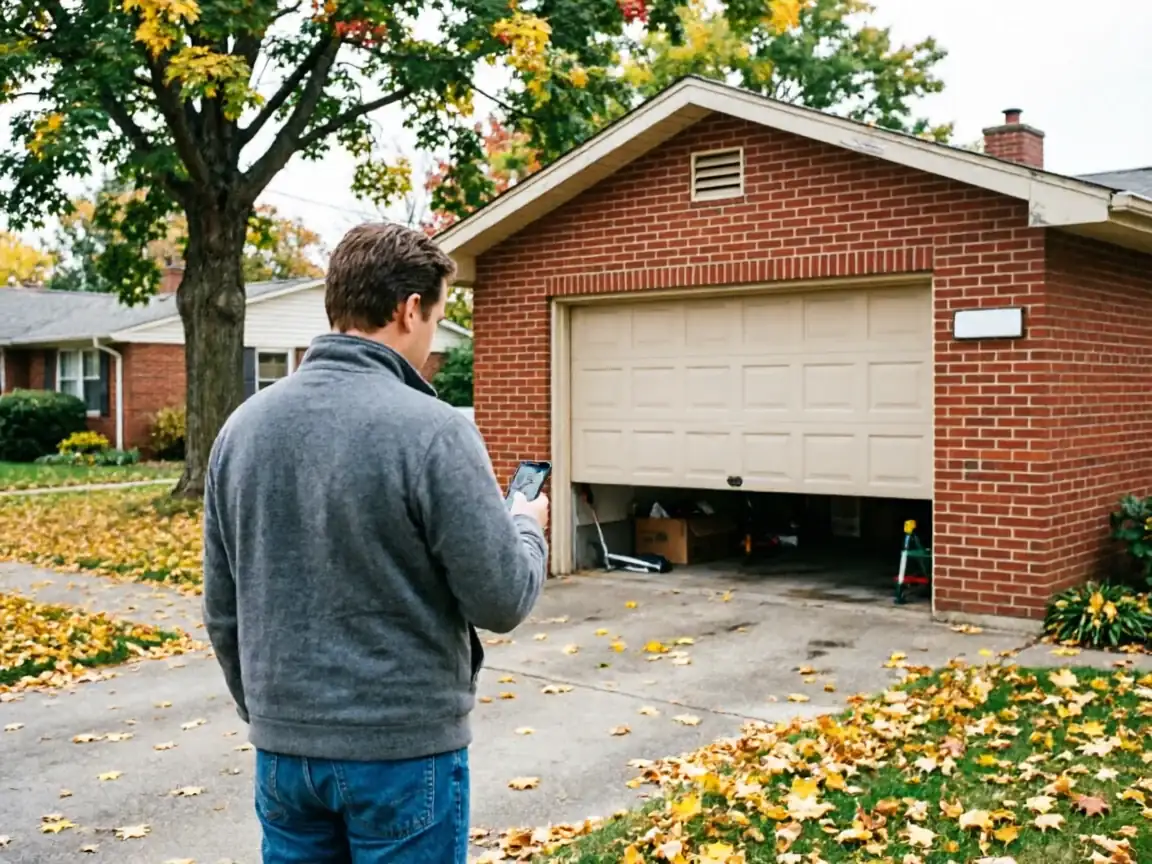
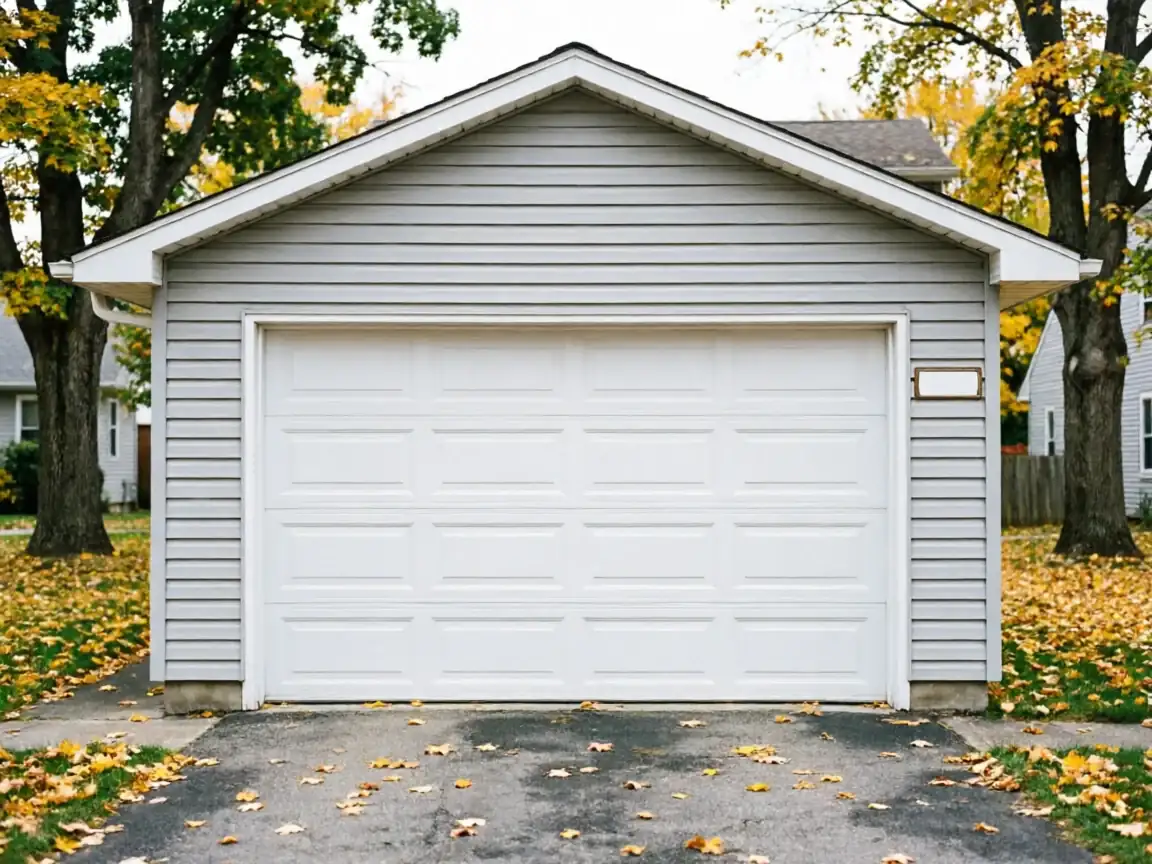
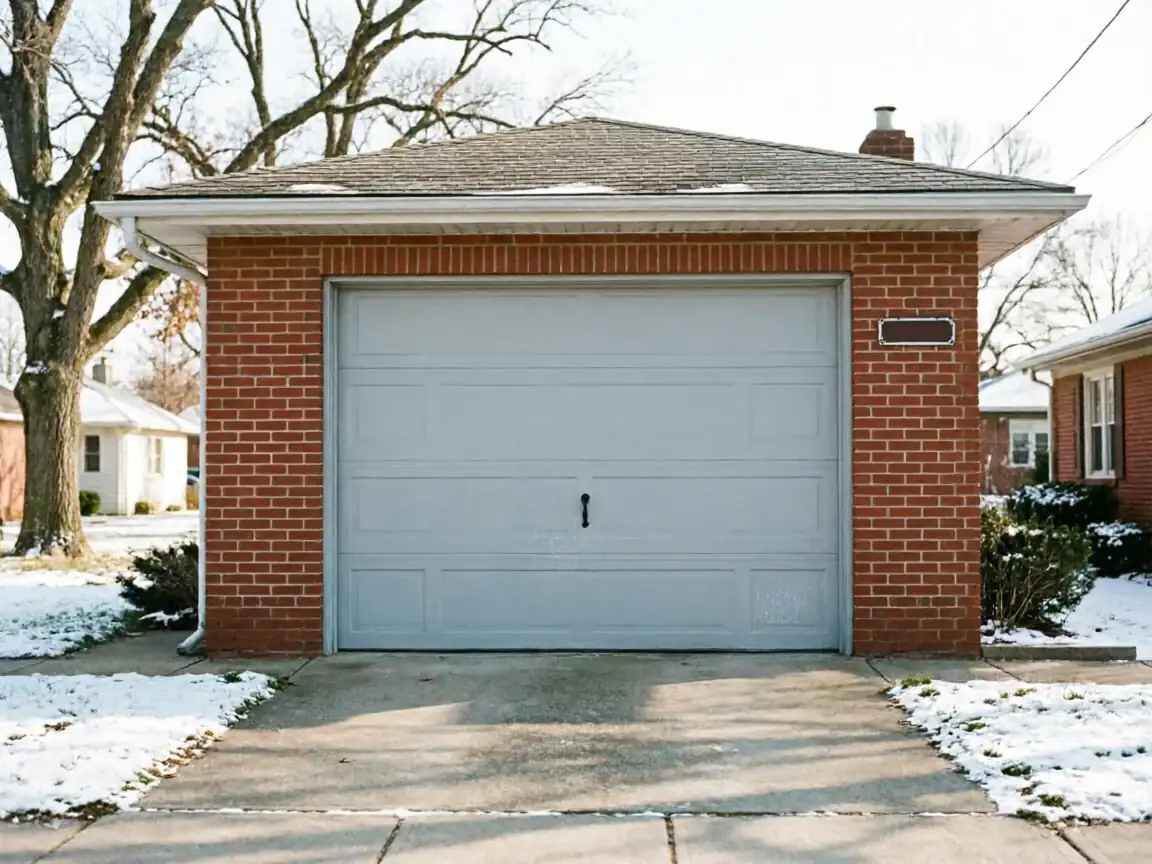
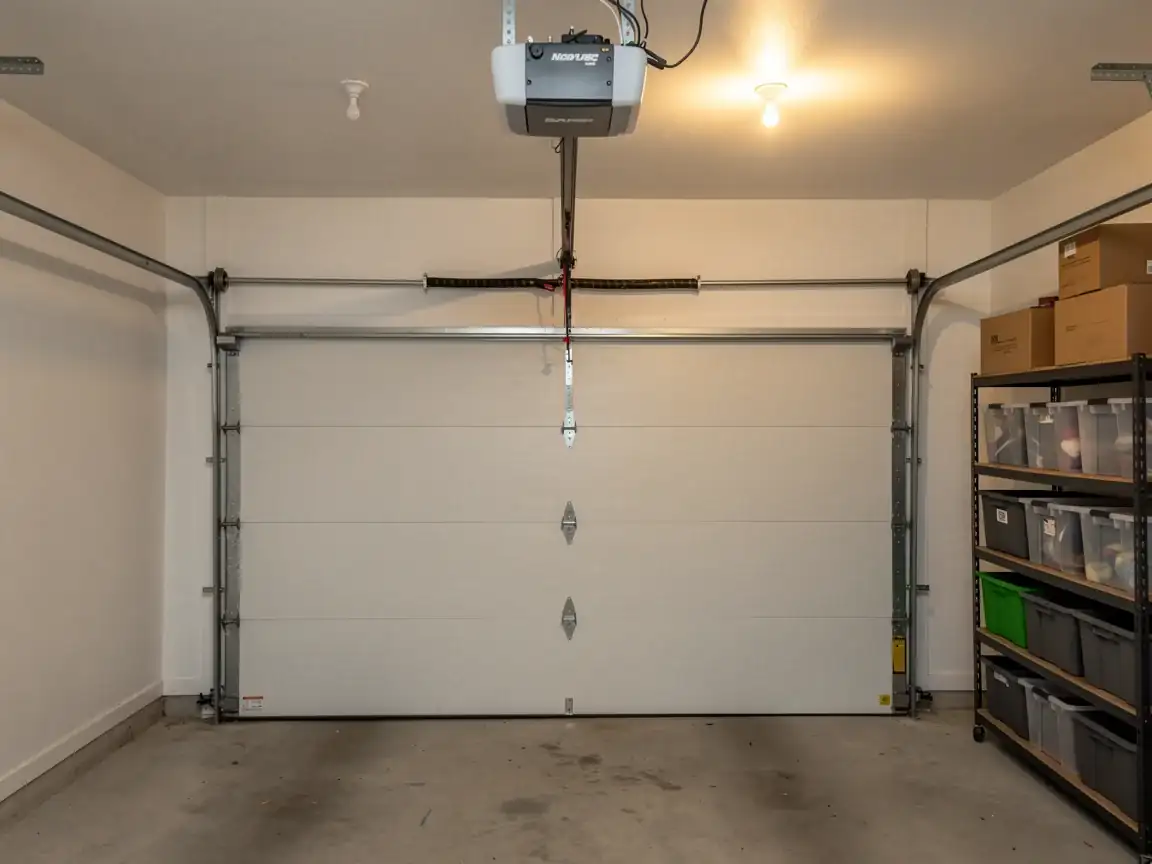
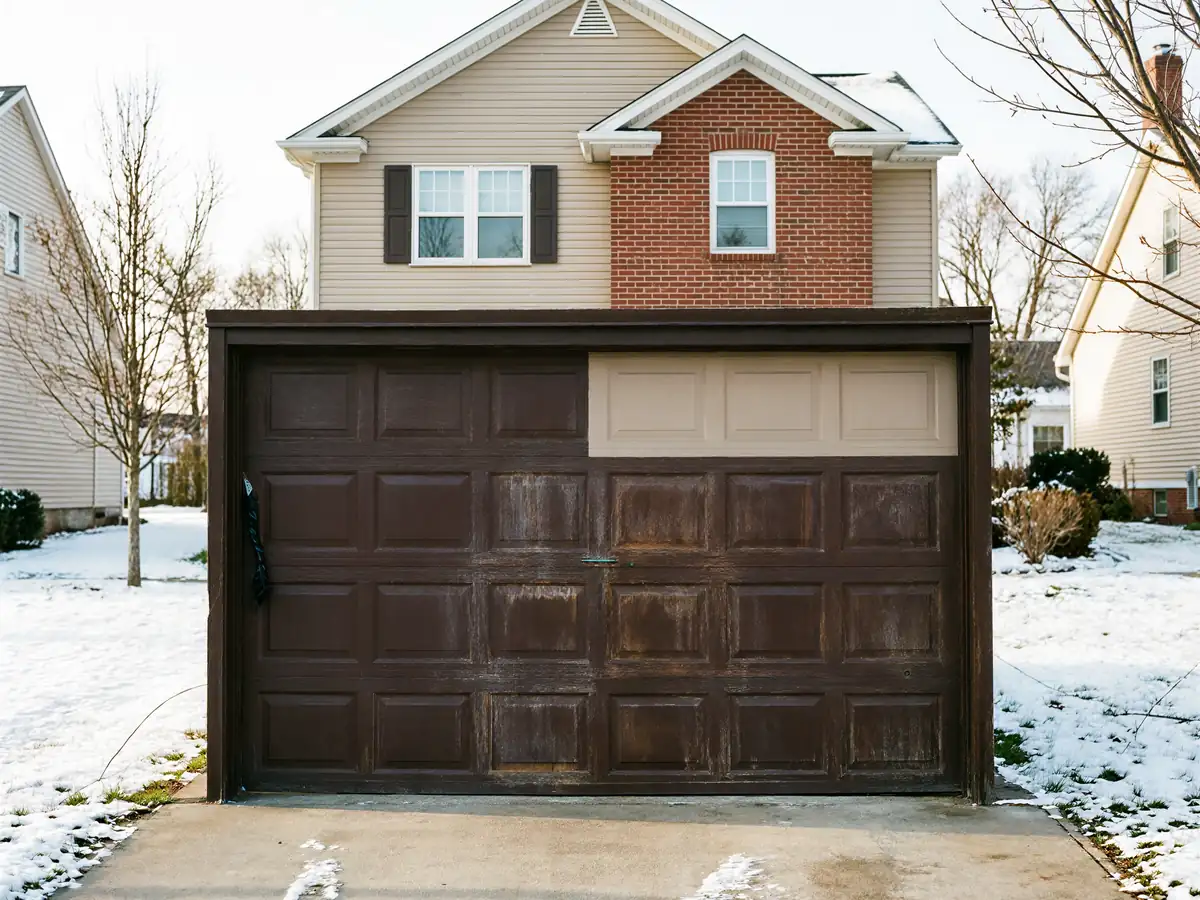
Mendota Heights' housing stock centers on 1983, almost exactly the service area's 1984 median, which puts this suburb dead center in the 1957-2005 build window rather than at either edge. That matters because it means the doors here aren't the oddball early-1960s flush panels or the late-1990s insulated steel you find in some of the newer pockets we cover - they're squarely builder-grade 1980s stock, the kind that came with a single torsion spring rated for a lighter door and an opener chain-drive unit that's been replaced once already by whoever owned the house before. Median household income in Mendota Heights runs $132,935, well above the $116,500 average across the 93,593 households we cover, which shows up in how many owners here choose full replacement over a patched repair once the original hardware starts failing. The complication isn't exotic parts - it's volume and timing. A whole suburb built inside a narrow decade means springs, cables, and rollers are wearing out on the same schedule, not spread out over thirty years like you'd see in an older or more mixed neighborhood.
The DIY Question
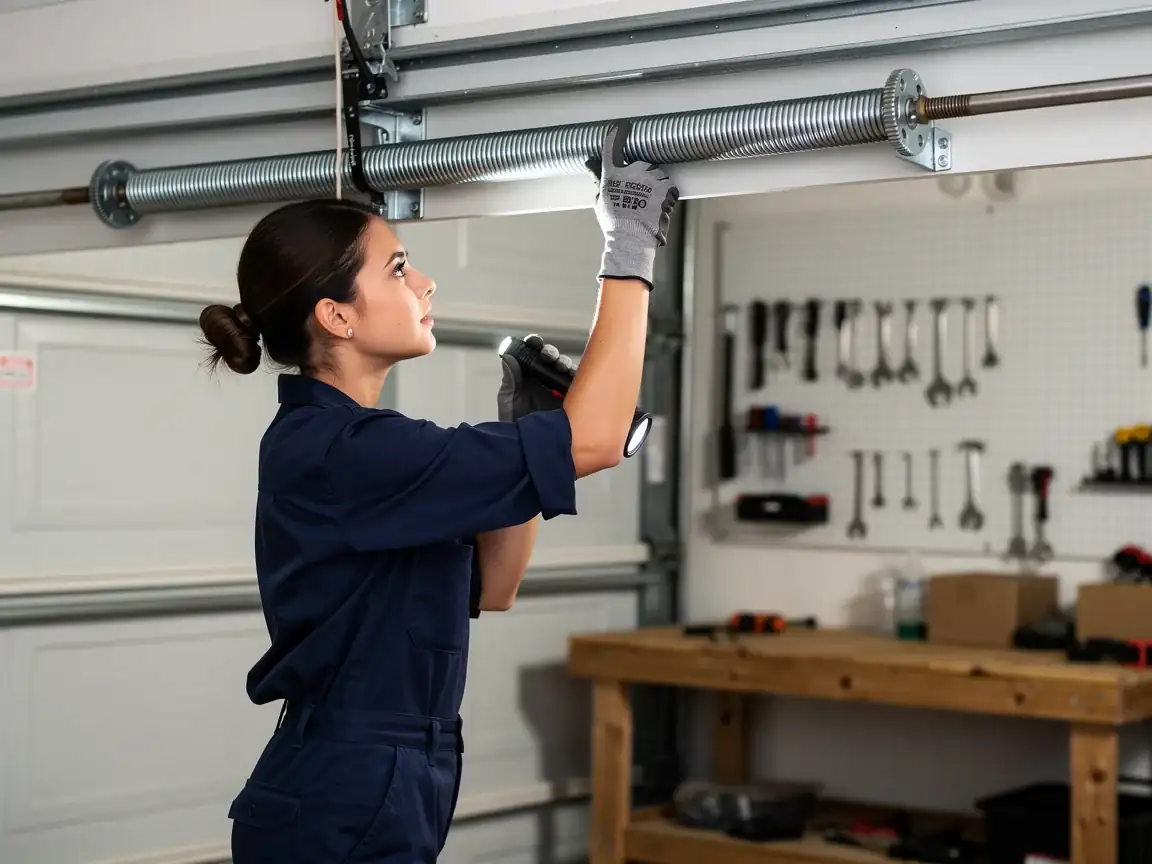
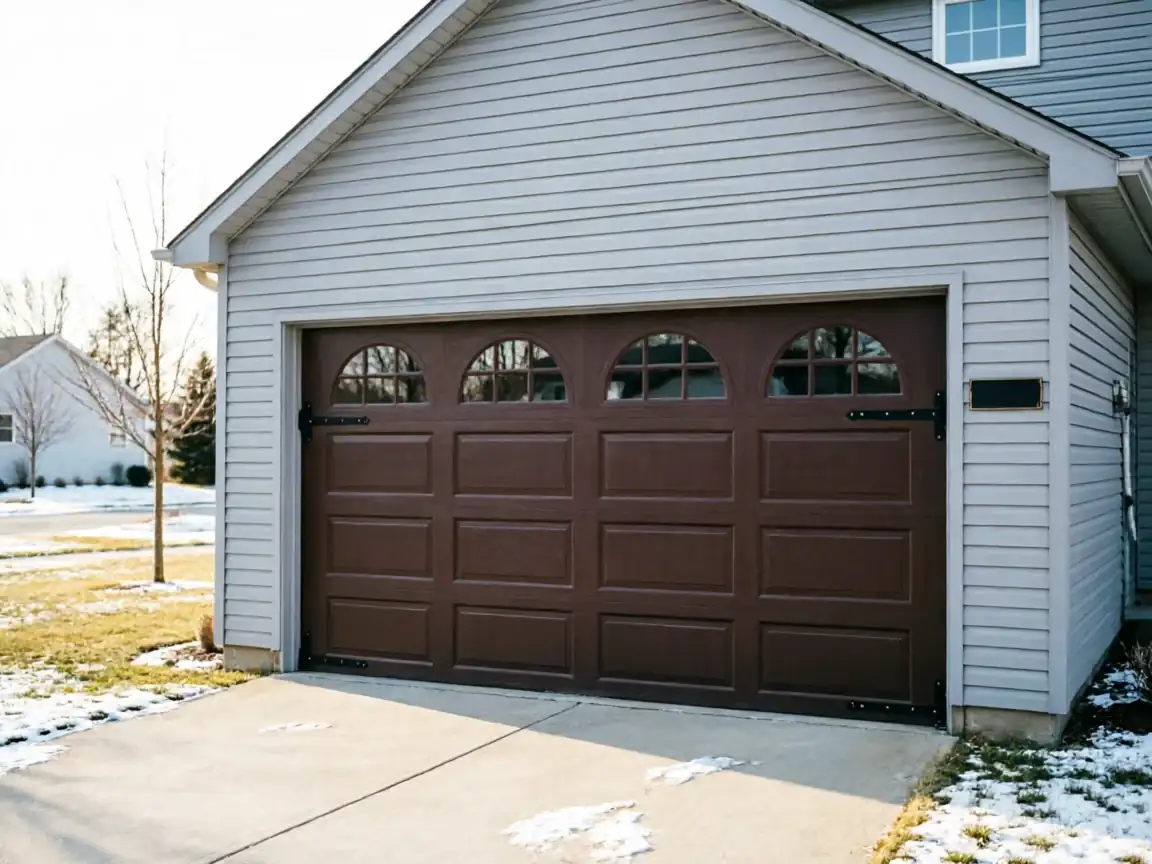
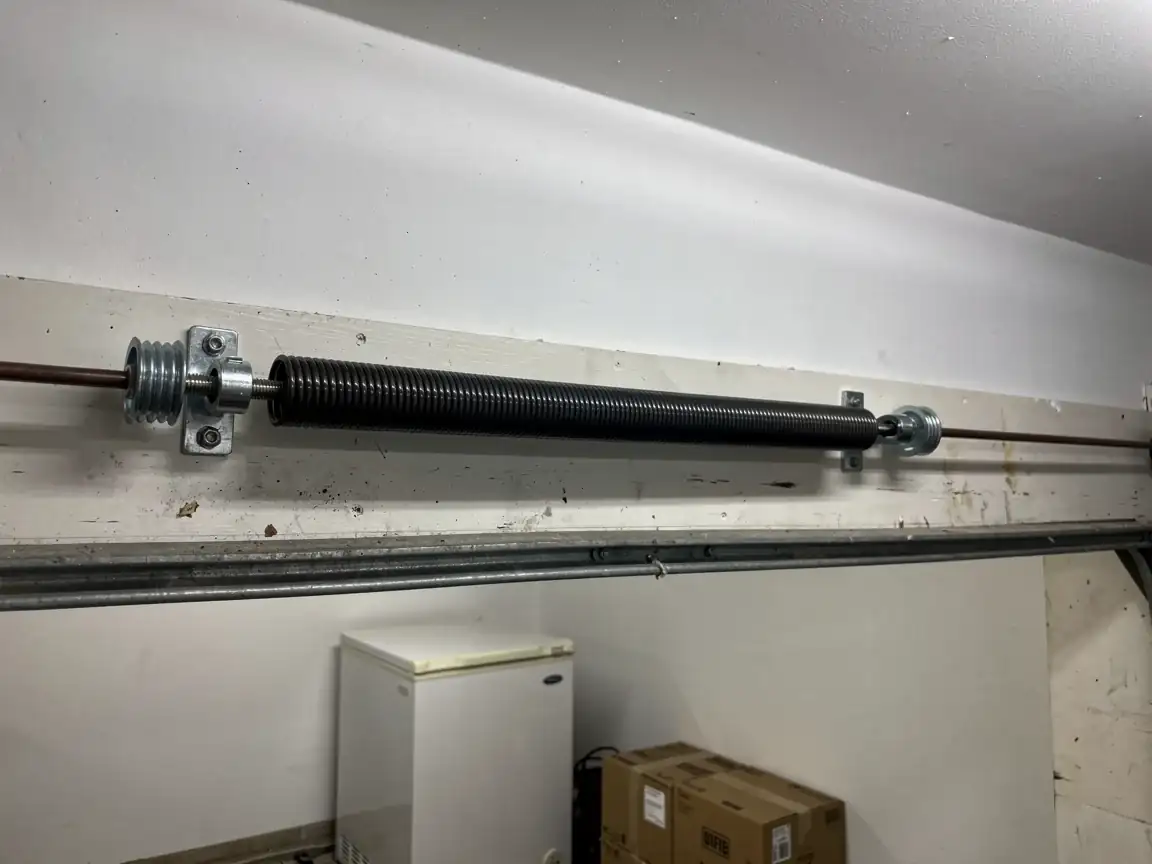
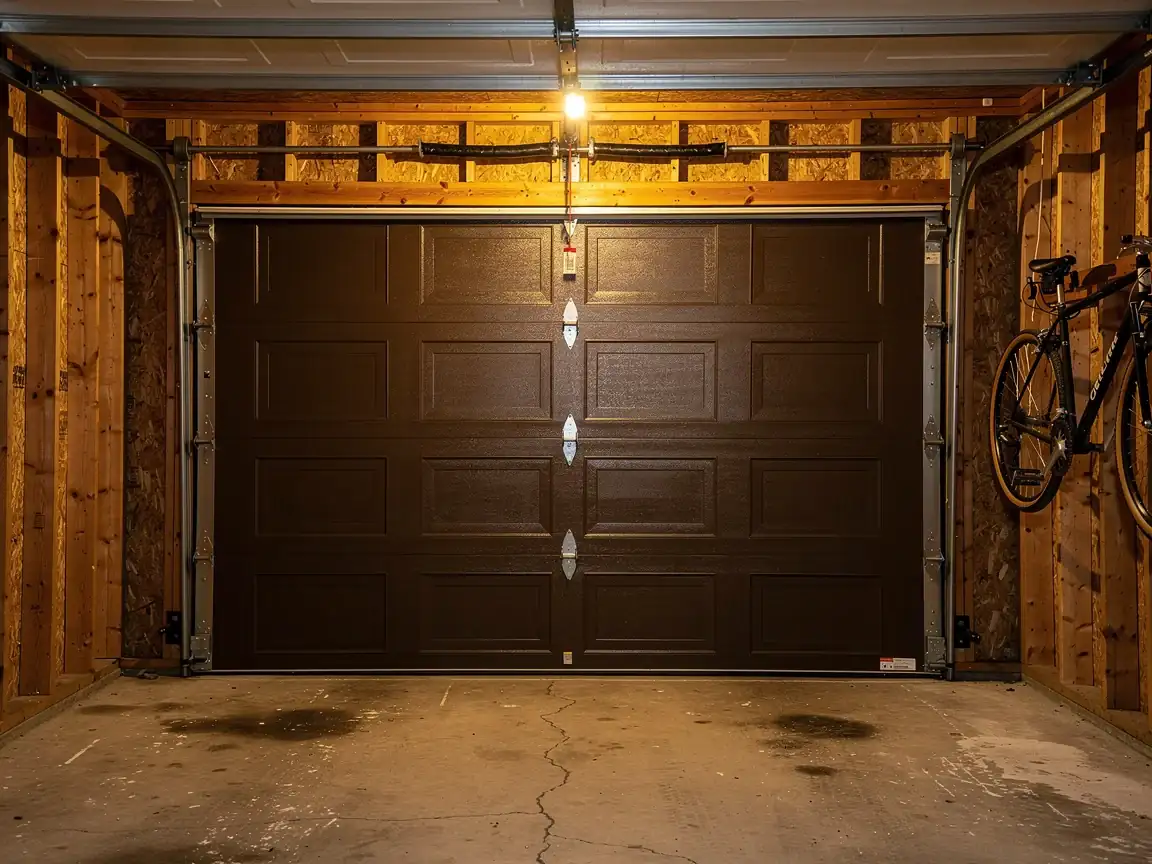
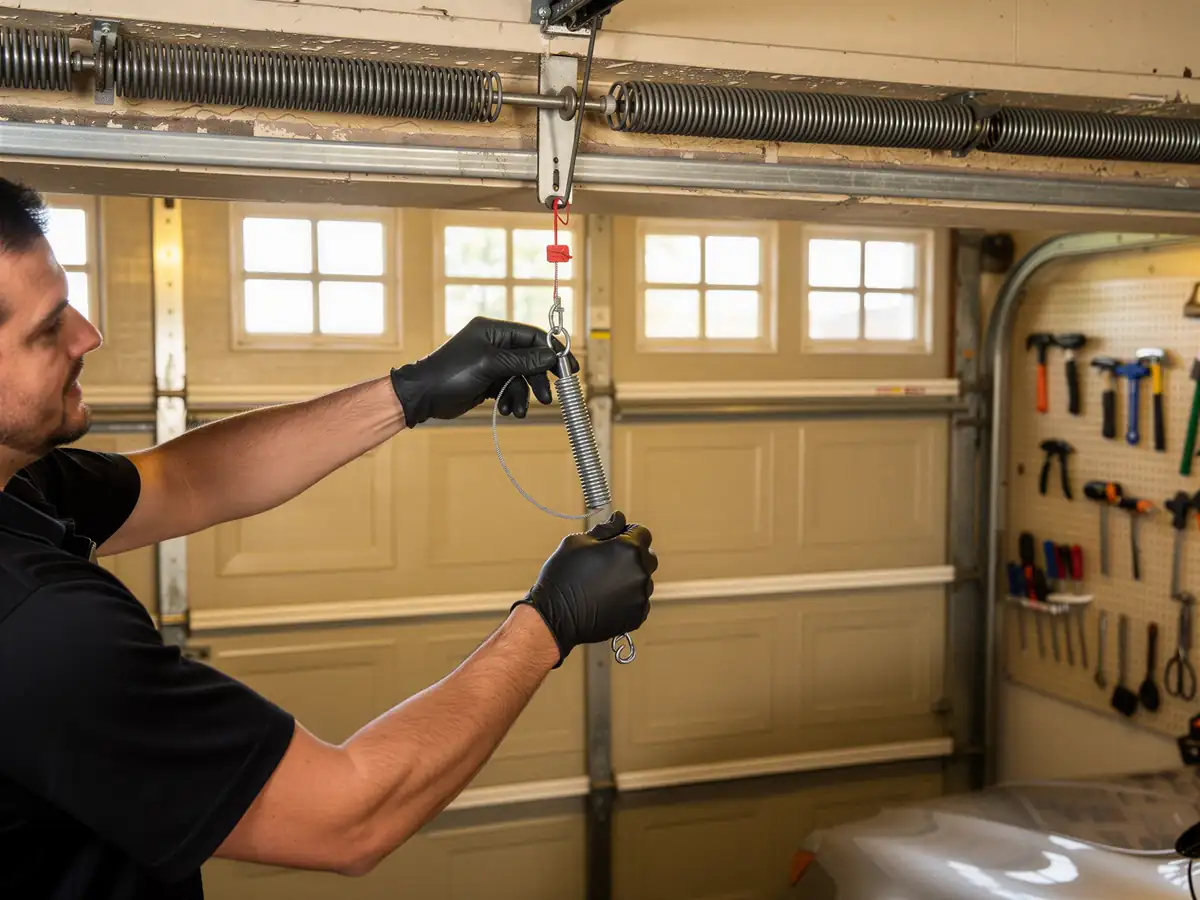
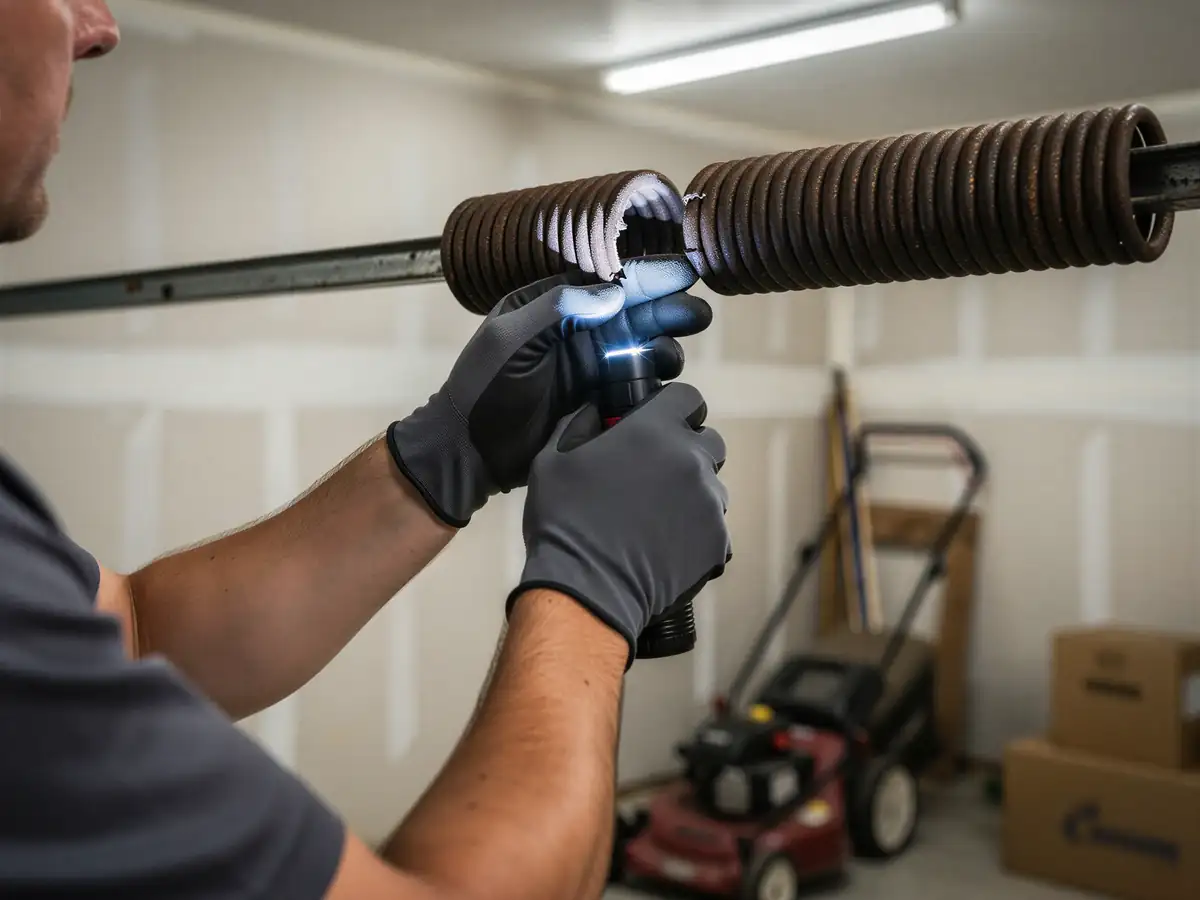
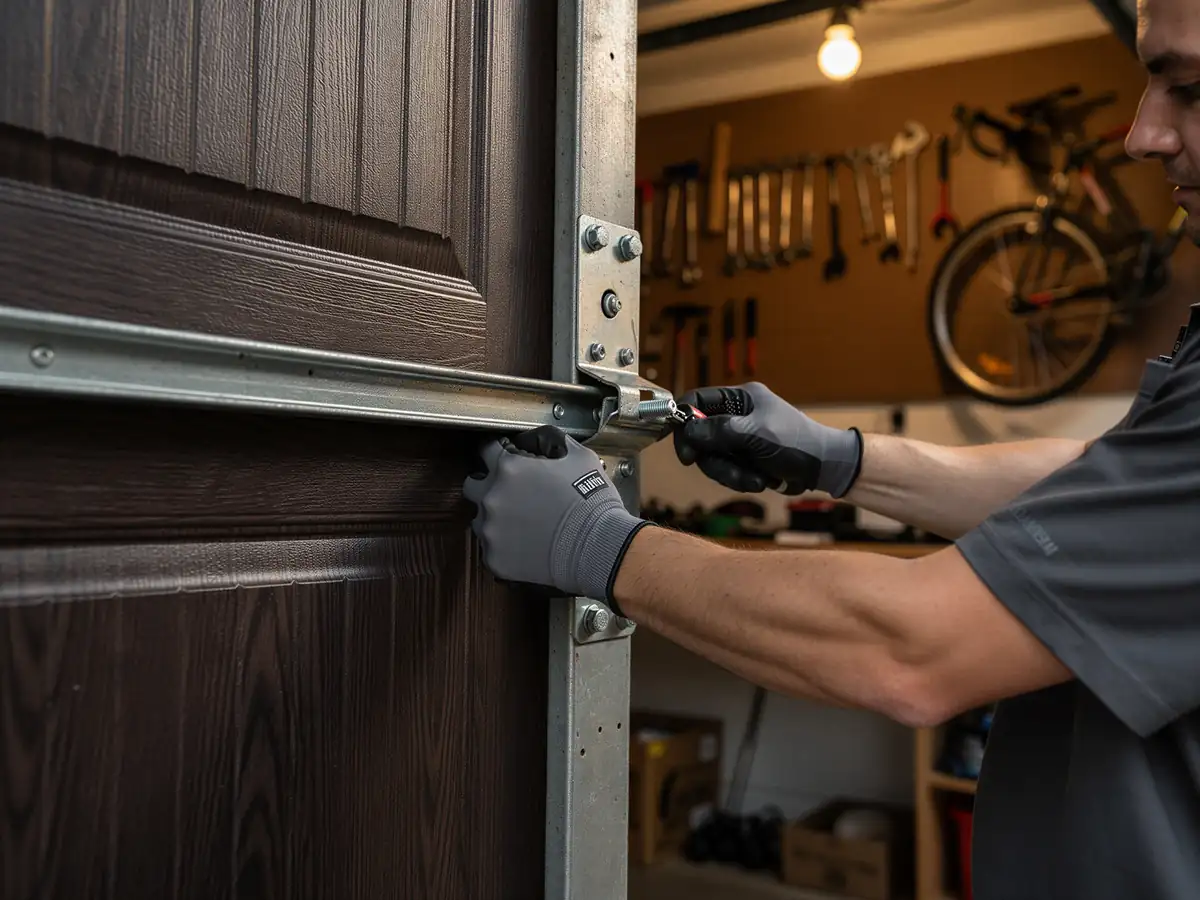
A lot of these 1980s builder-grade doors run on a single torsion spring mounted over the opening, which is a different animal than the dual-spring setups on wider or newer doors. Winding or replacing that spring under tension is where most DIY injuries happen, and it's the one repair we tell people flatly not to attempt themselves regardless of how simple a YouTube video makes it look. Swapping a roller or tightening a loose track bracket is reasonable weekend work. Touching the spring, the cable drums, or anything under tension on a door built with this hardware is not.
Why This Fails Locally
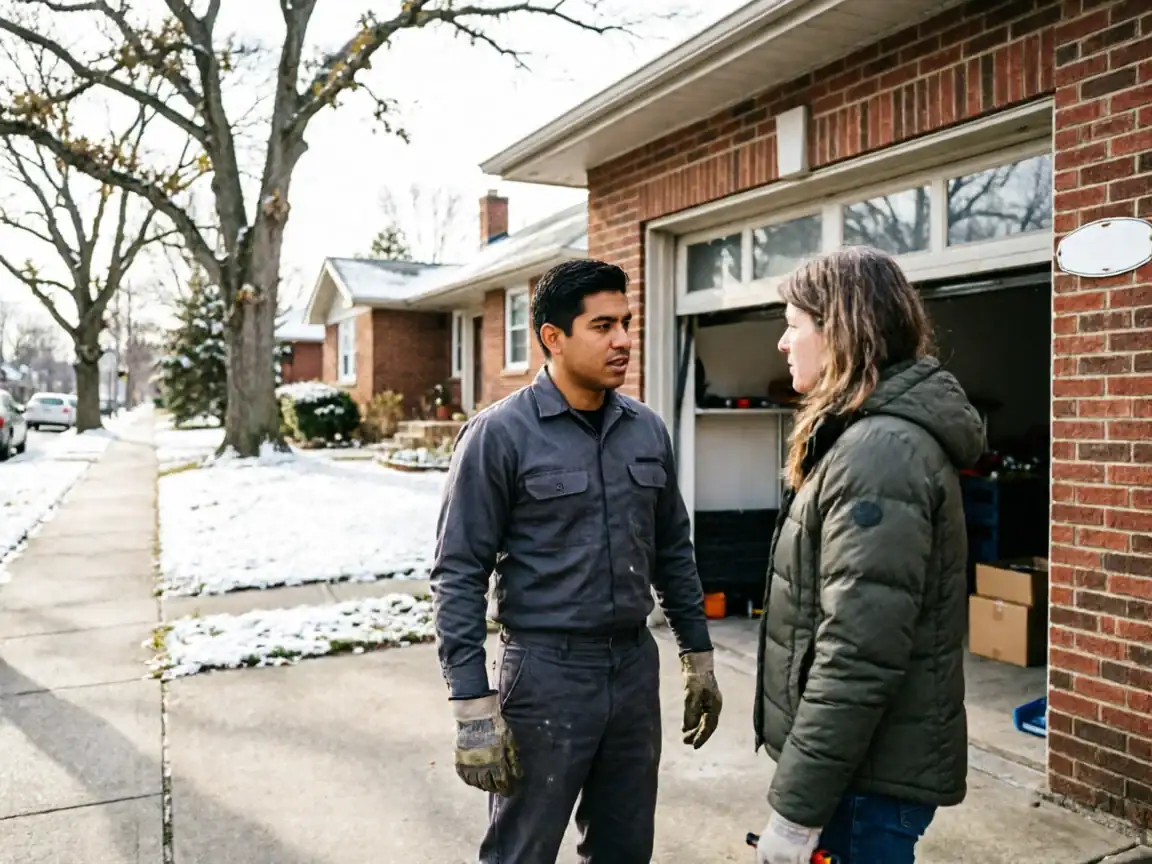
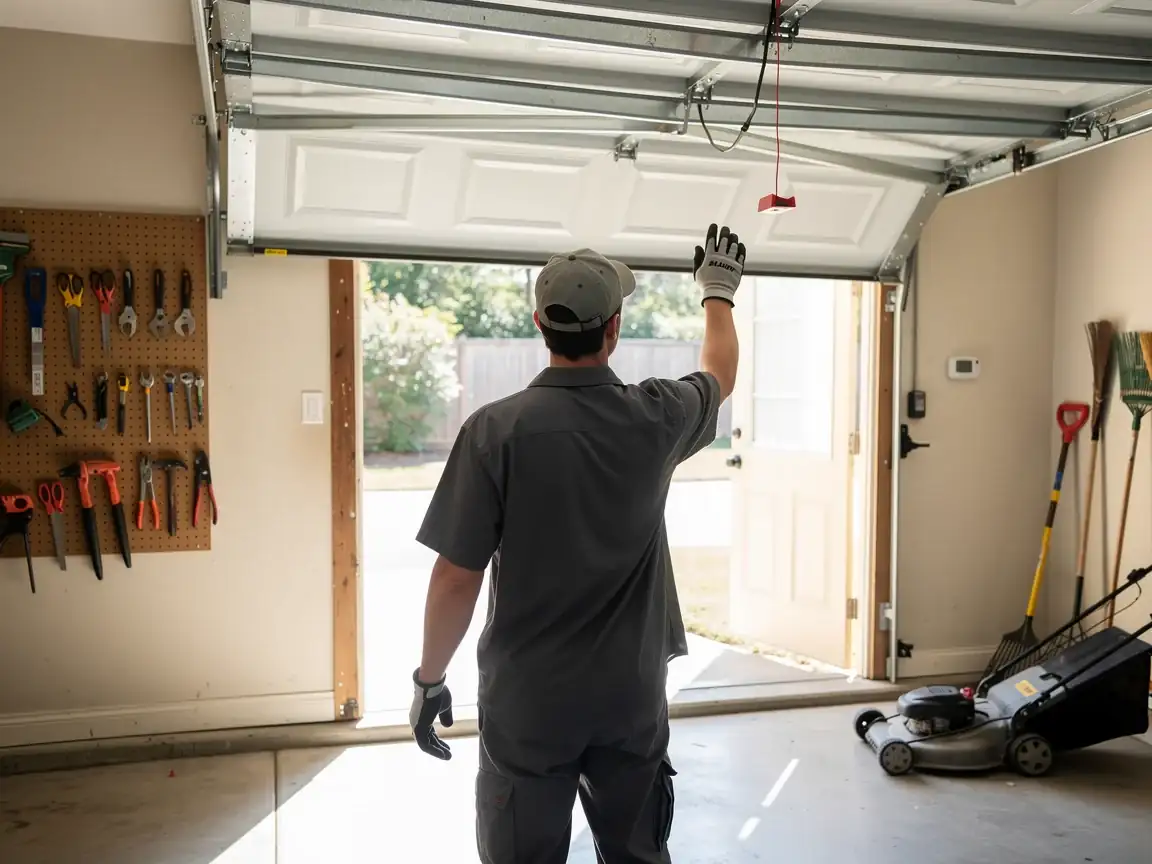
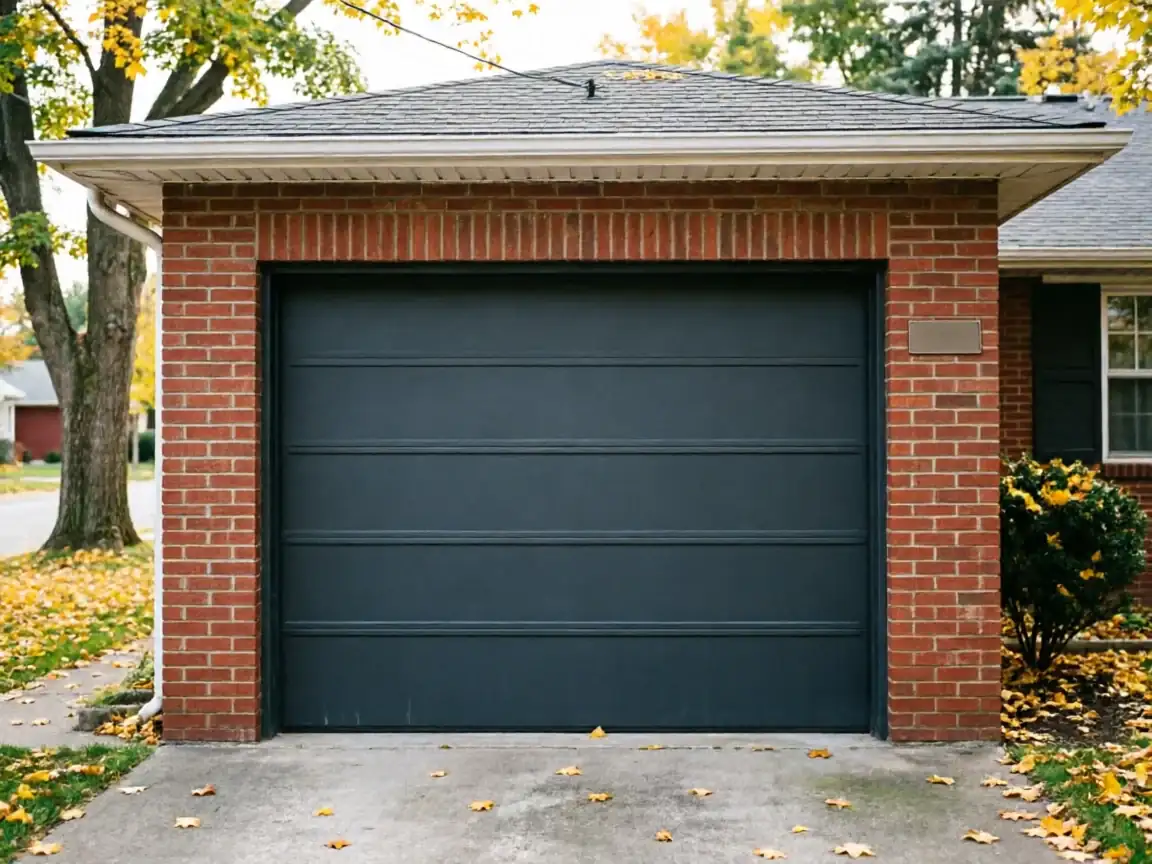
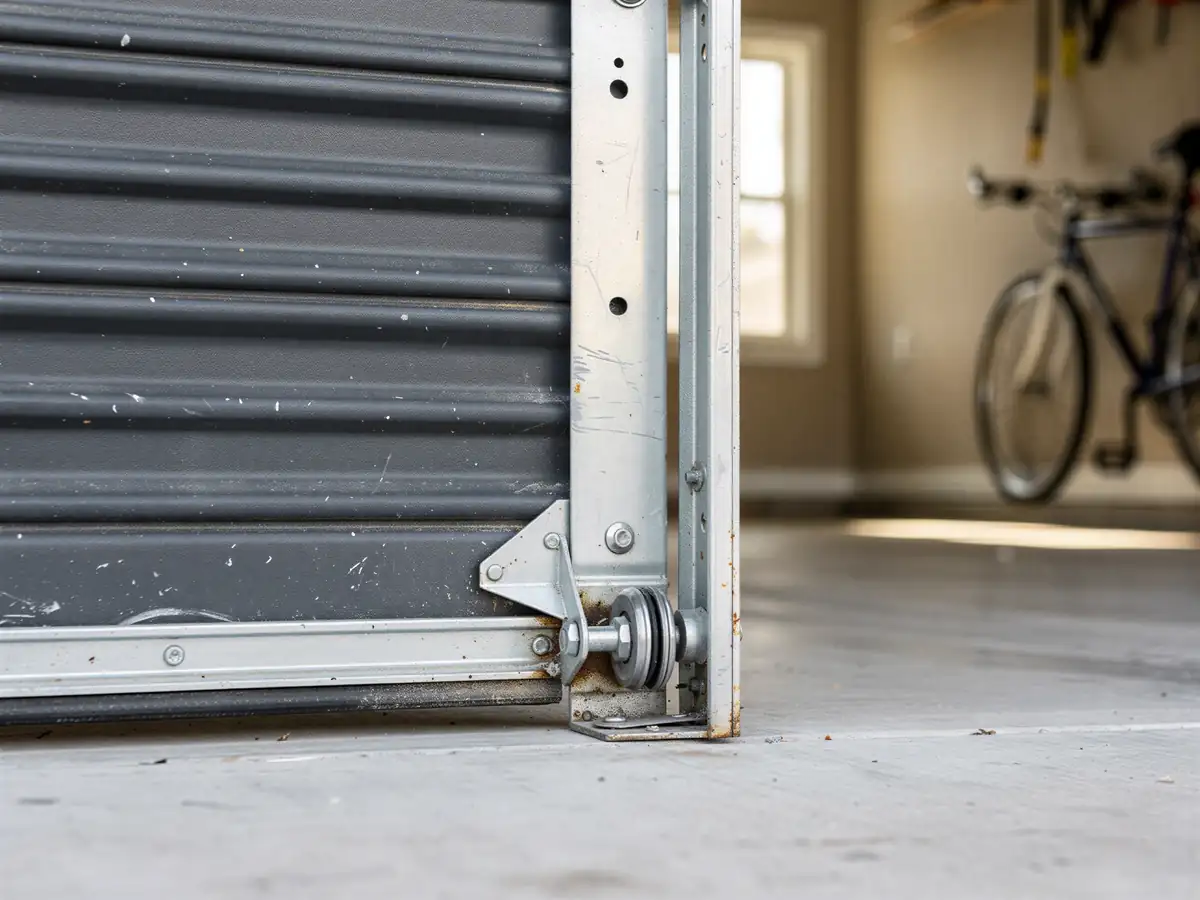
The climate band here is cold, not extreme, but it's cold enough and consistent enough that steel track on a door built around 1983 ices up at the bottom roller first, a sign this stock is pushing forty years old. Builder-grade weatherstripping from that era wasn't designed for forty winters of freeze-thaw cycling, so the bottom seal cracks, water gets under the track, and the first hard freeze locks the roller in place. That's a different failure mode than a newer door with a modern composite seal, and it's why a door that worked fine in October can jam solid in January without anything else changing. Higher household income in this suburb also means more detached three-car garages with wider doors, which puts more load on aging hardware than a standard single door sees.
What You Pay
We don't have a posted price list for this page, and quoting one without seeing the door would be a guess dressed up as a fact. What we can tell you is what tends to drive the decision here: with about 4,740 households in Mendota Heights, the number of mid-80s builder-grade doors still running their original torsion springs is smaller than in bigger neighboring suburbs, but they're all aging at once, and owners with incomes well above the service-area average more often choose to replace the whole door and opener together rather than keep patching 40-year-old steel. That's a judgment call based on the age of the unit, not a fixed price point, and we'll tell you honestly when a repair isn't worth it against a replacement.